

If the Statue of Liberty Were a Real Person
Zuni Maud
1921
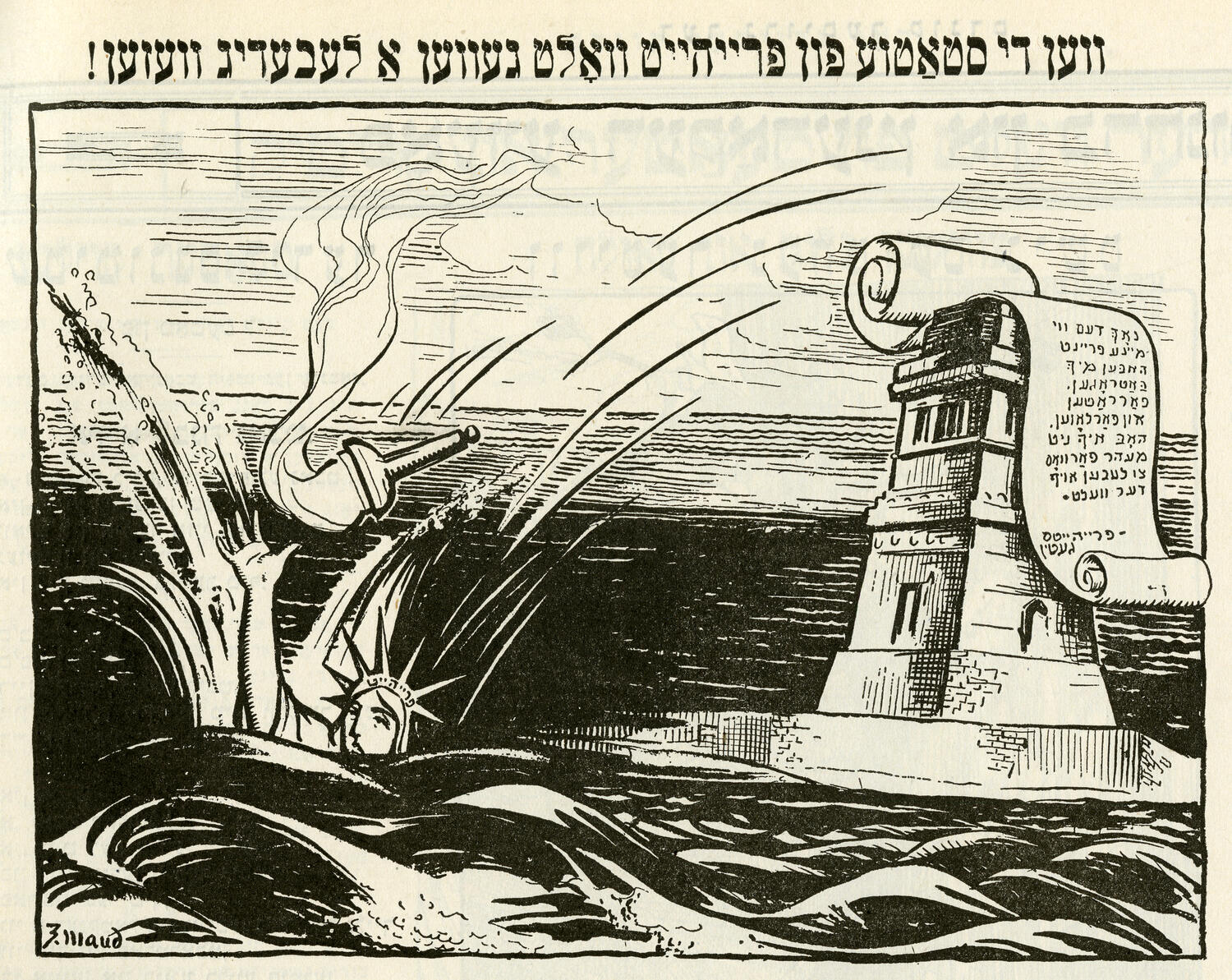
By the end of World War I, the United States was on the brink of major immigration reform. In 1921, the Emergency Quota Act capped immigration based on each nationality’s proportion of the American population in the 1910 census. Three years later, Congress rolled back the census date to 1890, a move that substantially reduced the slots for eastern and southern Europeans. While many elite Jews were relieved that the new law did not impose racialized categories on Jews, recent Jewish immigrants experienced the personal costs of the restriction. The quotas imposed a hierarchy that placed Jews like them near the bottom of desirable citizens and would stand in the way of reuniting them with family from the Old World. Asserting their own conception of true American values, some of these immigrants became vocal detractors of the new law, as the Yiddish cartoon communicates.
The Yiddish words penned on Lady Liberty’s pedestal read, “After my friends harassed, betrayed, and abandoned me, I no longer have a reason to live.” To which friends is she referring, and what have they done?
Who is the audience, and what is the political cartoon trying to inspire in it?
Look for modern-day political cartoons that use the figure of the Statue of Liberty to comment on American debates. How are they similar or different, depending on the context?