

Redressing Sepharad: Moroccan Jews, Colonial Modernity, and the Afterlives of al-Andalus
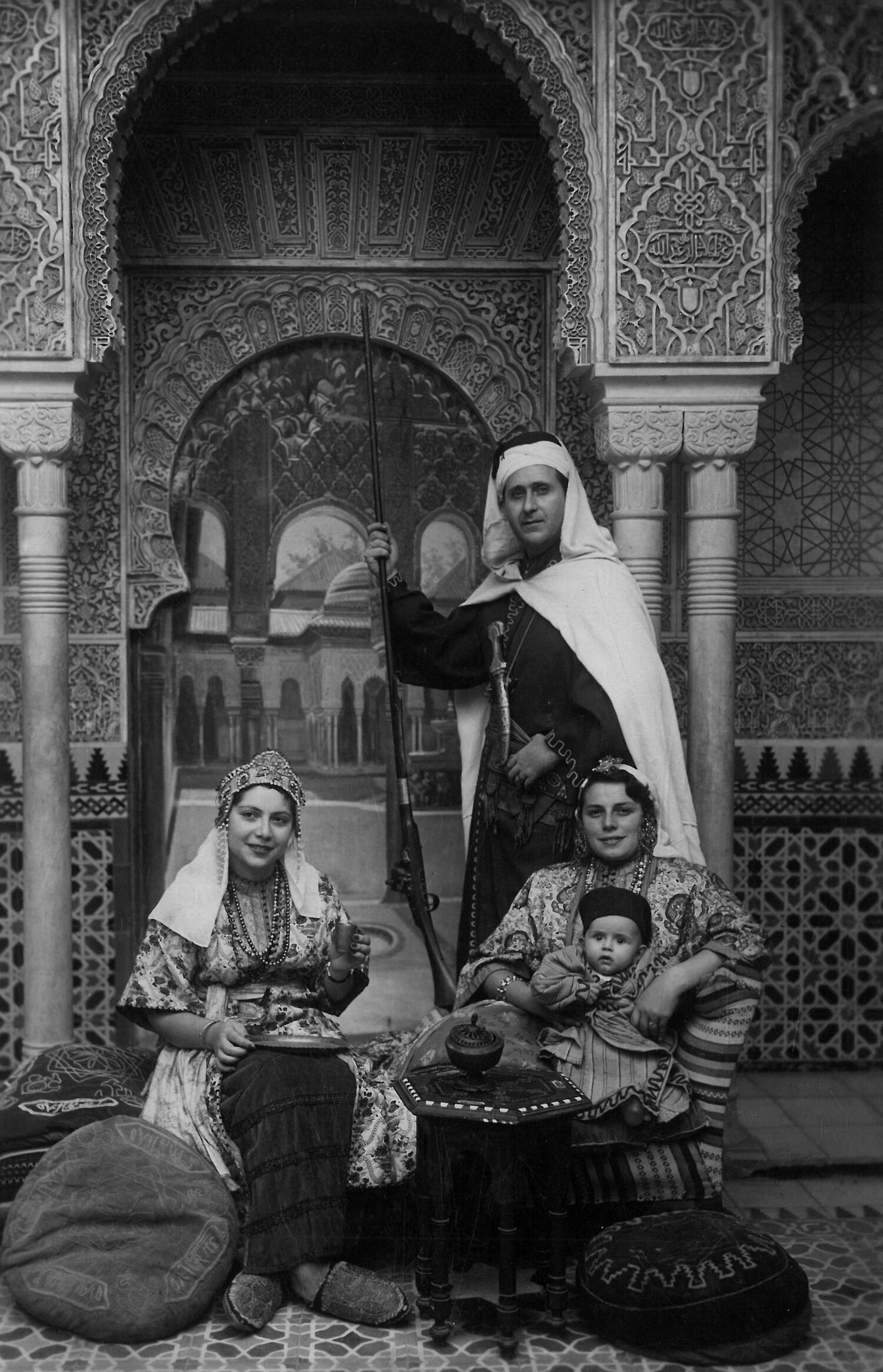
Centuries after Catholic kingdoms conquered the Iberian Arab Islamic states of al-Andalus and expelled all Muslims and Jews, the Jewish exiles, known as Sephardic Jews, still celebrated ties to Sepharad (medieval Spain) and many spoke Judeo-Spanish dialects. Spanish colonialism in northern Morocco (1912–1956) uniquely put a local Jewish population under a colonial regime whose language was close to their own, giving their link to Sepharad a new meaning. Here, a family dresses in the garb of al-Andalus while visiting Spain’s Alhambra compound. What appears to be a timeless portrait was in fact a modern, touristic performance that reveals how this community inhabited multiple worlds: Moroccan, Jewish, Sephardi, Spanish, and diasporic all at once. The image captures not inheritance alone, but the active, modern re-making of Sephardi identity.
Credits
Property of Aviad Moreno