

Passover across Jewish Time and Space
Passover is the most celebrated holiday for American Jews. Yet, few appreciate the historical evolution and diversity of its key themes and messages.


Curated by Deborah Dash Moore and Noam Pianko
Exile and Homecoming: The Enduring Impact of the Exodus Narrative
The Exodus narrative following the Israelites’ journey from slavery to freedom and exile to homecoming has shaped Western culture, politics, and religion. Starting with the biblical source itself, these examples illustrate how the biblical themes serve for Jews and non-Jews alike as a primary lens for interpreting everything from personal journeys to national liberation movements.

Oppression and Exodus
Exodus 1–18 (selections)
The biblical book of Exodus tells the story of the Israelites' march from oppression to liberation.

A Seder Night
A medieval rabbi barely escapes from a blood libel accusation at his own Seder table in this prescient nineteenth-century story by the famous German Romantic poet Heinrich Heine.

Out of Egypt: A Last Passover in Alexandria
A poignant scene depicts André Aciman’s family celebrating their final Passover in Egypt before exile.

Exodus and Revolution
The Exodus story serves as more than a religious or moral narrative. Its influence has shaped the fundamental paradigms of Western political thought to this day.
One Little Goat and the Four Sons
The Passover Haggadah has inspired many artistic illustrations that comment on the relationship between themes of Passover and contemporary events. These powerful twentieth-century depictions reveal the enduring relevance, and changing interpretations, of the Passover story.

The Fire Came and Burnt the Stick
This graphic depiction of the Passover song “Had Gadya” (“Tale of a Goat”) juxtaposes the collective memory of the exodus from Egypt with Soviet revolutionary art and politics.

The Four Sons
This 1934 illustration of the Passover story of the four sons features a caricature of the “wicked” son dressed as Hitler.

The Shohet (from Had Gadya)
The violence of the Passover song “Had Gadya” (“Who Knows One”) clearly spoke to this illustrator’s sense of horror following World War I.
Grappling with Passover’s Message during the Civil War
Today, the popular Passover story of Jewish freedom from slavery underscores a fundamental belief among many American Jews that there is a Jewish moral commitment to fight for justice and equity. Yet, the connection between overcoming the oppression of the ancient Israelites and fighting for the rights of other enslaved people was a central topic of debate during the American Civil War. We see the very different ways Jews have read and interpreted the moral lessons from the Passover story in these texts.

A Biblical Justification of American Slavery
A rabbi in 1861 argued that slavery was sanctioned by scripture, revealing how faith and politics collided before America’s Civil War.
Jewish Voices Divided: Slavery and Morality in 1861 America
As the Civil War loomed, Jewish leaders clashed over the morality of slavery—one invoking scripture to defend it, another proclaiming divine justice to oppose it.

A Union Soldier’s Passover
Passover preparations for a Civil War–era Union soldier included importing seven barrels of matzot and collecting weeds to substitute for the symbolic bitterness of horseradish.
Passover, Feminism, and Religious Innovation
The Exodus story and Passover rituals have provided many opportunities for challenging traditionally gendered narratives and ritual practices of the Jewish past. Passover’s central place in the Jewish calendar and collective memory makes it an important site for innovations that reflect changing norms about gender and sexuality. These examples extend back to the early nineteenth century and illuminate efforts to raise the visibility of women and women’s experiences in Judaism.

The Definitive Orange on the Seder Plate Story
The creator of the popular ritual of placing an orange on the Seder plate describes exactly how this innovation arose, its intended significance, and the problematic erasure of its origins.

Miriam HaNeviah
Miriam, one of the few women in the Bible to be called a prophet, provides an important opportunity for contemporary liturgists to expand the male-dominated framework of traditional Jewish prayer.
Miriam’s Song
What if Miriam were remembered just as a person rescuing her brother Moses rather than as the heroine responsible for saving the man who would redeem the Jewish people from bondage?
Haggadot From Around the World

Judeo-Persian Haggadah (Kaifeng)
This Haggadah from Kaifeng (China) includes Judeo-Persian instructional notes for the Passover ritual.

Haggadah (Prague)

Haggadah (Mantua)

Kibbutz Haggadah
Other Curated Collections
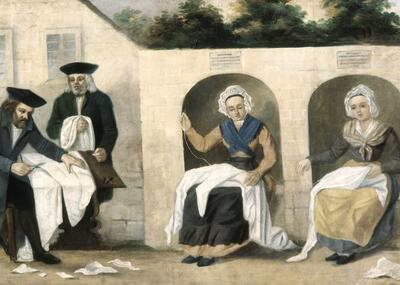
Gender Roles
Engage with the gendered dimensions of Jewish life and discover lost voices of Jewish women.
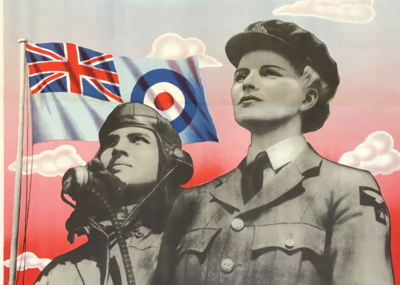
Jewish Resistance and the Holocaust
From armed confrontation to religious defiance, Jews fought back against the perpetrators of the Holocaust.
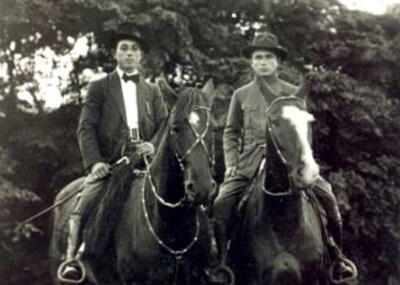
Jewish Gauchos in South America’s Pampas
In the late 19th and early 20th centuries, with the help of philanthropic organizations, many Jews escaping persecution in Russia made new lives for themselves in the South American pampas.