

Grace after Meals
Image
Please login or register for free access to Posen Library
Already have an account?
You may also like

Kaddish of Renewal
Kaddish le-ḥadata
May His great Name be magnified and sanctified.For He will renew the world in the future and revive the dead, and redeem the living, and build the city of Jerusalem, and perfect the holy…
The Justification of [Divine] Judgment
Tsiduk ha-din
The Rock’s deeds are perfect, for all His ways are justice; a loyal God, with no crime, He is righteous and upright (Deuteronomy 32:4).The Rock is perfect in all deeds…


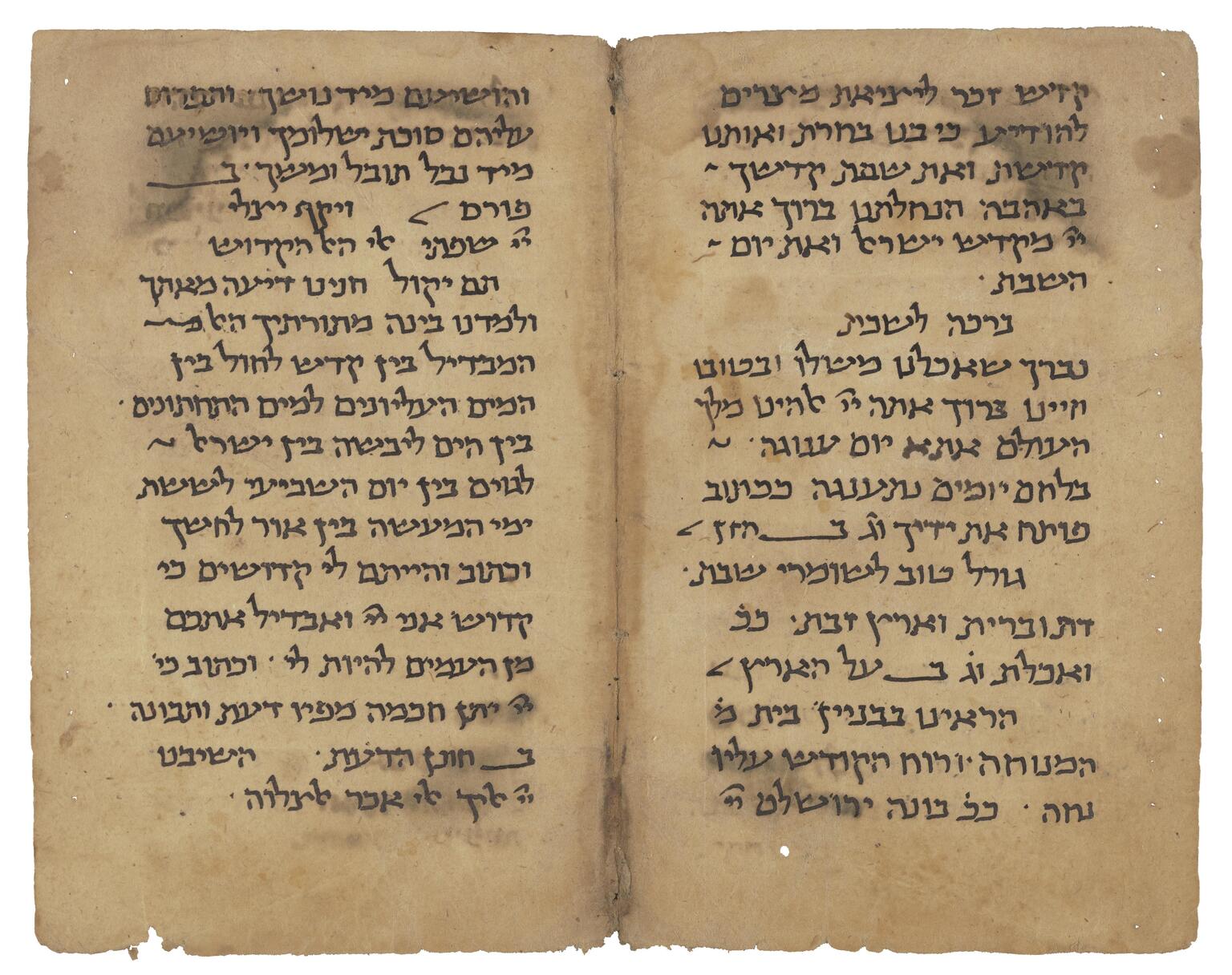
A Page with An Abbreviated Grace After Meals, for the Sabbath
This version of the Grace after Meals, found in the Cairo Geniza, is only a page long. It includes a line, “the day of joy comes, let us rejoice in the bread of two days,” alluding to the two portions…
Grace after Meals for Weekdays
You, our Eternal God, are the essence of praise, and the universal sovereign, creator of the world and moulder of mankind who prepares food for all his creatures, as the verse has it: You give it…
Grace after Meals in a House of Mourning
Say: [In] memory of a good man.May the memory of a humble man be for a blessing.May the memory of the righteous be for a blessing, and their souls [be] in paradise…
Great Laws (Halakhot gedolot): On the Blessing over the Signs of Virginity
When he brings out the sheet [stained with the blood of virginity], we require him to recite a blessing. If wine and spices are available, he recites over them, “who creates the fruit of the vine” and…