

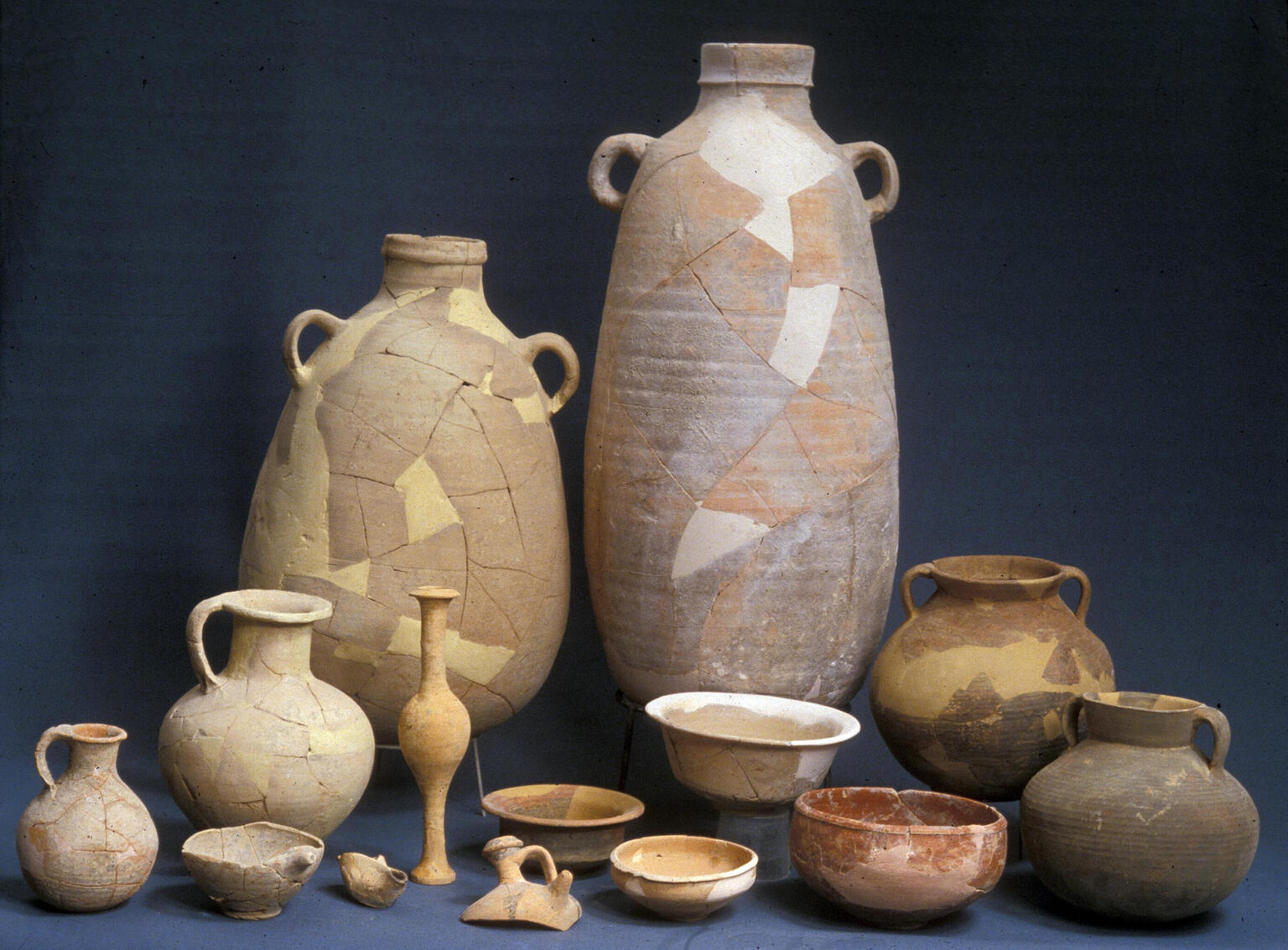
Hellenistic Pottery
Image
Please login or register for free access to Posen Library
Already have an account?
Engage with this Source


Related Guide
Ancient Jewish Material Culture
4th Century BCE–6th Century CE
You may also like

Grooved Glass Bowl
In addition to pottery, many Jewish homes made use of glass vessels, which became more affordable with the invention of free blowing around the mid-first century BCE and became especially common from…

Bronze Vessels and Utensils
Mining and metalworking were important industries in Hellenistic and Roman Palestine. Iron was the most common metal, used for agricultural tools…

Chalkstone Wares
A unique type of vessel made of chalkstone—comprising a wide range of hand-carved and lathe-turned tableware and storage jars—emerged in the land of Israel in the late first…

Eastern Terra Sigillata
These red-glazed ceramics, which were produced in the eastern Mediterranean, were the most commonly imported fine wares in the late Hellenistic and early Roman periods. They became particularly common…
Blown Glass Jugs and Juglets
The free blowing of glass was invented by Syrian craftsmen in the first century BCE, somewhere along the Syro-Palestinian coast. The glass workshop in Jerusalem, which was active during the early…

Jerusalem Painted Ware
This collection of fine wares decorated with painted floral and geometric designs was produced in Jerusalem in imitation of Nabataean painted wares. These were the only locally produced fine wares in…