

Jewish woman in Cairo
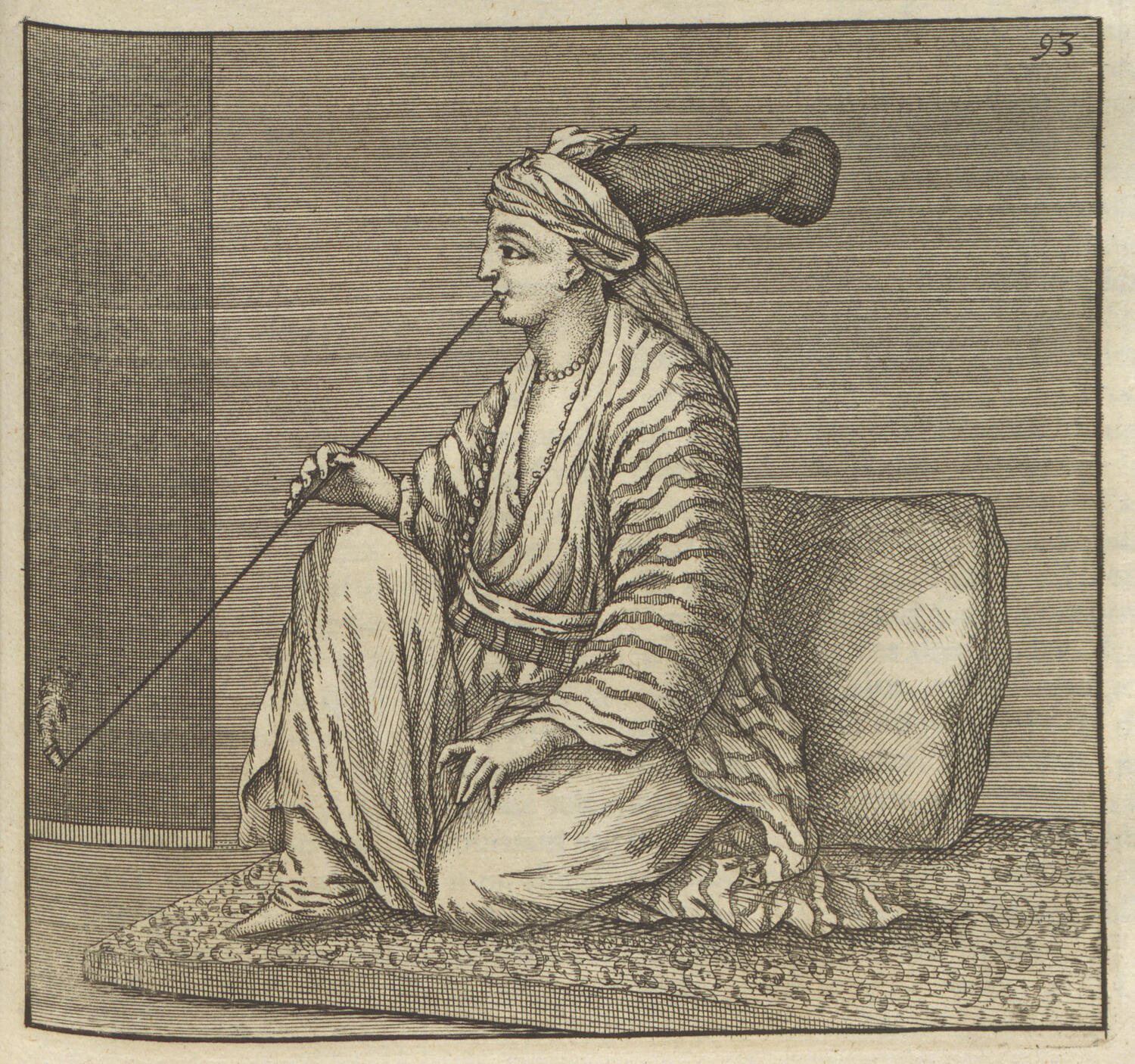

This engraving depicting a Jewish woman in Cairo, Egypt, is from Cornelis de Bruyn’s travelogue, Reizen van Corn de Bruyn door de vermaardste deelen van Klein Asia, de eylanden Scio, Rhodus, Cyprus enz. mitsg. de voornaamste steden van Aegypten, Syrien en Palestina, first published in Delft, the Netherlands, in 1698. Before the advent of photography, it was not uncommon for artists to travel to what were considered exotic or picturesque locations in Europe, North Africa, and the Near East, and to produce artworks upon their return home that helped satisfy the curiosity of the public about distant places and peoples.
Credits
Cornelis de Bruyn, from Voyage au Levant, c’est–à–dire, dans les principaux endroits de l’Asie Mineure, dans les isles de Chio, Rhodes, & Chypre, &c., de même que dans les plus consid érables villes d’Égypte, de Syrie, et de la Terre Sainte (Paris: Guillaume Cavelier, 714), p. 220. Special Collections Research Center, University of Chicago Library.
Published in: The Posen Library of Jewish Culture and Civilization, vol. 5.
You may also like

The Debate of the Flowers
This 1702 Ladino poem depicts a competitive debate between flowers, a popular song traditionally performed by Moroccan and Balkan Jewish communities.
The Exploits of Moses
This 1702 Ladino poem is a retelling of the life of Moses, celebrating the prophet in a song for the community.
Peri tsadik (Fruit of the Righteous)
Couplets of Joseph the Righteous
These 1732 Ladino couplets are a retelling of the biblical story of Joseph, blending Hebrew liturgical verses with popular rhyme for readers.
Ballad of Repentance
In my cottage was I one day
This 1749 narrative poem byYūsuf Yahūdī is a creative retelling of the Hanukkah story based on the scroll of Antiochus.

Related Guide
Early Modern Literature and the Arts
Jewish literary creativity flourished in the early modern period, dominated by Hebrew poetry that blended religious themes with Renaissance forms.
You may also like
The Debate of the Flowers
This 1702 Ladino poem depicts a competitive debate between flowers, a popular song traditionally performed by Moroccan and Balkan Jewish communities.
The Exploits of Moses
This 1702 Ladino poem is a retelling of the life of Moses, celebrating the prophet in a song for the community.
Peri tsadik (Fruit of the Righteous)
Couplets of Joseph the Righteous
These 1732 Ladino couplets are a retelling of the biblical story of Joseph, blending Hebrew liturgical verses with popular rhyme for readers.
Ballad of Repentance
In my cottage was I one day
This 1749 narrative poem byYūsuf Yahūdī is a creative retelling of the Hanukkah story based on the scroll of Antiochus.