

La Grande-Duchesse de Gérolstein
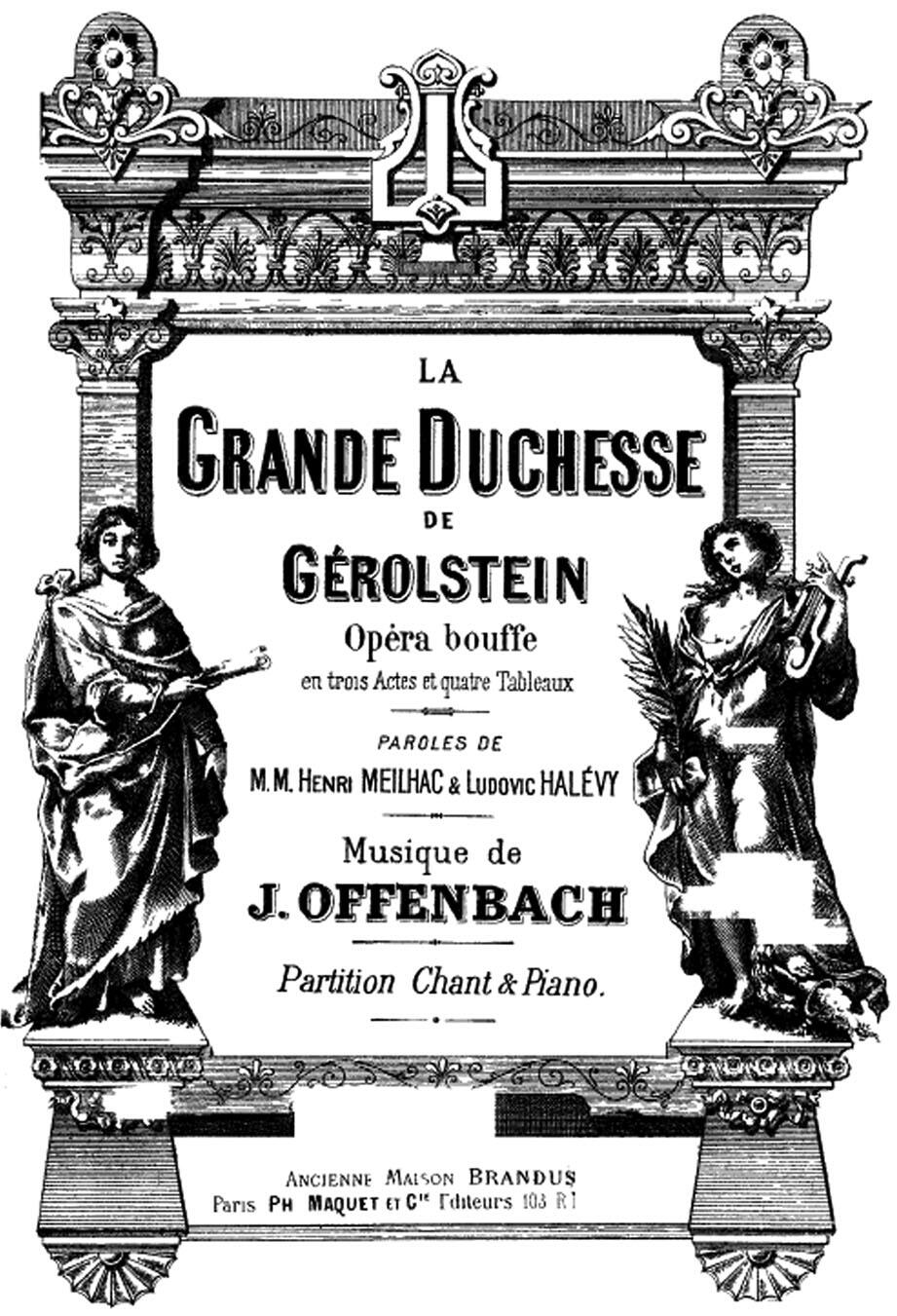

La Grande-Duchesse de Gérolstein is an opéra bouffe (French comic opera), composed by Jacques Offenbach when his career was at its height. It premiered in 1867 and had performances at the Paris Exposition, where its audiences included the crowned heads of Europe. Later, because of the antimilitarism of its libretto, La Grande-Duchesse de Gérolstein was banned in France after France’s 1871 defeat in the Franco-Prussian War.
Credits
Paris: Brandus & Dufour (ca. 1867), reprinted Paris: Ph. Maquet (after 1887); from Tales of Hoffmann, ca. 1880–1881. Paris: Choudens Père et fils [1881]. Plate A.C. 5100.
Published in: The Posen Library of Jewish Culture and Civilization, vol. 6.
You may also like

The Brazilian’s Song from the Opera La vie parisienne

Der Thurm zu Babel (The Tower of Babel)

Kantorzysta: Polka na fortepiano, op. 68

The Queen of Sheba

Tales of Hoffmann

Drawing of Costume for Jitka in the First Production of the Opera Dalibor by Bedřich Smetana

Related Guide
Music and Opera in Jewish Culture
One of the most striking changes in European Jewish culture toward the later eighteenth century was marked by the entry of Jews into art music, opera houses, and the stage.
You may also like
The Brazilian’s Song from the Opera La vie parisienne
Der Thurm zu Babel (The Tower of Babel)
Kantorzysta: Polka na fortepiano, op. 68
The Queen of Sheba
Tales of Hoffmann