

Letter to a Relative
About This Entry
This Judeo-Arabic letter, to an unnamed man with the rank of “fifth” in the Palestinian academy, concerns the desire of the addressee’s son Nissim to travel to northern Europe, where Jews did not always allow those from outside of their communities to settle among them (this restriction was called ḥerem ha-yishuv). Judah ha-Kohen warns his correspondent against permitting his son to travel there because, in his view, both the financial opportunities and the character of the local Jews were poor. Judah was further concerned about the length of the journey and the son’s ability to continue his studies once there. It is not clear when this letter was sent, perhaps in 1064 or, less likely, 1085. Ellipses indicate lacunae in the manuscript.
In Your name, O Merciful One.
I was expecting the letters of my master—the head, the fifth [in rank], may he be protected from Heaven and blessed, and his days prolonged—to arrive with R. Barukh, but I didn’t see him. I became worried, and I hope these worries turn out for the best. Later, I met the abovementioned, and he notified me what your son, R. Nissim, may [our God] protect and bless him, decided: to make a dangerous journey, a voyage to a land [where] he does not know the people or their nature. Even if he is lucky, and things work out extremely well, he won’t be able to reach the land of R. Judah, our relative, in less than three years. And then, God is a witness, he will find himself among people whose nature is the meanest of all of God’s creation, the darkest of all.
For example, when a foreign Jew reaches them, they do not greet him with more than a word or two. And then, if he stays in their town for a month, they tell him, “Get up and leave!”—for they have banned any foreigner from living with them for more than a month. Besides that, he won’t be able—I swear to God—to get [even] a single perutah [a coin of small value], nor—God forbid—merchandise to make a living from. What is more, what he has read here in one month, he won’t read there in a whole year, since he won’t find a person there to truly teach him halakhah. I cannot think of any reason for such an idea except a bad spirit. God knows he has saddened my heart. . . . this idea. He is hurting his parents in this matter; this mistreatment is too much. May the Merciful One save us from this idea.
For the people who come from that land, even if they have a large family there, they despise it [the land]—all the more so a foreigner, who does not speak the language. I cannot see what has made him consider it, except his eyes. There is no might nor power except in God. And I say, eventually he will regret this but won’t be able to change it.
And peace.
My master, the head, the fifth, I was expecting from you that thing which you have mentioned time and again, but it did not arrive. I don’t know the reason for the delay.
I wish you, your family, your brothers, your dear children peace. Peace to the whole community, peace to the dignitaries leading the communities. And peace.
Written on Tuesday, the twenty-second of Iyyar, may God show you its blessing.
And peace.
Source: CUL T-S 16.235.
Translated by Moshe Yagur.
Published in: The Posen Library of Jewish Culture and Civilization, vol. 3: Encountering Christianity and Islam.
You may also like

Migration and Mobility in the Early Medieval Period
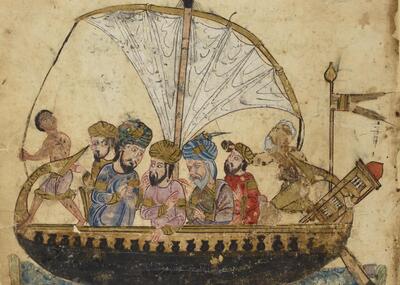
Medieval societies can sometimes be seen as static and isolated. Yet medieval people of all sorts moved from one place to another, for a variety of reasons: for economic opportunity and trade, driven by wars and forced displacement, and more. Western Europe and the Mediterranean, the Middle East, and even the Far East were connected by the migration of people, merchandise, and ideas.

Letter to Nahray ben Nissim (II)
Letter to Joseph ben Eli ha-Kohen
Letter to Eli ben Ḥayim ha-Kohen
Letter to Evyatar ben Elijah ha-Kohen
Letter to Eli ben Ḥayim ha-Kohen
You may also like
Migration and Mobility in the Early Medieval Period
Medieval societies can sometimes be seen as static and isolated. Yet medieval people of all sorts moved from one place to another, for a variety of reasons: for economic opportunity and trade, driven by wars and forced displacement, and more. Western Europe and the Mediterranean, the Middle East, and even the Far East were connected by the migration of people, merchandise, and ideas.