

Paratroopers at the Western Wall, June 7, 1967
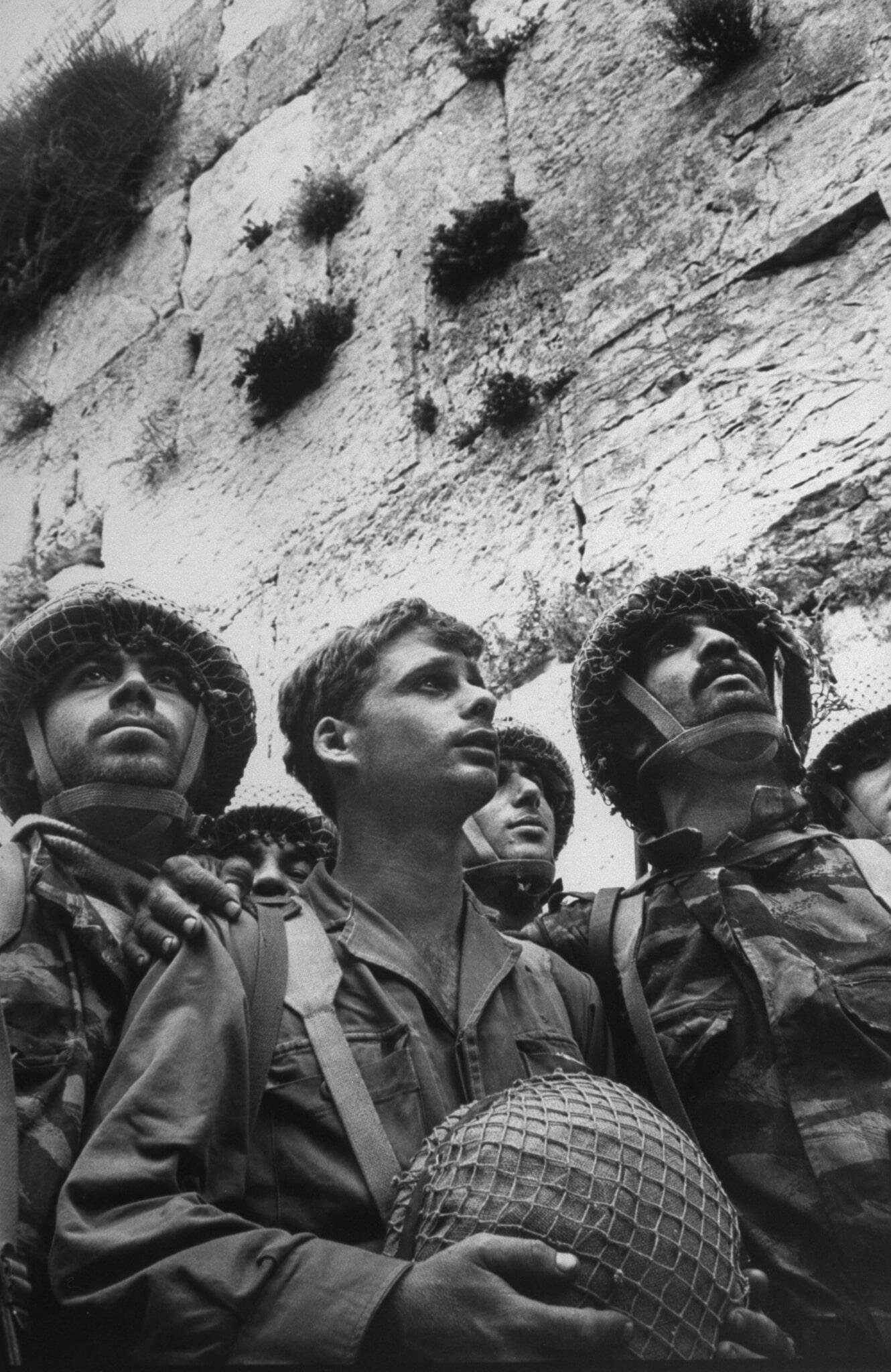

Perhaps the most iconic photograph of the Six Day War is this one, of three Israeli paratroopers at the Western Wall shortly after its capture by the Israeli army on the third day of the war. A few minutes later Israel Defense Forces Chief Rabbi Shlomo Goren arrived with a shofar and Torah scroll to celebrate the capture of the Wall, Judaism’s holiest site.
We’re sorry. The Posen Library’s licensing agreements prevent this image from being printed or downloaded.
Credits
David Rubinger / The LIFE Images Collection / Getty Images.
Published in: The Posen Library of Jewish Culture and Civilization, vol. 9.
You may also like

Survivors Are Not Heroes
Survivors Are Not Heroes stands five meters tall on the St. George Campus of the University of Toronto. Etrog intended the bronze sculpture to serve as a critique of traditional war memorials, which…

“Le people juif . . . sur de lui-même et dominateur . . .” (“The Jews, a People Sure of Itself and Domineering, . . .” Charles de Gaulle)
Louis Mitelberg drew this cartoon in ironic response to a 1967 comment made by French president Charles De Gaulle in the wake of the Six Day War, in which he described the Jewish people (now that they…

Red Stripe Kitchen
Red Stripe Kitchen is from Martha Rosler’s Bringing the War Home: House Beautiful, a series created to protest the Vietnam War and the ways in which Americans distance themselves from violence…

The Liberation of Jerusalem
The Liberation of Jerusalem, created shortly after the Six Day War, was a bold statement by its artist Solomon (Shlomo) Dreizner, at a time when any expression of support for Israel by Soviet Jews…

Illustration to Sholem Aleichem, The Haunted Tailor
Sholem Aleichem’s grotesque story “The Haunted Tailor” tells of a poor, witless tailor who is sent on a mission to buy a milk-giving goat, who turns out to be possessed. In the Soviet Union, it was…

The Artist behind Bars (Self-Portrait)
Boris Penson painted this self-portrait soon after he was refused a visa to emigrate to Israel. He depicted himself in prison stripes against a background of a grate against a dreary landscape. After…
You may also like
Survivors Are Not Heroes
Survivors Are Not Heroes stands five meters tall on the St. George Campus of the University of Toronto. Etrog intended the bronze sculpture to serve as a critique of traditional war memorials, which…
“Le people juif . . . sur de lui-même et dominateur . . .” (“The Jews, a People Sure of Itself and Domineering, . . .” Charles de Gaulle)
Louis Mitelberg drew this cartoon in ironic response to a 1967 comment made by French president Charles De Gaulle in the wake of the Six Day War, in which he described the Jewish people (now that they…
Red Stripe Kitchen
Red Stripe Kitchen is from Martha Rosler’s Bringing the War Home: House Beautiful, a series created to protest the Vietnam War and the ways in which Americans distance themselves from violence…
The Liberation of Jerusalem
The Liberation of Jerusalem, created shortly after the Six Day War, was a bold statement by its artist Solomon (Shlomo) Dreizner, at a time when any expression of support for Israel by Soviet Jews…
Illustration to Sholem Aleichem, The Haunted Tailor
Sholem Aleichem’s grotesque story “The Haunted Tailor” tells of a poor, witless tailor who is sent on a mission to buy a milk-giving goat, who turns out to be possessed. In the Soviet Union, it was…
The Artist behind Bars (Self-Portrait)
Boris Penson painted this self-portrait soon after he was refused a visa to emigrate to Israel. He depicted himself in prison stripes against a background of a grate against a dreary landscape. After…