

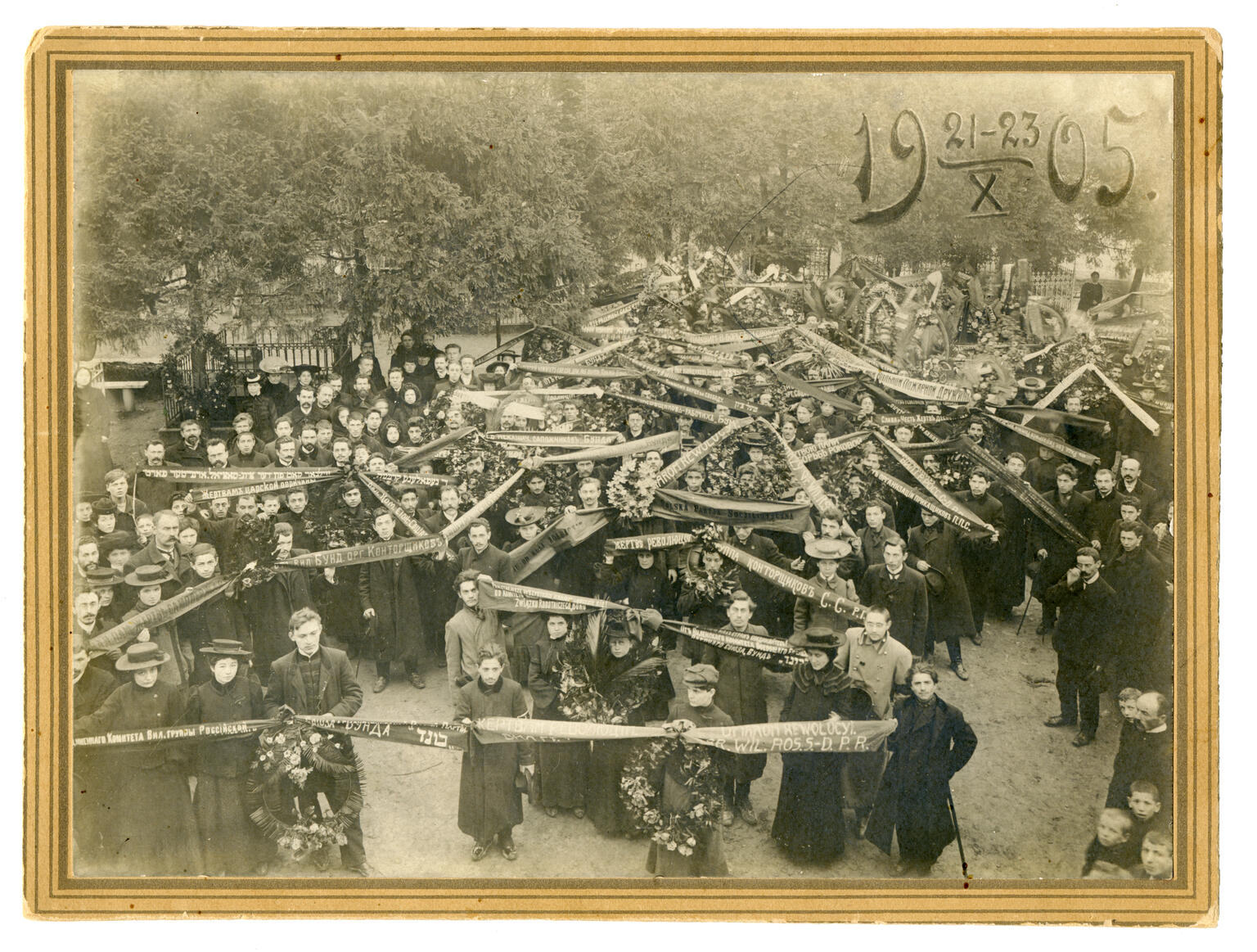
Protest at the Funeral of Anti-Tsarist Revolutionaries
Image
Please login or register for free access to Posen Library
Already have an account?
You may also like


Banner of the London Bakers’ Union
This banner of the London Jewish Bakers’ Union calls for (in both English and Yiddish) an eight-hour workday and an end to night work, for people to buy only bread “with the union label,” and for…

Rally in Memory of Fallen Worker Kagan
In this photograph, members of Jewish socialist parties and trade unions display banners at the funeral of protestors killed in the Russian Revolution.

A Call to the Jewish Youth Whose Hearts Lie with Their People and with Zion
Brothers!While our true Zionist goal is more or less clear—namely, our national and political revival in the Land of Zion—the ways that lead us to our goal are still clouded in fog. We have been going…
The East Africa Offer
But would not the existence of a Jewish State, or the efforts to establish it, bring into suspicion the Jews’ patriotism in other countries, or even cause them to be driven to the new State? No more…
About Autonomism: Decisions from the First Zionist Socialist Workers Party Congress
Recognizing, that any national political institution created on the basis of national autonomy in all its forms, is of value only to the extent that it answers a number of definite necessities—needs…
On the Tasks of the Folkspartay
We must not repeat the mistake made by western Jews . . . in denying their nationality and in assimilating completely in all areas of life except religion. . . . We eastern Jews have seen all the…