

Small Limestone Incense Altar from Lachish
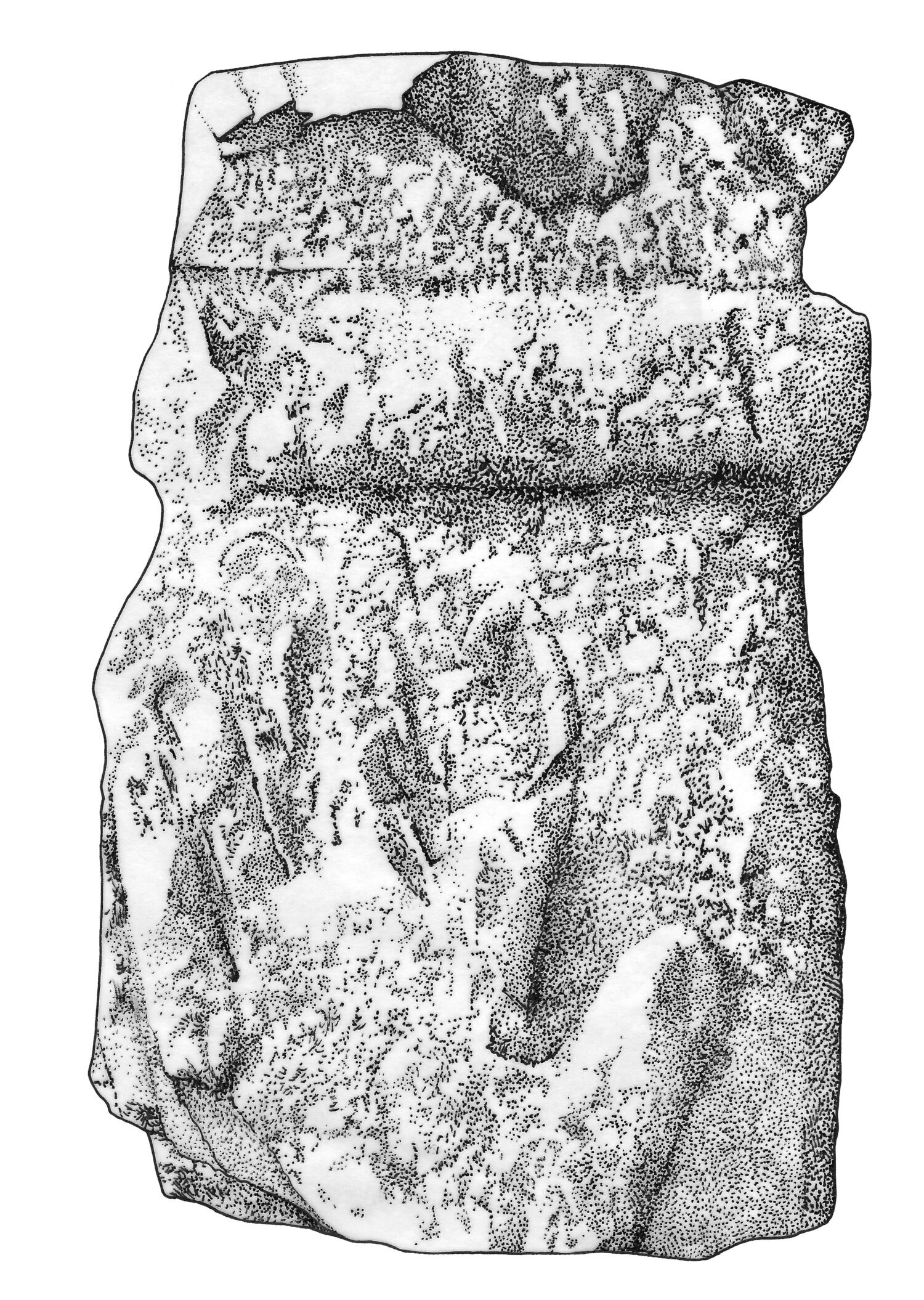

This altar from Lachish was originally about 20 inches (0.5 m) high, and it seems to have had horns at the upper corners (not shown here). There is a relief of a life-size hand on one side and, on the other (not shown here), a human figure with arms upraised. Both reliefs signify prayer and seem to indicate a connection between prayer and incense. Compare Psalm 141:2, “Take my prayer as an offering of incense, my upraised hands as an evening sacrifice [lit. ‘offering’].”
Credits
Drawing by Dalit Weinblatt Naim.
Published in: The Posen Library of Jewish Culture and Civilization, vol. 1.
You may also like

Small Limestone Altar from Megiddo
This altar is 21 inches (55 cm) high. Its styling, its square shape, the central band and rim, the groove between them, and the well-defined horns are characteristic of altars from the Northern…

Small Ceramic Altar from Hazor
This square altar from Hazor is 12 inches (30 cm) high. The offering surface is recessed, and the upper corners have horns that would have held the offering in place.

Ceramic Offering Stands and Other Objects from Lachish
This group of ritual containers from Lachish, for incense or other types of offerings, includes ceramic stands, offering bowls, chalices, and a small stone altar found near them. The ceramic stand on…

Ceramic Offering Stand from Ai
This stand is 26 inches (66 cm) high and open at the top and bottom. It has four rows of windows and five feet, with five toes each, protruding near the bottom (three of the feet are visible in the…

Ceramic Offering Stand from Taanach
This 21-inch-high (54 cm) stand was made in the ajouré (open-spaced) style and finished to look like bronze. In the bottom register, a nude female with raised arms (a fertility goddess?) touches the…

Ceramic Chalice from Arad
The chalice, covered with red slip (a thin mixture of red clay and water), consists of a tall, hollow stand and a separate bowl; both parts are decorated with downturned petals. Together they stand…
You may also like
Small Limestone Altar from Megiddo
This altar is 21 inches (55 cm) high. Its styling, its square shape, the central band and rim, the groove between them, and the well-defined horns are characteristic of altars from the Northern…
Small Ceramic Altar from Hazor
This square altar from Hazor is 12 inches (30 cm) high. The offering surface is recessed, and the upper corners have horns that would have held the offering in place.
Ceramic Offering Stands and Other Objects from Lachish
This group of ritual containers from Lachish, for incense or other types of offerings, includes ceramic stands, offering bowls, chalices, and a small stone altar found near them. The ceramic stand on…
Ceramic Offering Stand from Ai
This stand is 26 inches (66 cm) high and open at the top and bottom. It has four rows of windows and five feet, with five toes each, protruding near the bottom (three of the feet are visible in the…
Ceramic Offering Stand from Taanach
This 21-inch-high (54 cm) stand was made in the ajouré (open-spaced) style and finished to look like bronze. In the bottom register, a nude female with raised arms (a fertility goddess?) touches the…
Ceramic Chalice from Arad
The chalice, covered with red slip (a thin mixture of red clay and water), consists of a tall, hollow stand and a separate bowl; both parts are decorated with downturned petals. Together they stand…