

Treatise Refuting the View That the Jews Have Altered the Torah
About This Entry
This brief text denies the Muslim claim that Jews altered the text of revelation originally provided to Moses, a claim referred to as taḥrīf. It survives in a codex that contains several Karaite philosophical and polemical works, all written in Arabic script. The codex, now held in the British Museum, was owned for a long period by a Karaite synagogue and contains ownership marks in Hebrew characters. ‘Alī ibn Sulaymān cited verses from the Qur’ān in an effort to show that Islamic revelation itself testifies to the Pentateuch’s authenticity, a common line of attack in these kinds of polemics. The charge of taḥrīf appears in many Muslim texts of this period and many Jews responded, regardless of their affiliation within the Jewish community.
In the name of Allāh the Merciful, the most Merciful:
It is said that the Jews have altered the Torah according to what it says in the Qur’ān in Sūrat Yūnus [Jonah], “So if you are in doubt about what We have revealed to you, ask those who have read the Book [al-kitāb] before you” [10:94]. The word kitāb refers to the Torah. The Qur’ān’s attribution of this question to the Torah disproves the possibility of its prior alteration.
And it says in Sūrat al-Mā’ida [The Table] regarding the Jews: “. . . If they come to you [Prophet] for judgment, you can either judge between them, or decline—if you decline, they will not harm you in any way, but if you do judge between them, judge justly: God loves the just—but why do they come to you for judgment when they have the Torah with God’s judgment . . .” [5:42–43]. And this is evidence that God’s judgment was in the Torah at this time, and this disproves the possibility of its prior alteration.
And the statement in Sūrat al-Ḥijr [The Rock]—“We have sent down the message from Ourself, and We Ourself will preserve it . . .” [15:9]—also disproves any alteration to the Torah, because He has guaranteed its preservation since it is the revealed message.
And if one were to say that the Torah was altered after the revelation of the Qur’ān, one may respond: “If it is possible that it was altered afterwards, then the Qur’ān also could have been altered! And how could one disprove the claim of the Qur’ān’s alteration, even if there is a disproof for the Torah’s alteration?”
The religion [Judaism] is perfect, and God is enough for me.
Source: London British Library MS Or. 2572, fol. 12.
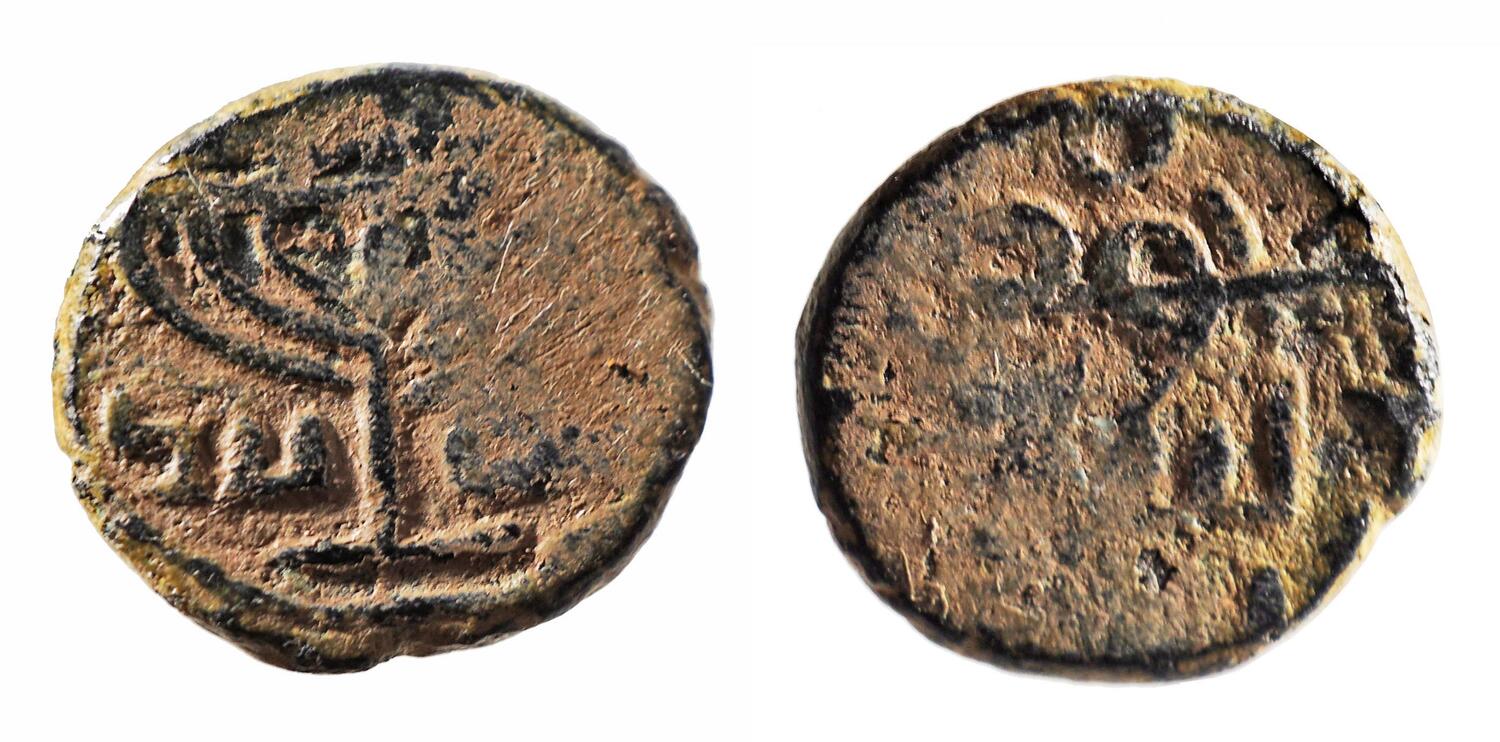

Published in: The Posen Library of Jewish Culture and Civilization, vol. 3: Encountering Christianity and Islam.
You may also like

Muslim Coins

A Book Containing Proofs That the Christians Adopted Their Books without Reliable Testimonies
The Life of Jesus (Toledot Yeshu)
On Moses’ Prophethood and on Circumcision

The Book of Intercalation: On the Christian Calendar
Sefer ha-‘ibbur, Chapter 10
This Hebrew work from 1122 discusses the Jewish (and non-Jewish) calendars, alongside cosmology, astronomy, and historical dates. Here he presents the Christian calendar and Christmas.
How is it that the lovely land
This lamentation poem (kinah) for the Ninth of Av is a response to the Crusader conquest of Jerusalem in 1099.
You may also like
Muslim Coins
A Book Containing Proofs That the Christians Adopted Their Books without Reliable Testimonies
The Life of Jesus (Toledot Yeshu)
On Moses’ Prophethood and on Circumcision
The Book of Intercalation: On the Christian Calendar
Sefer ha-‘ibbur, Chapter 10
This Hebrew work from 1122 discusses the Jewish (and non-Jewish) calendars, alongside cosmology, astronomy, and historical dates. Here he presents the Christian calendar and Christmas.
How is it that the lovely land
This lamentation poem (kinah) for the Ninth of Av is a response to the Crusader conquest of Jerusalem in 1099.