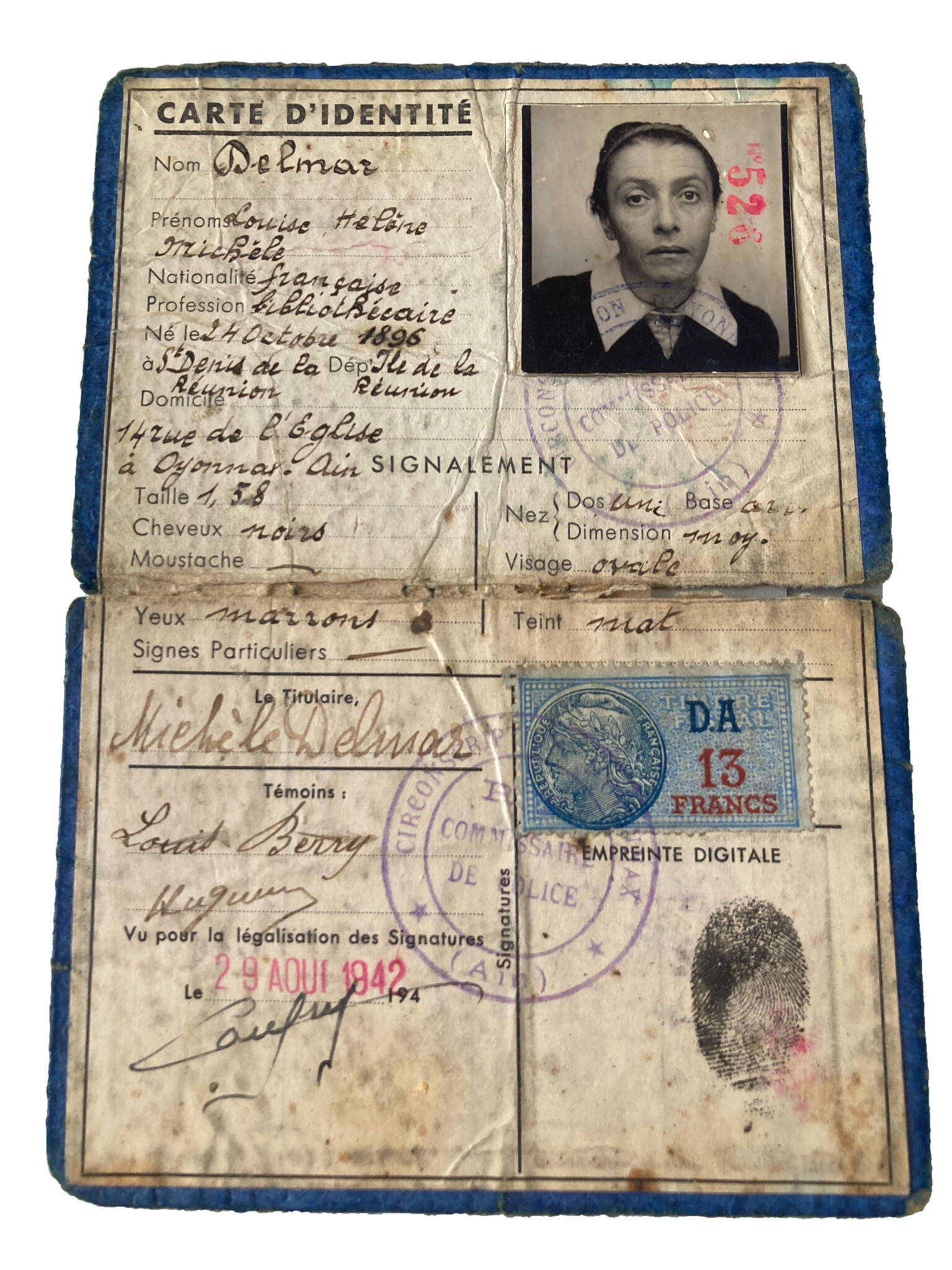
Forged Identities in Nazi-Occupied France
1942
Across Nazi-occupied Europe, Jews were forced to register and carry identity cards marking them for persecution. Forgery and carrying forged papers became acts of survival and resistance. Olga Kagan-Katunal, a Lithuanian-born Jewish activist in France, refused to register and went into hiding, assuming a French identity within the Resistance. Using two forged IDs—one from La Réunion and another from a central French village—she relied on the latter for protection. Throughout the war, she helped produce false papers that saved fellow Jews and political dissidents from arrest and deportation.
Examine the two identity cards carefully. What elements make up each card, and what do they reveal about their holders’ identities? How do the two cards differ?
Forged papers alone did not guarantee survival. What else might have mattered? How might Kagan-Katunal’s experience as a highly educated, multilingual Resistance fighter have differed from others’?
What role might gender have played in shaping resistance work, particularly document forgery?