

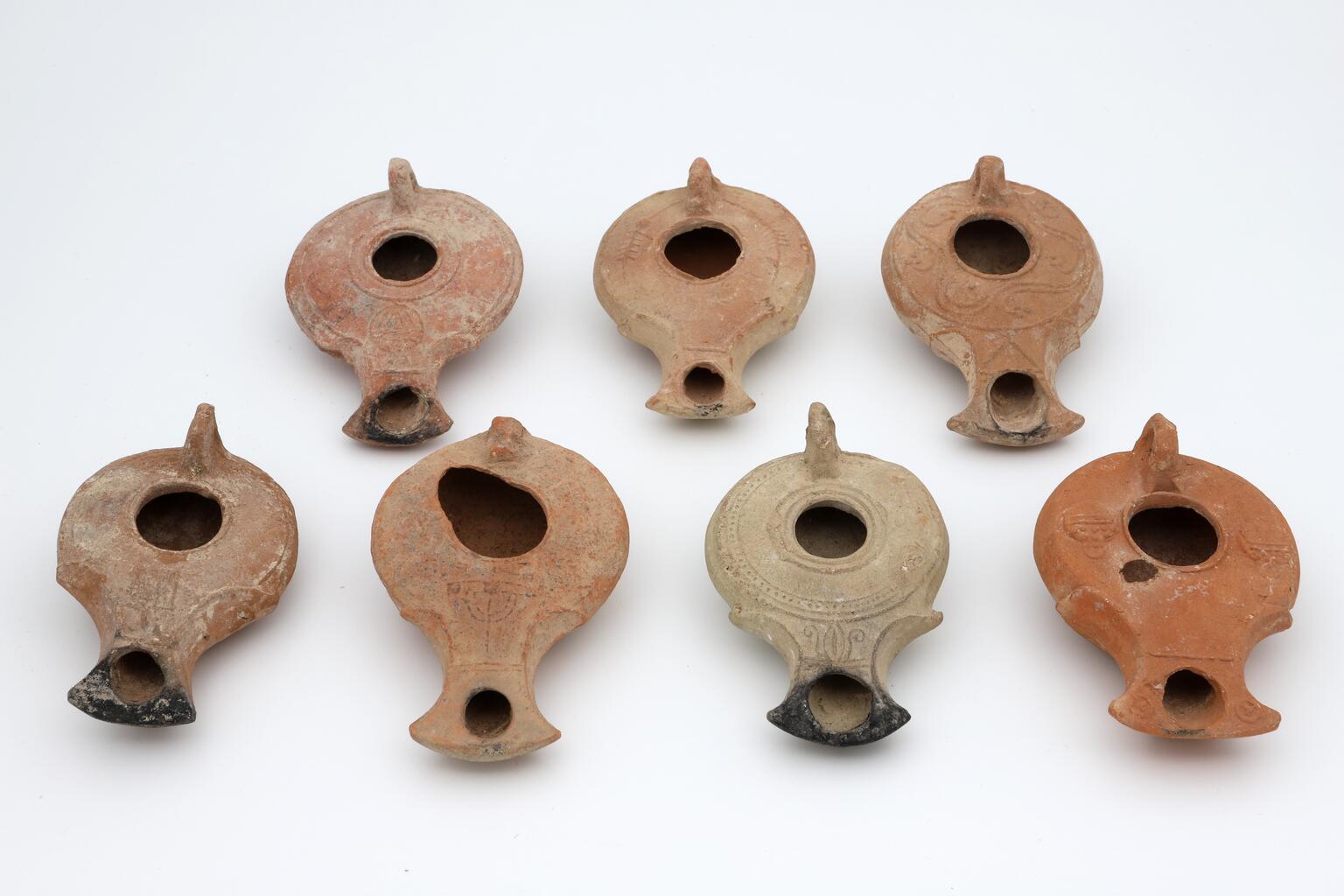
Darom Lamps
Image
Please login or register for free access to Posen Library
Already have an account?
Engage with this Source


Related Guide
Ancient Jewish Material Culture
4th Century BCE–6th Century CE
You may also like

Herodian Lamps
Lamps are important for archaeological work because they are ubiquitous, and their styles changed frequently, unlike pottery, whose styles seemed to endure for some time. Changing lamp styles allow…

Beit Nattif Lamps
This mold (image 1) was used for lamps that were produced in a workshop at Beit Nattif, southwest of Jerusalem, from the third to fifth centuries CE. The lamps produced there (images 2 and 3) were…

Glass Lamps
Glass lamps start to appear in the late fourth and early fifth centuries CE. They had considerable advantages over clay or metal lamps, in that they burned the same amount of oil but provided twice as…

Pompeian Mill
Household pottery was supplemented by a wide range of other essential utensils made of clay, stone, wood, bone, and metal. The earliest wheat grinders were made of two basalt stones between which the…

Olive Presses
In addition to grain, mills in the ancient Mediterranean were used to crush olives for their oil. By the end of the Persian period, olive presses featured a stationary lower stone beneath a large…

Grinding Stone
Grinding equipment, used for food processing, ranged in size from small mortars and pestles used to grind spices and herbs to large millstones used to grind wheat. These implements were typically made…