

Major Tractate on Marriage (Kallah rabbati)
About This Entry
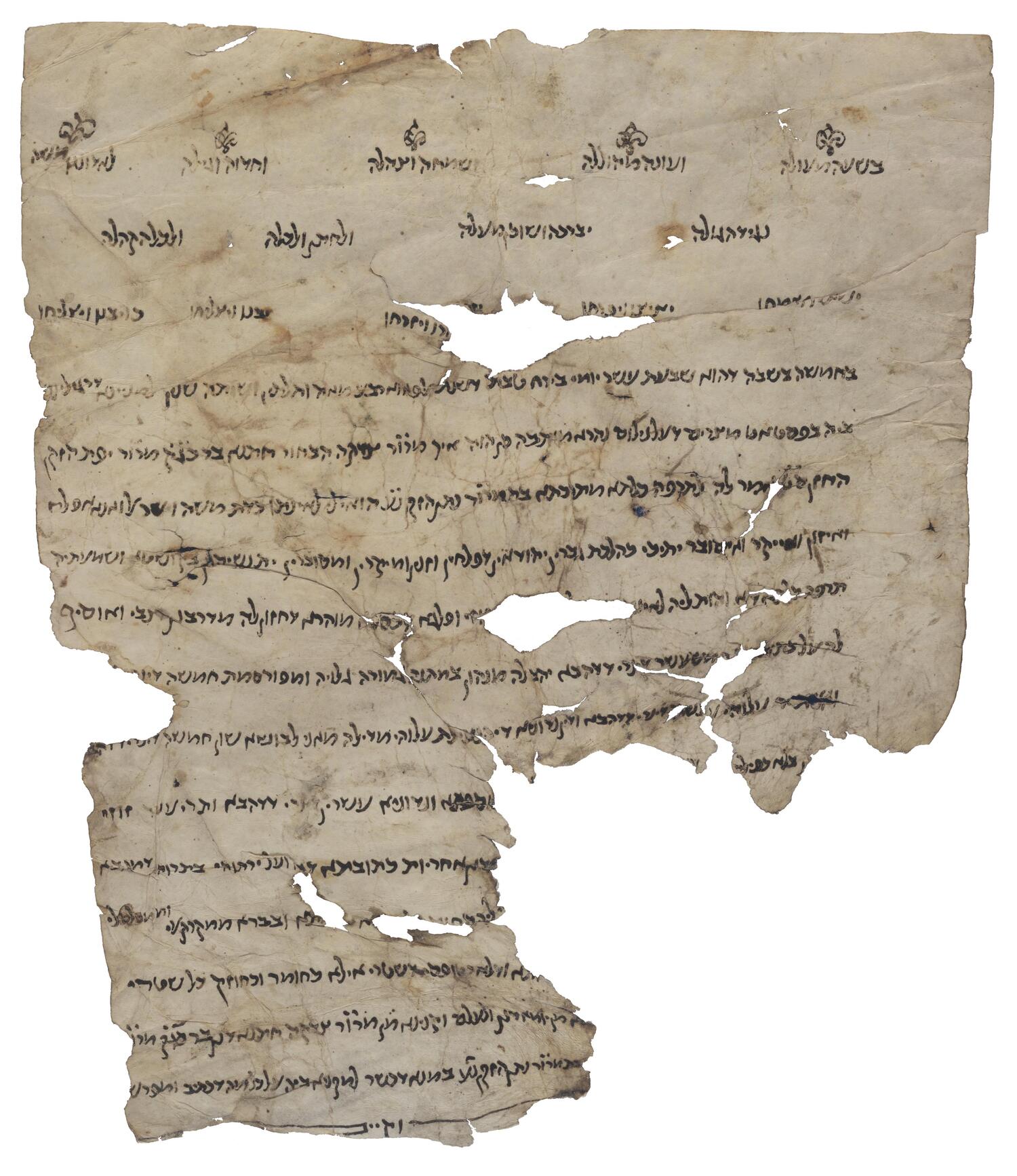
This halakhic work is made up of a “Mishnah” (here called “Baraita”), which may preserve traditions that predate the Babylonian Talmud, and a “Gemara” that postdates the Babylonian Talmud. Despite the title, only the first two chapters deal with marriage and family law. The others treat ethics and Torah study. This Hebrew work circulated widely among Jews in both Muslim and Christian lands, in fluctuating versions.
Baraita: A bride without a blessing is forbidden to her husband like a menstruating woman who has not immersed. Just as a menstruating woman who has not immersed is forbidden to her husband, so too a bride without a blessing is forbidden to her husband.
Gemara: Rava said: With regard to which blessing did they say this? The blessing of seven, not the blessing of betrothal.1 What is the blessing of betrothal? R. Judah said in the name of Rav: “. . . who sanctified us with His commandments and commanded us regarding forbidden relatives, and prohibited to us betrothed women, and permitted to us the married women by means of the wedding canopy and betrothal. Blessed are You, O Lord, who sanctifies Israel by means of the wedding canopy and betrothal.” [ . . . ]
Baraita: One who passes the cup of blessing [of the Grace after Meals] to a woman without her husband’s knowledge is liable to death, because his mind has overcome him. Rabbi [Judah the Prince] says: Because the evil inclination has overcome him.
Gemara: Rava said: Why is she called ishah [woman], referring to esh [fire]; and [he is called] ish [man], also referring to esh? The letters yod of ish and heh of ishah place a Name [of God] between them. If they both grow heated, the Name removes itself from between them, and there is only “fire, fire” left. [ . . . ]
Baraita: R. Yoḥanan ben Dehavai said: The ministering angels told me four things, and they are as follows. Why are there lame people? Because they turn over their tables [i.e., their parents engaged in what might have been regarded as unnatural intercourse]. Why are there blind people? Because they [i.e., their fathers] stare at the genitals. Why are there mute people? Because they kiss the genitals. Why are there deaf people? Because they talk at the time of intercourse.
Gemara: Rava said: All the attributes of the Holy One are measure-for-measure. He turned over his table—the legs of his seed will be turned over. He stared at the genitals, the most hidden place of all; therefore, all will hide themselves from his seed. He discarded the mouth as a speaking organ, to which the power of kissing was given, and kissed the sealed-up place; therefore, the mouth of his seed is sealed. He spoke at a time when he should have remained silent; therefore the ear of his seed turns deaf. Why is he called ḥeresh [deaf]? Because he remains silent, as it is written: And Jacob remained silent [ve-heḥerish] until they arrived (Genesis 34:5). Rava said: And all of these apply when she became pregnant from that intercourse.
Baraita: But the sages say: The law is not in accordance with R. Yoḥanan ben Dehavai. Rather, one may do whatever he wants with his wife. To what is this comparable? To meat that comes from the butcher. If one wants to eat it cooked on coals, he may do so; if he wants to eat it with salt, he may do so. And to what else is this comparable? To fish that comes from the fisherman. If he wants to eat it with salt, he may do so; roasted, he may do so; cooked on coals, he may do so.

Notes
[In early medieval Jewish marriages, there were several steps to be completed. First, a contract of engagement (shidukhin) would be signed, which laid out the financial agreements. Then, the bride and groom would be betrothed (‘erusin), and finally, they would be formally married (nisu’in), which was when the ketubah was written and signed. The “blessing of seven” refers to the seven blessings that are recited during the final marriage ceremony.—Ed.]
Published in: The Posen Library of Jewish Culture and Civilization, vol. 3: Encountering Christianity and Islam.
You may also like

The Laws of R. Abba
Responsum: On Repentant Heretics
Responsum: On Apostasy and Levirate Marriage
The Book of Commandments
Decided Laws (Halakhot pesukot)
Halakhot pesukot (Decided Laws), Laws of Yom Kippur (selections)

The Laws of Ritual Slaughter
You may also like
The Laws of R. Abba
Responsum: On Repentant Heretics
Responsum: On Apostasy and Levirate Marriage
The Book of Commandments
Decided Laws (Halakhot pesukot)
Halakhot pesukot (Decided Laws), Laws of Yom Kippur (selections)