

Aerial View of Iraq el-Amir Castle
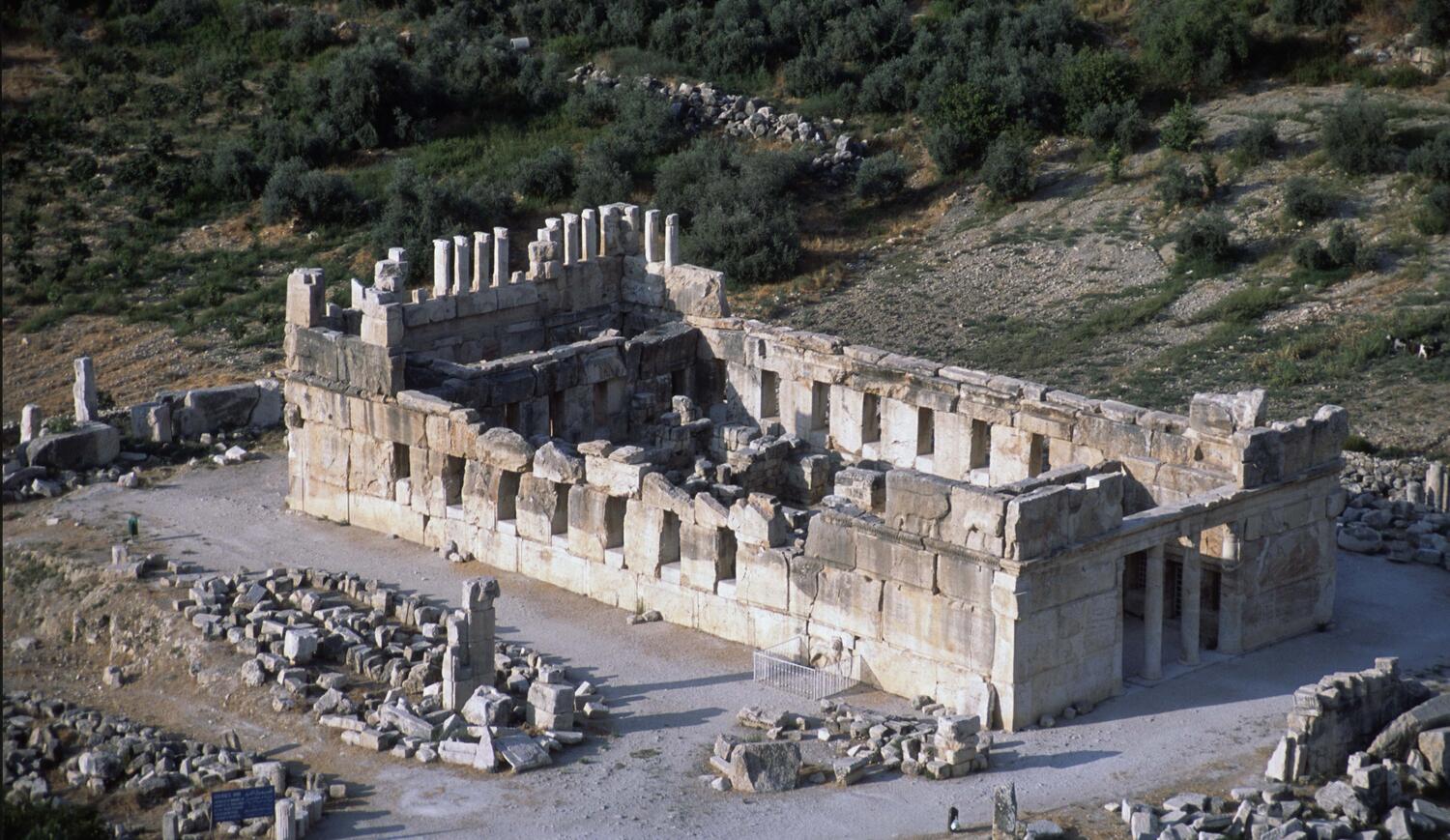

This palace was originally surrounded by a large reflective pool, erroneously interpreted by Josephus as a protective moat. The ruins consist of a monumental rectangular building constructed with large, finely cut stones and adorned with columns topped with Corinthian capitals and an animal frieze. Two leopard-shaped fountains sculpted in relief flank the two long sides of the building.
We’re sorry. The Posen Library’s licensing agreements prevent this image from being printed or downloaded.
Credits
© Aerial Photographic Archive for Archaeology in the Middle East, photograph by David Kennedy.
Published in: The Posen Library of Jewish Culture and Civilization, vol. 2: Emerging Judaism.
You may also like

Zenon Papyrus
The Zenon papyri, a cache of more than two thousand papyrus documents, were discovered in Egypt during the winter of 1914–1915. The documents contain records written by Zenon, an Egyptian official who…

Josephus Recounts the Seleucid Conquest
Jewish Antiquities 12.129–137
During the reign of Antiochus the Great, who ruled over all Asia, the Jews, as well as the inhabitants of Coele-Syria, suffered greatly, and their land was severely devastated. For while he was at war…

Hefzibah Inscription
Hefzibah Inscription
A Seleucid-era Levantine inscription pertaining to the Fifty Syrian War.
Seleucus Tries to Confiscate the Temple Treasure
2 Maccabees 3:13–40
But Heliodoros, because of the orders he had from the king, said that this money must in any case be confiscated for the king’s treasury. So he set a day and went in to direct the inspection of…

The Heliodoros Stela
Dorymenes to Diophanes, greetings. The copy of the letter handed over to us by Heliodoros who is in Charge of the Affairs is enclosed. You will therefore do well if you take care that everything is…

Tobyah Inscription
This inscription spelling out tobyah is probably a reference to the family of Hyrcanus, said to have descended from a man named Tobias. The inscription is engraved on the right side of a cave entrance…
Engage with this Source

Related Guide
Judea under Ptolemaic and Seleucid Rule
3rd–1st Centuries BCE
Conflicts between the Ptolemaic and Seleucid dynasties shaped ancient Judea and eventually led to the Hasmonean revolt.
You may also like
Zenon Papyrus
The Zenon papyri, a cache of more than two thousand papyrus documents, were discovered in Egypt during the winter of 1914–1915. The documents contain records written by Zenon, an Egyptian official who…
Josephus Recounts the Seleucid Conquest
Jewish Antiquities 12.129–137
During the reign of Antiochus the Great, who ruled over all Asia, the Jews, as well as the inhabitants of Coele-Syria, suffered greatly, and their land was severely devastated. For while he was at war…
Hefzibah Inscription
Hefzibah Inscription
A Seleucid-era Levantine inscription pertaining to the Fifty Syrian War.
Seleucus Tries to Confiscate the Temple Treasure
2 Maccabees 3:13–40
But Heliodoros, because of the orders he had from the king, said that this money must in any case be confiscated for the king’s treasury. So he set a day and went in to direct the inspection of…
The Heliodoros Stela
Dorymenes to Diophanes, greetings. The copy of the letter handed over to us by Heliodoros who is in Charge of the Affairs is enclosed. You will therefore do well if you take care that everything is…
Tobyah Inscription
This inscription spelling out tobyah is probably a reference to the family of Hyrcanus, said to have descended from a man named Tobias. The inscription is engraved on the right side of a cave entrance…