

The Book of Musta‘īnī
Image
Please login or register for free access to Posen Library
Already have an account?
You may also like

The Garden of Wisdom
The world did not create itself since it is impossible for a thing to create itself, to originate its own essence. For if things created themselves, they would be autonomous, perfectly free in their…


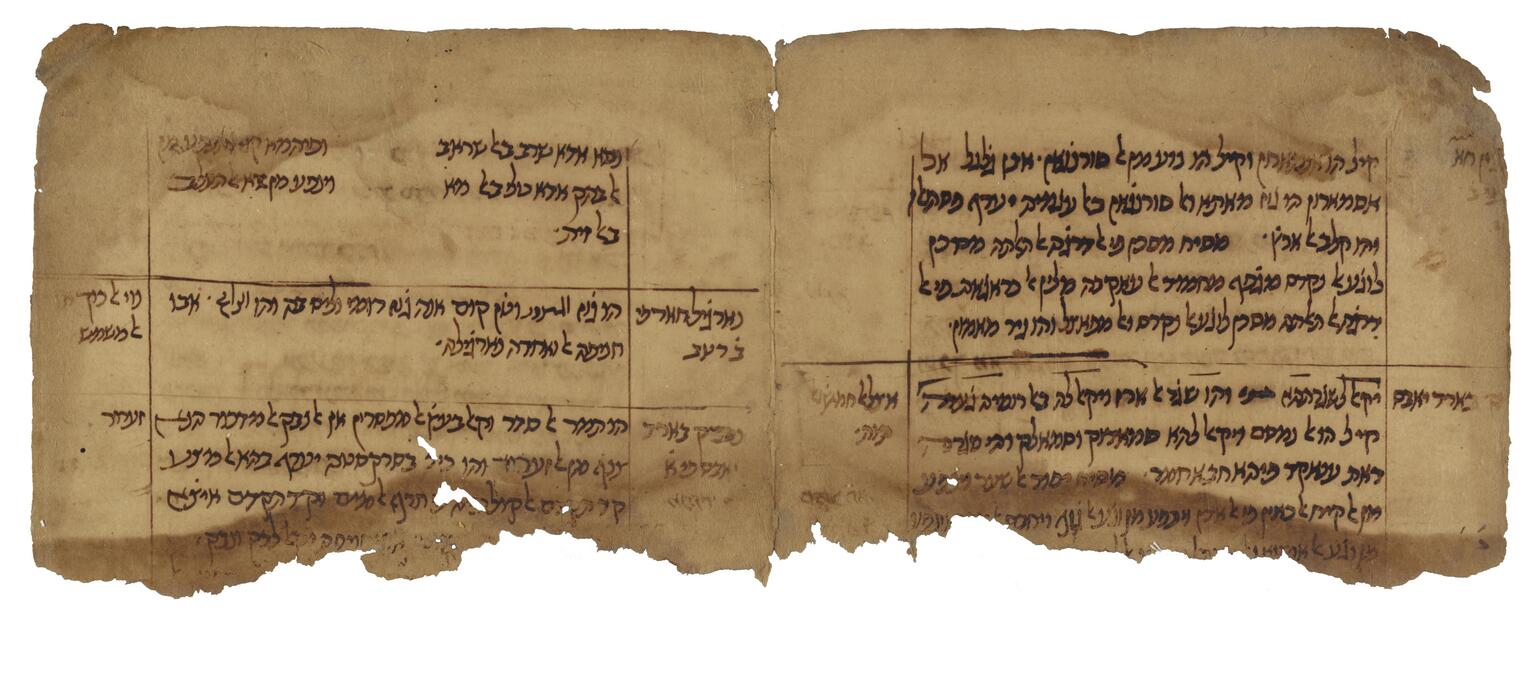
A Manuscript Page from The Book of Musta‘īnī
The Book of Musta‘īnī consists of a mostly alphabetical list of 704 medicinal components, identified in Arabic and presented in tabular format. The author names the ingredients in a startling variety…
Letter to Judah Barzillai of Barcelona
It is said that the first science of the sciences of the stars is the investigation of the form of the earth and the heavens and their shapes; and to give proofs and evidence that they [the heavens]…
Treatise on the Jewish Calendar
The procedure of tequfah, what is it and what danger is there? It is already written in the [part describing the sun’s] motion. Apart from that, see what I have found, that there are those who rely…
Scroll of the Revealer
Megilat ha-megaleh, Introduction, Chapters 2, 5 (selections)
Anything whose basic principle is from the Torah and provides good for Israel in this exile, or encourages them in their faith, or serves to increase their trust and hope in God is good for a person…
The Kuzari: The Beliefs of the Philosopher
The Kuzari, I.1.1-2.
1.1. I was asked about whatever argumentation I had against those who differ with us, such as the philosophers and the adherents of [other] religions, as well as the dissenters who differ with the…