

Cairo Codex: Colophon
About This Entry
The Masorete Moses Ben Asher wrote this colophon (the closing statement by the scribe at the end of a manuscript) for a magnificent Hebrew Bible codex. While the colophon states that this work was written in 895, it has been shown using carbon dating and other techniques that the manuscript is actually a copy of that written by Moses Ben Asher and likely dates to the eleventh century. Moses’ work drew on an already-long tradition of analysis and careful transmission of scriptural works. In several places, this text deviates from what is known to have been the Tiberian tradition of biblical pointing and signs. This manuscript remained in the Cairo Karaite community for centuries, having originally been copied for a Jerusalem-based Karaite, Ya‘bets ben Solomon.
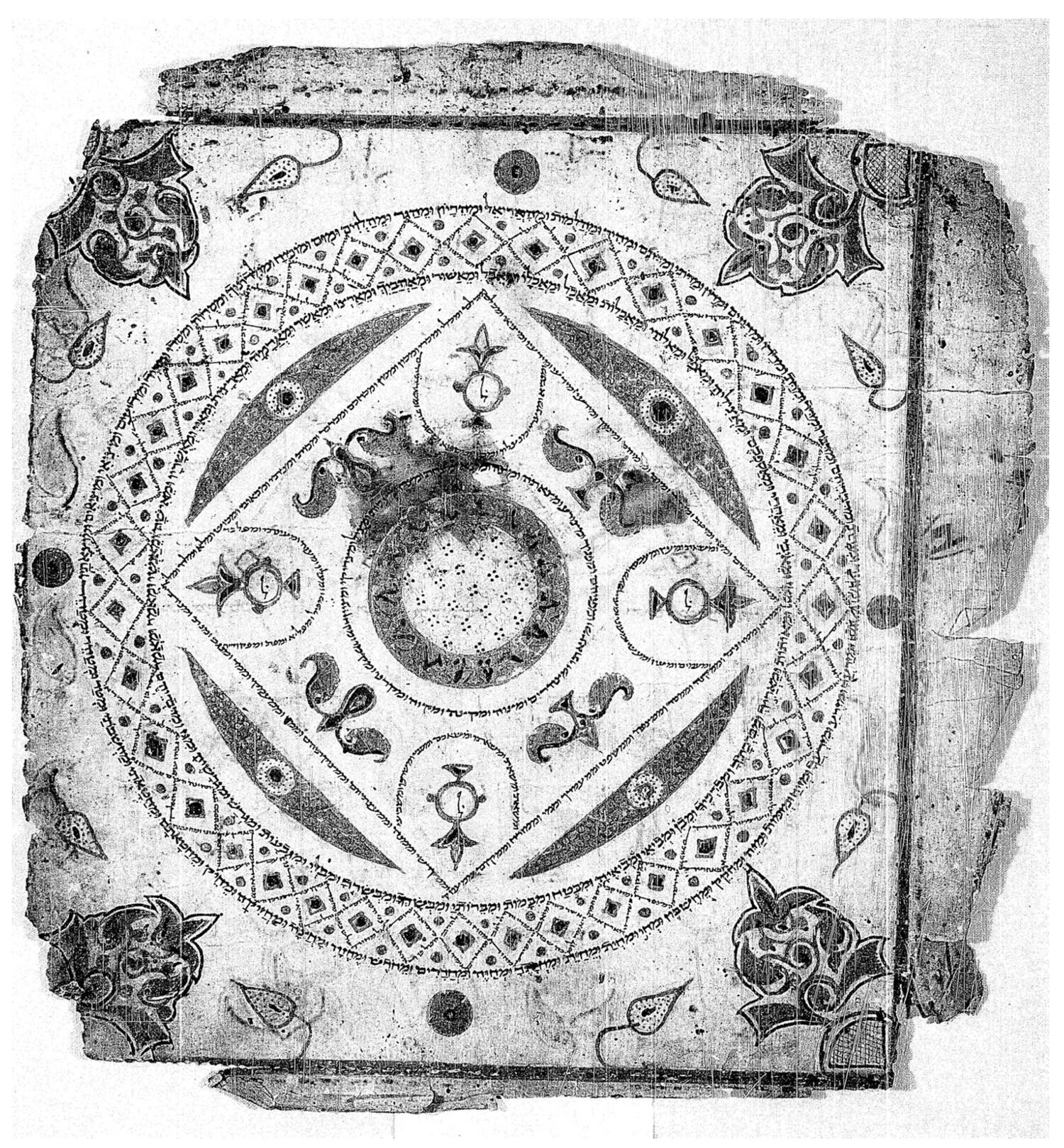

I, Moses Ben Asher, wrote this holy book of the Bible, dictated by myself, in accordance with the good hand of the Lord upon me [see Nehemiah 2:18], very clearly (Deuteronomy 27:8), in the province of Maaziah [see Nehemiah 10:9, 1 Chronicles 24:18], which is Tiberias, the renowned city (Ezekiel 26:17). Upon gaining understanding, the company of prophets—the chosen of the Lord, holy ones of God, who comprehend all secret matters, and who disclose the secret of wisdom, the mighty ones of righteous ness and men of faith—did not omit one word of what was handed down to them, nor did they add one saying to what was bequeathed to them. They strengthened and increased the Bible to twenty-four books, which they established through their faith, with sound accents, with a commentary to aid pronunciation, with sweet palate and beautiful speech. May it be our Creator’s will that He enlighten our eyes and illuminate our heart in His Torah, to learn, teach, and act, with a perfect heart and with a willing soul (1 Chronicles 28:9), and for all Israel. Amen.
It was composed at the end of the 827th year after the destruction of the Second Temple [897]—may the fashioner of souls [i.e., God] speak of it and return to it in compassion, and build it with carbuncles, sapphires, and rubies [see Isaiah 54:11–12], a perfect building, a lasting building, a building that shall neither be plucked up, nor thrown down, nor demolished [see Jeremiah 31:39], forever and for eternity, speedily, in our days, and in the days of all Israel. Amen.
Whoever alters a word of this holy book or of this text, or erases a letter from it, or tears a leaf from it—unless he understands and knows that it contains something in which we have erred, in writing, or in punctuation, or in the Masorah, or in defective or complete spelling—let him have neither pardon nor forgiveness, nor let him behold the beauty of the Lord [see Psalm 27:4], nor let him see the good that is stored up for those who fear Him. Let him be like a menstruating woman and like a leprous man, locked away, [so that] his limbs are crushed, the pride of his power broken [see Ezekiel 33:28], his flesh consumed until it cannot be seen, and his bones corroded to unsightliness [see Job 33:21]. Amen.
Whoever reads shall hear, whoever hears shall understand, and whoever sees shall become wise. Peace.
Credits
Cairo Codex, p. 582, in Elvira Martín-Contreras, “Las páginas tapiz hebreas a partir de sus textos” (Exploring Hebrew Carpet Pages through their Texts), Sefarad, vol. 80, no. 1 (January-June 2020): 7–24 (12), doi:10.3989/sefarad.020-001. © 2020 CSIC. Licensed under (CC BY 4.0).
Published in: The Posen Library of Jewish Culture and Civilization, vol. 3: Encountering Christianity and Islam.
You may also like

An Early Manuscript Copy of the Book of Word Pairs

Fine Details of the Accents
Dikduke ha-te‘amim
A Masoretic treatise that describes the vocalization and the accents of Hebrew words.
Epistle
Risāla
A Judeo-Arabic letter addressed to the Jews of Fez arguing for reading the Targum with the weekly Torah reading.
Book of the Principles of Hebrew Poetics
Kitāb usūl al-shi‘r al-‘ibrānī
Book of the Seventy Isolated Biblical Words
Kitāb al-sab‘īn lafẓa al-mufrada

You may also like
An Early Manuscript Copy of the Book of Word Pairs
Fine Details of the Accents
Dikduke ha-te‘amim
A Masoretic treatise that describes the vocalization and the accents of Hebrew words.
Epistle
Risāla
A Judeo-Arabic letter addressed to the Jews of Fez arguing for reading the Targum with the weekly Torah reading.
Book of the Principles of Hebrew Poetics
Kitāb usūl al-shi‘r al-‘ibrānī
Book of the Seventy Isolated Biblical Words
Kitāb al-sab‘īn lafẓa al-mufrada