

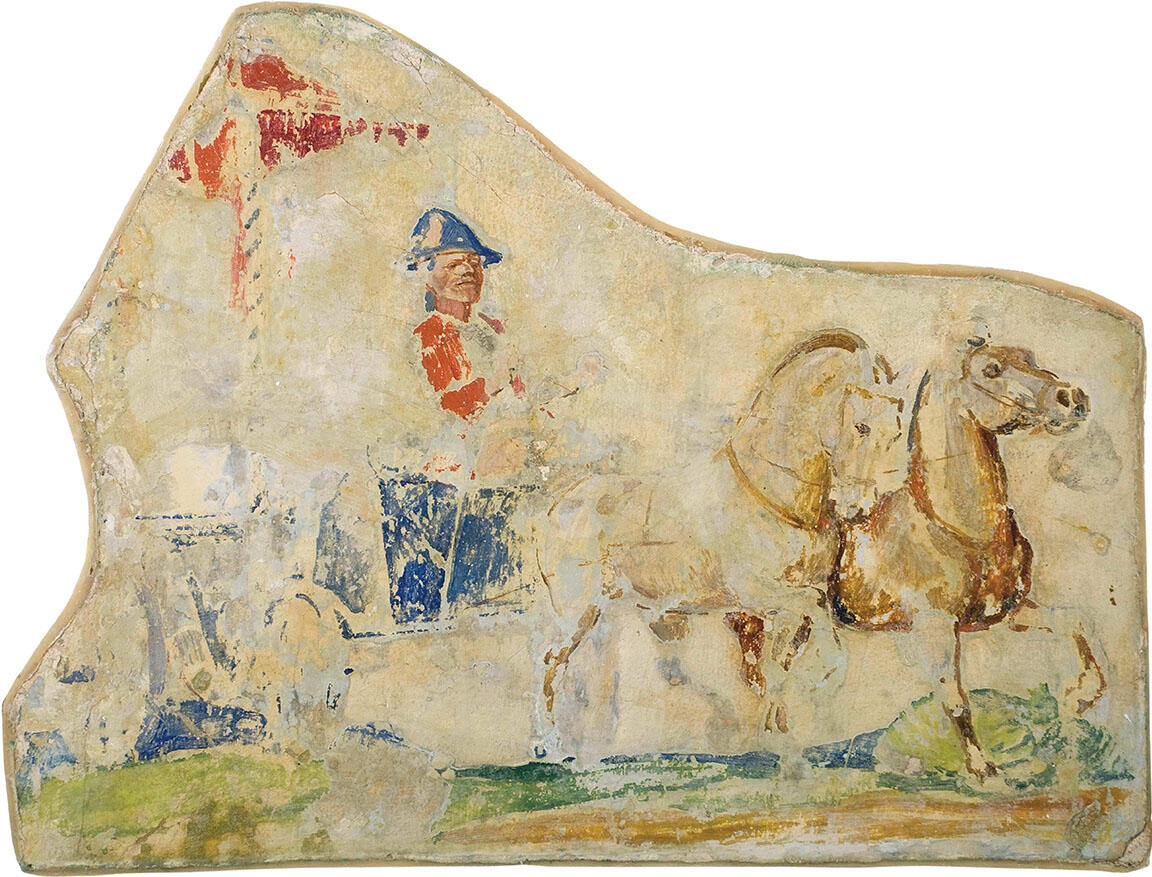
Carriage Driver (Self-Portrait), Drohobycz
Image
Please login or register for free access to Posen Library
Already have an account?
You may also like


Refugees
Refugees is very different in style from Josef Herman’s later work. In 1948, the artist disowned his earlier paintings (which he felt were too derivative of Chagall’s paintings) and destroyed most of…

Gouache from Leben? Oder Theater?: Ein Singspiel (Life? or Theater? An Operetta), #4351
To ward off depression while living as a refugee in France, Charlotte Salomon began telling the story of her life in the form of a drama, in hundreds of gouache paintings. This painting depicts her…

Kerch, Crimea (Grief)
When Dmitri Baltermants took this picture in January 1942, he and the other Soviet photographers who were accompanying liberating troops did not at first understand what they were seeing. Were these…

Casablanca, Poster for the Film
Bill Gold designed more than one poster for Casablanca, including one featuring Humphrey Bogart wielding a gun. Over his seventy-year career, he designed thousands of movie posters, tailoring the…

Leave Taking before Deportation
In January 1942, the Nazis began the large-scale deportations of Jews and Roma from the Łódź Ghetto to the Chełmno killing center, where, by the end of that September, they had murdered about 70,000…

Leaving a Son to the Partisans, Leningrad
Mikhail Trakhman was one of several Soviet photographers dropped behind enemy lines by Sovinformburo, the main Soviet agency for the distribution of war-related information, to report on partisans who…