

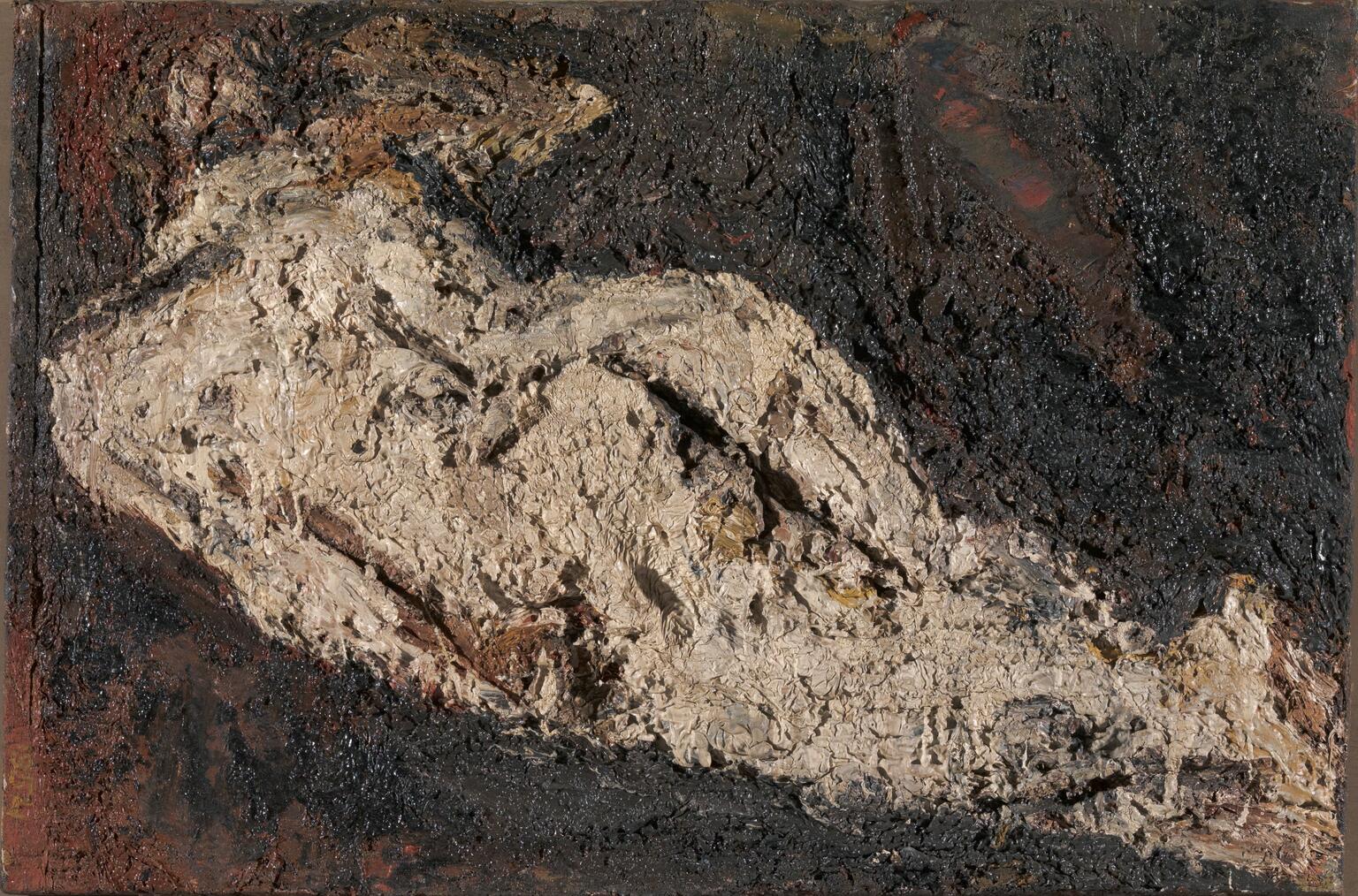
E. O. W. Nude
Image
Please login or register for free access to Posen Library
Already have an account?
You may also like


In the Ma‘abarah
Ruth Schloss’s artworks were infused with her commitment to social justice and egalitarianism. This painting of a ma‘abarah (refugee absorption camp), made at a time when the new State of Israel was…

Ritual Figure
Though he later turned to a more abstract style, Elbert Weinberg was still making figurative sculptures in the early 1950s, when a trend toward pure abstraction was already dominant. But Ritual Figure…

Nahal Oz
Nahal Oz, located in the Negev close to the border of the Gaza strip, was founded in 1951 as Israel’s first Nahal settlement. These were established by soldiers to provide a first line of defense…

Dancers Resting
The female figure, especially dancers, were a favorite subject for Moses Soyer. He was especially inspired by Edgar Degas and Honoré Daumier, whose paintings he had the opportunity to examine…

Nahalat Binyamin Street, Tel Aviv
Nahalat Binyamin Street was the longest road in the city during Tel Aviv’s earliest years. In the 1920s, it was paved and became Tel Aviv’s main commercial street. Over the next few decades, new…

The Strabismic Jew
The Strabismic Jew is one of Baskin's most famous prints. “Strabismic” means “squinting” and, indeed, the Yiddish inscription reads “The Jew with the squinty eyes.” In this enigmatic woodcut, the face…