

In the Ma‘abarah
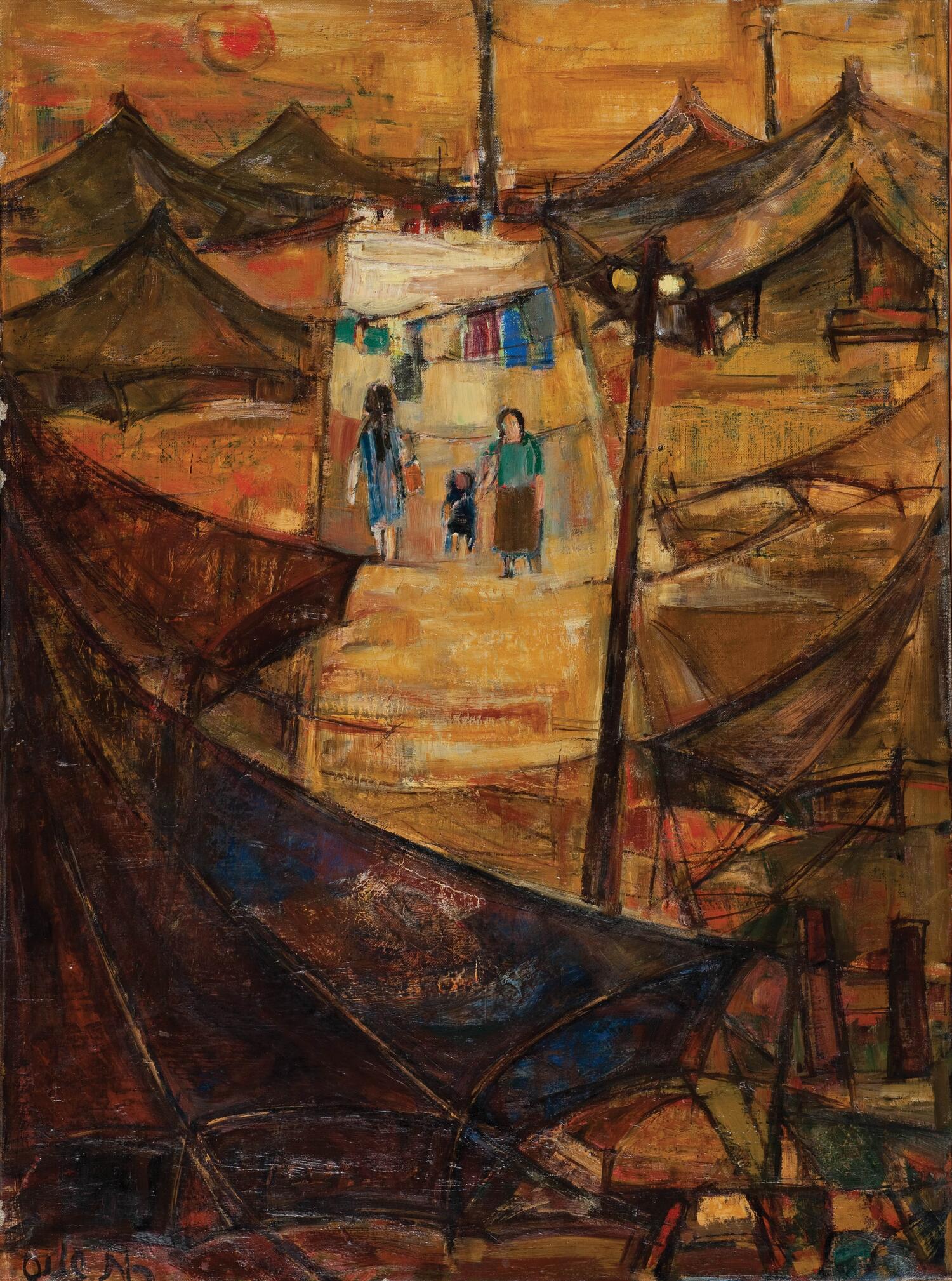

Ruth Schloss’s artworks were infused with her commitment to social justice and egalitarianism. This painting of a ma‘abarah (refugee absorption camp), made at a time when the new State of Israel was struggling to take in hundreds of thousands of arriving immigrants, emphasizes the crowded conditions. In the center of a jumble of tents, painted in muddy hues, is a brightly colored patch illuminating women, children, and a clothesline, suggesting hope in the midst of hardship.
Credits
Collection of Mishkan Museum of Art, Ein Harod, Israel.
Published in: The Posen Library of Jewish Culture and Civilization, vol. 9.
You may also like

L’Unité d’habitation à Nantes-Rezé

Temple Emanuel Sanctuary Wall (Grand Rapids, Michigan)
The mural covering this synagogue’s wall includes biblical imagery and abstract designs representing the creation of the world.

Superduperman, Mad #4

Ritual Figure

E. O. W. Nude

Nahal Oz
You may also like
L’Unité d’habitation à Nantes-Rezé
Temple Emanuel Sanctuary Wall (Grand Rapids, Michigan)
The mural covering this synagogue’s wall includes biblical imagery and abstract designs representing the creation of the world.
Superduperman, Mad #4
Ritual Figure
E. O. W. Nude