

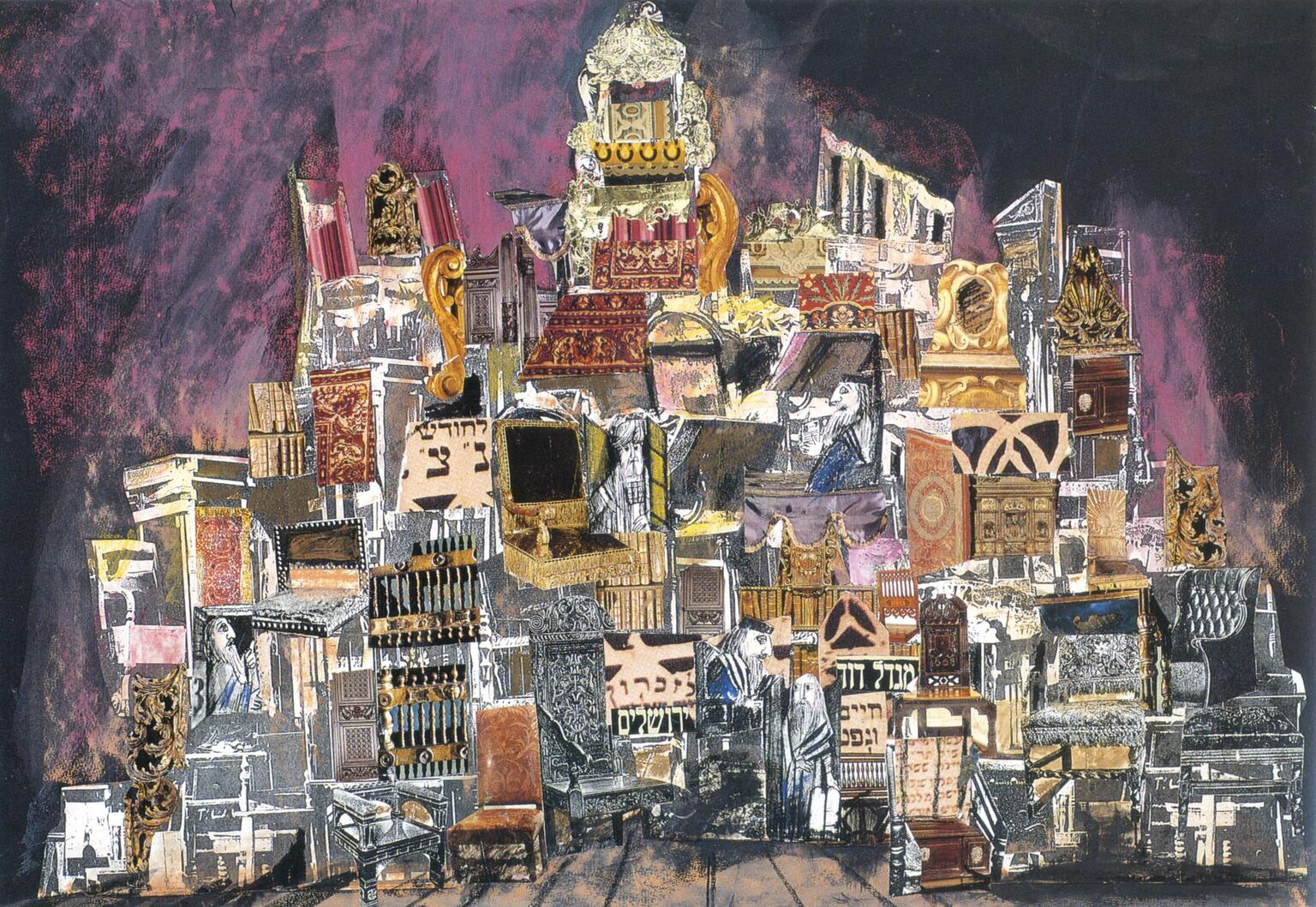
Golem, Teatro La Pergola, Firenze
Image
Please login or register for free access to Posen Library
Already have an account?
You may also like


Daniel Cohn-Bendit Jumping the Police Barricade
Daniel Cohn-Bendit was a student leader during the protest in France in May 1968, when up to ten million workers went on strike and 800,000 people marched through Paris. Here he vaults a police…

Untitled
Raffi Lavie was a leader of the Tel Aviv School, or 10+ group, made up of artists who were among the first in Israel to incorporate pop art, found objects, and collage into their work. In the early…

Boots, Gallery House, Jerusalem
Boots was composed of 17,000 pairs of army boots piled up in the gallery. The boots are an obvious reference to soldiers in the IDF (Israel Defense Forces), but also evoke the piles of shoes of…

Let My People Go poster
This poster of the Soviet Jewry movement, which, from the mid-1960s to the late 1980s fought for the right of Jews to emigrate from the Soviet Union, uses a hammer and sickle, a symbol of communism…

New York City, Three Women
The street photographer Garry Winogrand said he was motivated by wanting “to see what the world looks like in photographs.” He didn’t regard his photos as identical with the reality of the scenes he…

Farb Family Portrait
In the 1960s, Audrey Flack began to paint photorealistic pictures with social and political themes, reproducing photographs of people from all walks of life, as well as everyday objects. Farb Family…