

Ketubah between God and Israel for Shavuot
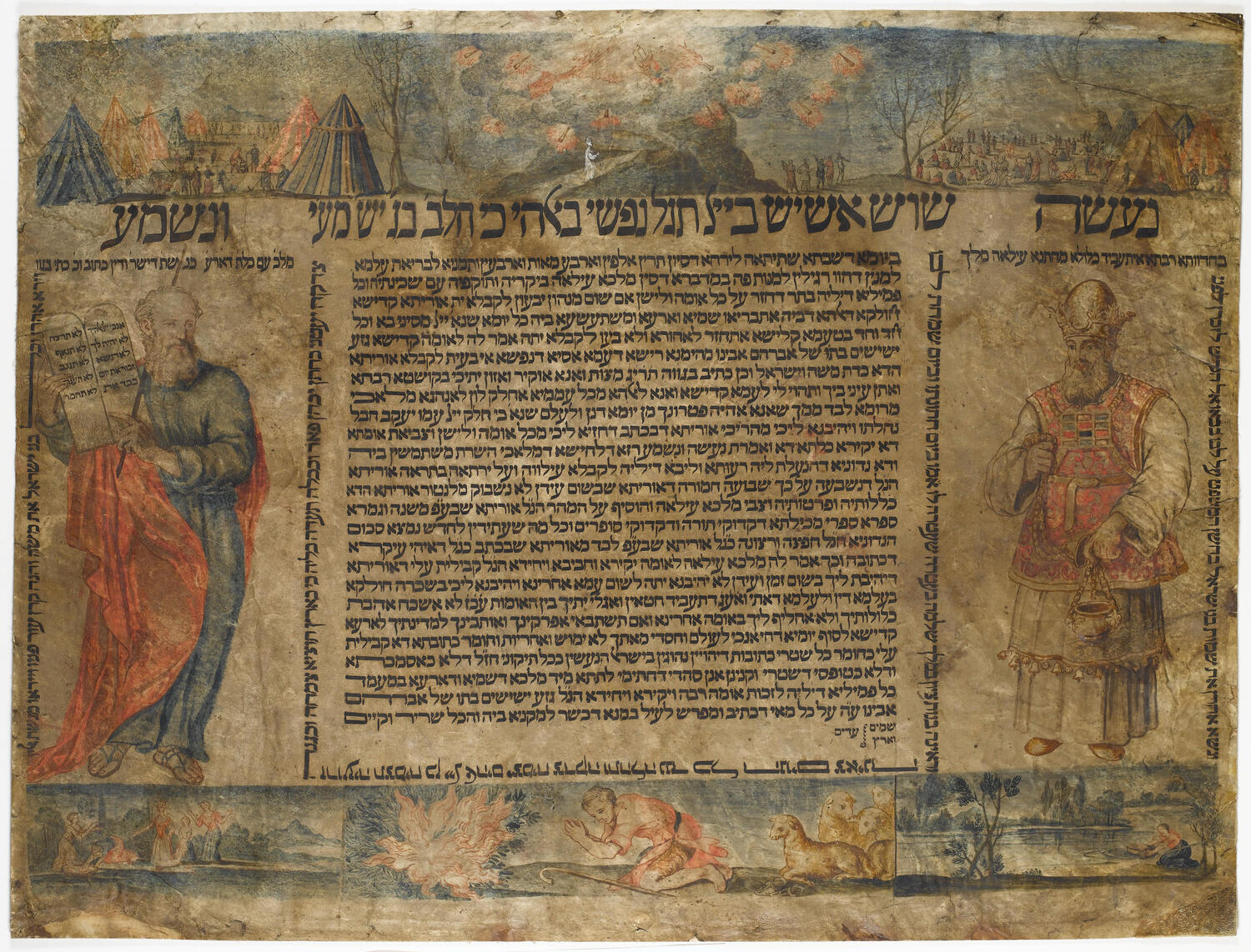

In the Sephardic tradition, a “marriage contract” (ketubah), a symbolic betrothal of God and Israel, is read before the Torah reading on the first day of the holiday of Shavuot, which celebrates the giving of the Torah to the people of Israel. This rare example of such a ketubah is from Italy. The figures of Moses and Aaron stand to either side of the text, and other stories from the life of Moses are illustrated above and below it.
Credits
Marriage Contract for Shavuot. Gift of Dr. Harry G. Friedman / The Jewish Museum, New York.
Published in: The Posen Library of Jewish Culture and Civilization, vol. 5.
You may also like

A Prose Ketubah for Shavuot
Her bitter soul is anguished: For Tishah be-Av

Kiddush Cup (Nuremberg)
Yosef omets (He Will Be Stronger): On the Ten Days of Repentance

Torah Ark in the Klausen Synagogue
Yosef omets (He Will Be Stronger): On Yom Kippur Eve

Related Guide
Early Modern Rabbis and Intellectuals on the Move
Carrying books and knowledge, itinerant rabbis and scholars traveled between communities, facilitating cultural exchange.

Related Guide
Early Modern Italy: Where East and West Meet
Ashkenazim, Sephardim, and Marranos encountered each other in Italian cities, developing community structures that later influenced Jewish communal organization throughout the western world.

Related Guide
Early Modern Religious Practices
Early modern Jews both preserved tradition and innovated. Documents and legal texts reveal rich details about synagogue life, marriage, family relations, and death rituals.
You may also like
A Prose Ketubah for Shavuot
Her bitter soul is anguished: For Tishah be-Av
Kiddush Cup (Nuremberg)
Yosef omets (He Will Be Stronger): On the Ten Days of Repentance