

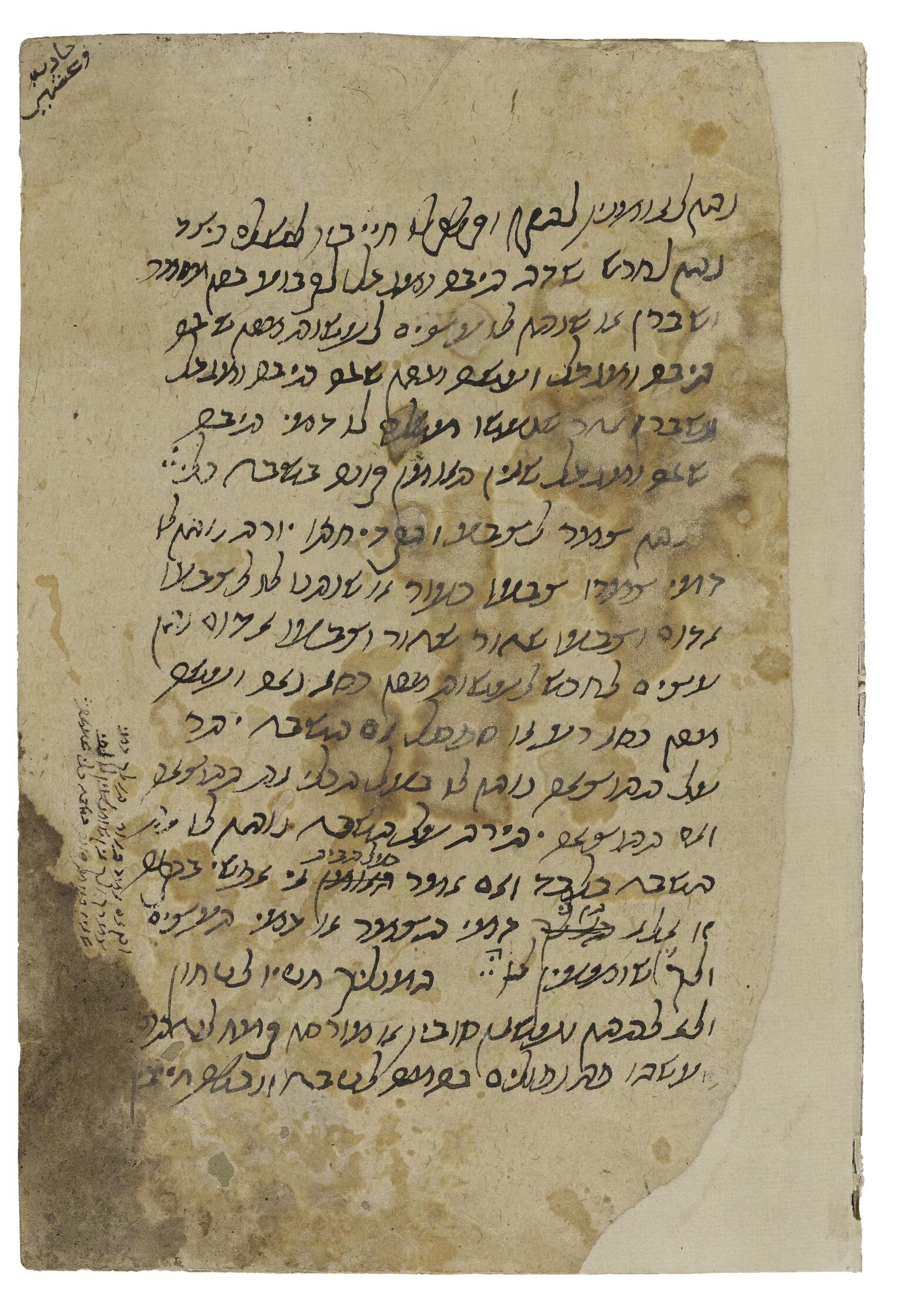
Mishneh Torah
Image
Please login or register for free access to Posen Library
Already have an account?
You may also like

Decree on Menstrual Purity
Build up, build up, clear the way! Remove a stumbling block from my people’s way (Isaiah 57:14).
We, the scholars living in Egypt at this time, say: When we were brought together in this region from…


Book of God-Fearers
Sefer yere’im, vol. 2, page 6, section 239
You shall fear your God and observe that which He commanded in Parashat Shoftim: There shall not be found among you anyone who passes his son or his daughter through the fire, one who uses…
The Book of Commandments
Sefer ha-mitsvot, Introduction (selections)
The first principle of these, that it is not appropriate to count in this sum commandments which are rabbinic.
Know that this matter should not require noting due to its obviousness, for…
Book of the Pious
Ba‘ale ha-nefesh, Chapter of Holiness
Now we must know and understand what is the appropriate intention in that [i.e., sexual] deed, and what is the intention that corrupts it and abrogates its reward and renders…
Responsum: On Burial in a Crypt
Question: The question [was asked] of R. Natronay: “What is the correct way to bury [a dead person]—is it to place him in a crypt and to place a slab of stone above the crypt so that the dirt and mud…
Critical Notes on the Mishneh Torah: On Graven Images
Critical Notes on Maimonides, Mishneh Torah, Laws of Idolatry and the Ruling of the Nations 3:11
Regarding a ring with a seal that bears a human image, if the image protrudes, it is prohibited to wear it, but it is permitted to use it as a seal. If the image is sunken, it is permitted to wear it…