

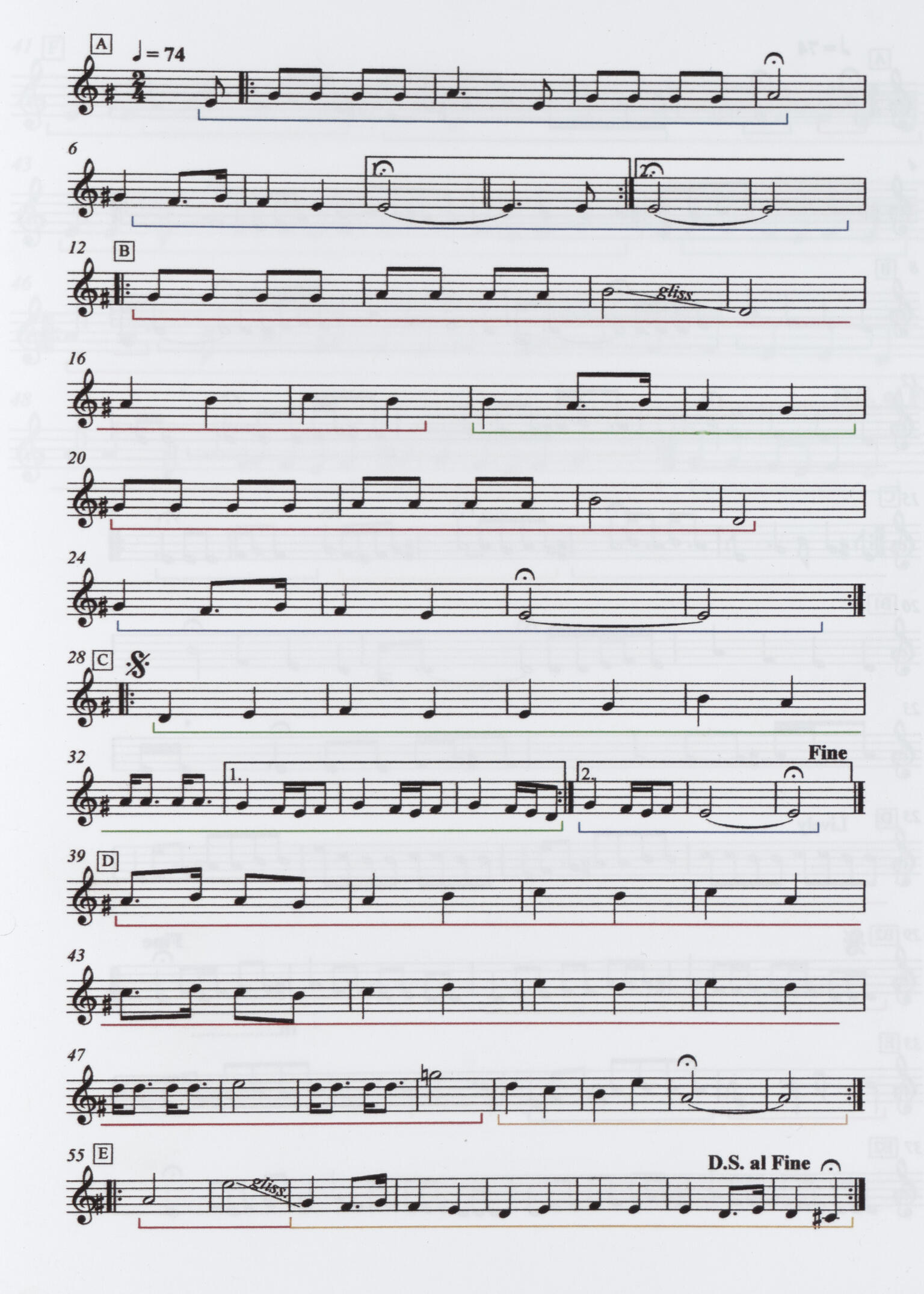
Niggun of Four Stanzas
Image
Please login or register for free access to Posen Library
Already have an account?
Engage with this Source


Related Guide
Music and Opera in Jewish Culture
1750–1880
One of the most striking changes in European Jewish culture toward the later eighteenth century was marked by the entry of Jews into art music, opera houses, and the stage.
You may also like

Song Settings for the Poet Lord Byron’s Hebrew Melodies
Hebrew Melodies was a collaboration between the English poet Lord Byron (1788–1824) and his friend, the Jewish composer Isaac Nathan. It is a collection of thirty poems by the poet, set to music by…

Shir hama‘alot (Song of Ascents)
“Shir ha-ma‘alot (Song of Ascents),” Psalm 126, is customarily recited or sung before the Grace After Meals on the Sabbath and festivals. There are many different tunes for the song. A Yiddish…

Marsch der Israelitischen national Garde in Warschau
This illustration depicts three Polish Jewish soldiers taking part in the Polish uprising of 1830 and 1831. The rendering of an “Israelite National Guard in Warsaw” alongside solemn, patriotic music…

Duette: Mein Liebchen, wir sassen beisammen (Duet: My Sweetheart, We Sat Together)
Fanny Mendelssohn Hensel wrote numerous songs, piano compositions, cantatas, and other musical works, which were not published in her lifetime. The illustration on this hand-written manuscript…

Ancienne melodie de la synagogue
Charles-Valentin Alkan was the first composer to incorporate Jewish melodies in art music. His “Ancienne melodie de la synagogue,” a prelude for solo piano or organ, was published in 1847, along with…
Hallelujah: Eine Cantatine für 4 Männerstimmen mit begleitung einer obligaten orgel und des chores ad libitum
The manuscript is believed to be the earliest extant Reform Jewish liturgical composition. An early example of the work of Giacomo Meyerbeer, “Hallelujah” was probably prepared for use at a service at…