

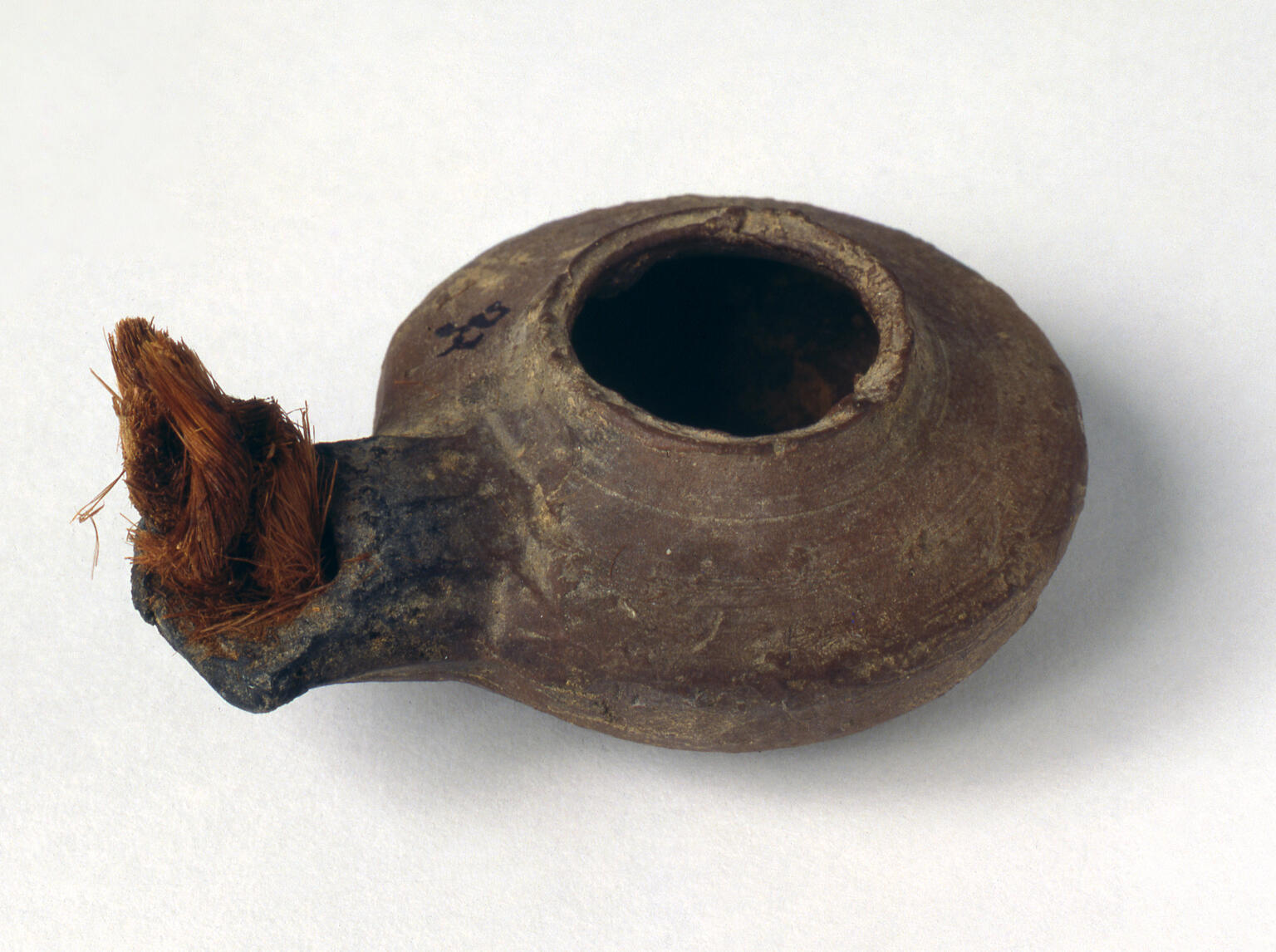
Oil Lamp with Original Wick
Image
Please login or register for free access to Posen Library
Already have an account?
You may also like


Qumran Caves 4 and 5
These caves, discovered by Bedouin shepherds at the end of the British Mandate period (1918–1948), contained numerous scrolls and scroll fragments, which came to be known as the Dead Sea Scrolls, in…

Earthenware Jar, Qumran
Many cylindrical earthenware jars were found in the caves surrounding the site of Qumran. The jars contained fragments of ancient documents written in the first century BCE and the first century CE…

Scriptorium, Qumran
The presence of plastered benches and inkwells in this part of the Qumran site suggests that it may have been used for writing and copying manuscripts, including the manuscripts found in the caves…

Room with Benches, Qumran
Located next to the scriptorium, this room had low benches around its perimeter and contained a few small clay lamps that could be used for reading, which has led some scholars to suggest that it was…

Large Cistern, Qumran
The settlement at Qumran contained a number of cisterns, mikvaot, and pools and channels for water, suggesting a concern with purity (also reflected in sectarian texts found at the site), which…

The Heavenly Prince Melchizedek
[ . . . ] . . . [ . . . ] [ . . . ] And as for what he said: In [this] year of jubilee, [you shall return, each one, to his respective…