

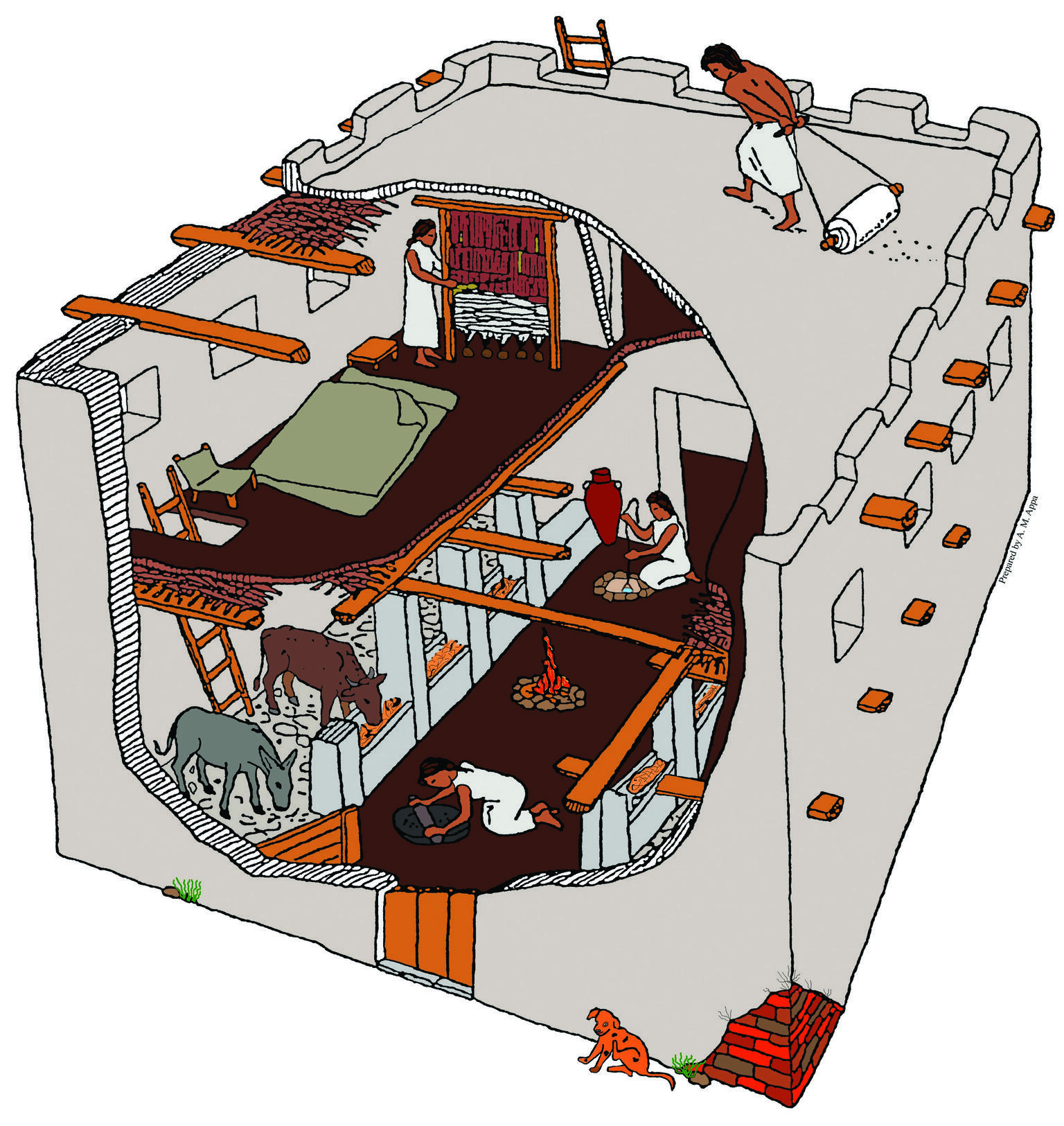
Pillared House
Image
Please login or register for free access to Posen Library
Already have an account?
Engage with this Source


Related Guide
Architecture of Ancient Jewish Houses and Palaces
4th Century BCE–6th Century CE
You may also like

Ashlar Masonry Wall in Samaria Acropolis
The masonry in the royal palace of Samaria, the capital of the Northern Kingdom, is considered the finest example of ashlar masonry from the Iron Age. The blocks are cut so well that they fit together…

Crenellation from Ramat Rahel Palace
Several stone crenellations, like the one shown in this computer reconstruction, with each of the upper layers shorter and narrower than the one below, were found broken into pieces at the palace at…

Volute Capital from Ramat Rahel Palace
The palm and the palmette are common iconographic elements in ancient Near Eastern art, appearing, for example, in ivory decoration (see Ivory and Bone Carvings and Engraved Seashells) and in Assyrian…

Window Balustrade from Ramat Rahel Palace
Palm imagery is a common motif in decorative architectural elements like window balustrades. Each of the four columns in this partial restoration from the biblical period is six inches in diameter and…

The Tabernacle
Shown here are two slightly different reconstructions of the Tabernacle based on the Bible’s descriptions; many details derive from educated guesses. The first shows the sanctuary compound with its…

The First Temple
These two modern depictions of the Temple built by King Solomon on the Temple Mount in Jerusalem are based on biblical descriptions and pertinent archaeological evidence from…