

The Travelers
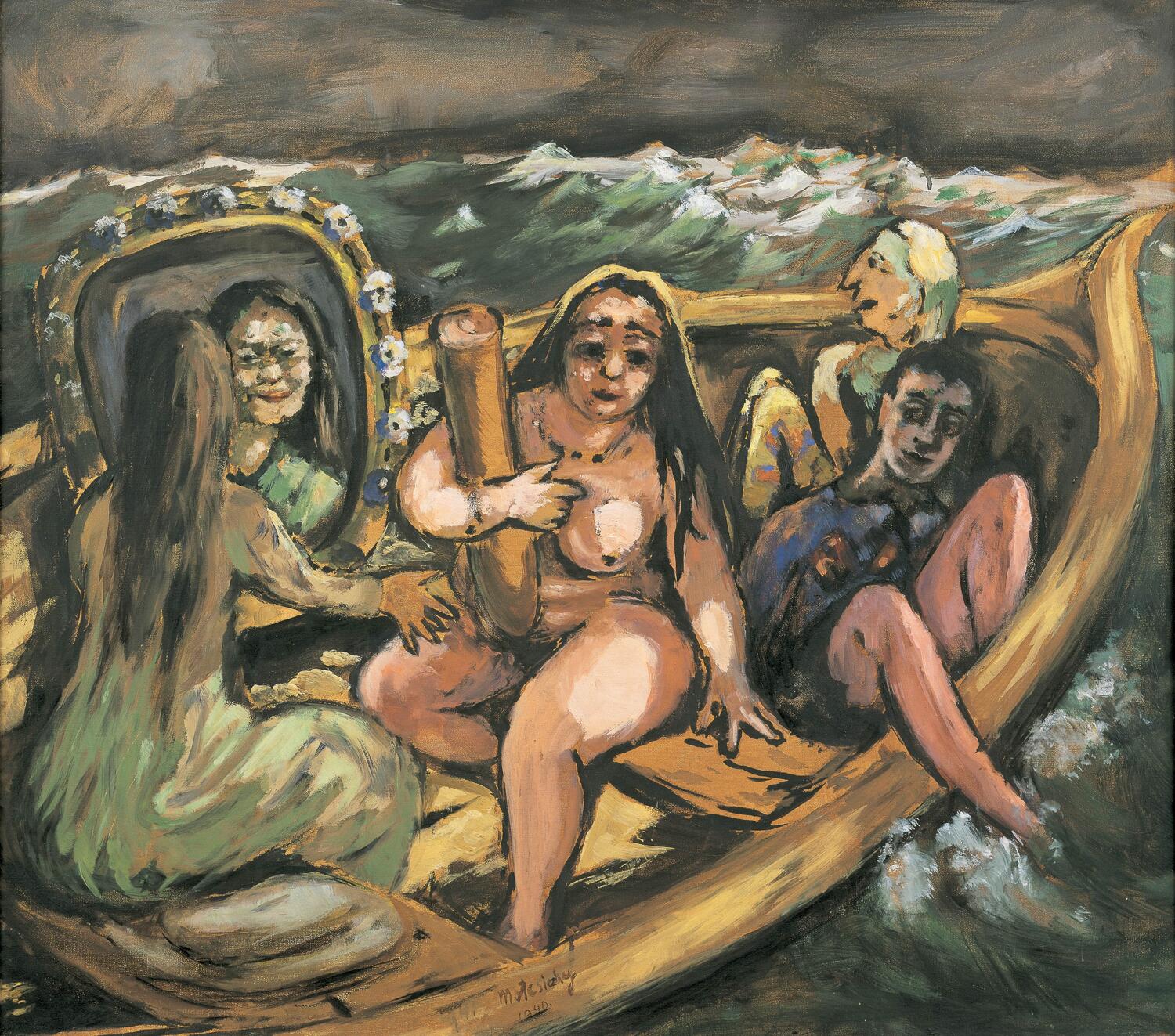

In The Travelers, one of a series of “Mother Paintings,” Marie-Louise Motesiczky depicts herself and her mother, Henrietta (the white-haired woman at right), escaping from Nazi-occupied Austria. Motesiczky was also known for her many self-portraits. Here she is represented by the naked woman in the center and/or the woman gazing at herself in the mirror. The style of the painting shows the influence of Motesiczky’s teacher, Max Beckmann (1884–1950).
We’re sorry. The Posen Library’s licensing agreements prevent this image from being printed or downloaded.
Credits
University of Iowa Stanley Museum of Art. © Marie-Louise von Motesiczky Charitable Trust 2018.
Published in: The Posen Library of Jewish Culture and Civilization, vol. 9.
You may also like

Sport
Zoltan Kluger was one of the most influential and prolific photographers in Palestine and, after the establishment of the state, during the first decade of Israel’s existence, as attested to by his…

Coney Island Beach
Weegee, known for his boundless energy and the wildly diverse subject matter to which he was attracted as a photographer, shot this photograph on a hot Saturday in July 1940 for the left-wing tabloid…

Tel Aviv
This building, photographed by Liselotte Grschebina, is one of approximately four thousand Bauhaus-style buildings constructed in Tel Aviv, the most of any city in the world. The Nazi Party’s rise to…

From the series Jewish Soldiers
This series by Helmar Lerski pictured Jewish soldiers fighting with the British Army during World War II—all in all, about a hundred men and women. All the portraits are in Lerski’s distinctive…

Father and Sons
Yosl Bergner was only twenty-one years old and living in Australia when he painted this bleak picture. Many of his paintings were drawn from memories of his childhood in Warsaw but he also portrayed…

Captain America, no. 1, cover
Captain America, the eponymous hero of this comic series, was given a backstory similar to that of one of his creators, Jack Kirby. Like Kirby, Captain America was born on New York’s Lower East Side…
You may also like
Sport
Zoltan Kluger was one of the most influential and prolific photographers in Palestine and, after the establishment of the state, during the first decade of Israel’s existence, as attested to by his…
Coney Island Beach
Weegee, known for his boundless energy and the wildly diverse subject matter to which he was attracted as a photographer, shot this photograph on a hot Saturday in July 1940 for the left-wing tabloid…
Tel Aviv
This building, photographed by Liselotte Grschebina, is one of approximately four thousand Bauhaus-style buildings constructed in Tel Aviv, the most of any city in the world. The Nazi Party’s rise to…
From the series Jewish Soldiers
This series by Helmar Lerski pictured Jewish soldiers fighting with the British Army during World War II—all in all, about a hundred men and women. All the portraits are in Lerski’s distinctive…
Father and Sons
Yosl Bergner was only twenty-one years old and living in Australia when he painted this bleak picture. Many of his paintings were drawn from memories of his childhood in Warsaw but he also portrayed…
Captain America, no. 1, cover
Captain America, the eponymous hero of this comic series, was given a backstory similar to that of one of his creators, Jack Kirby. Like Kirby, Captain America was born on New York’s Lower East Side…