

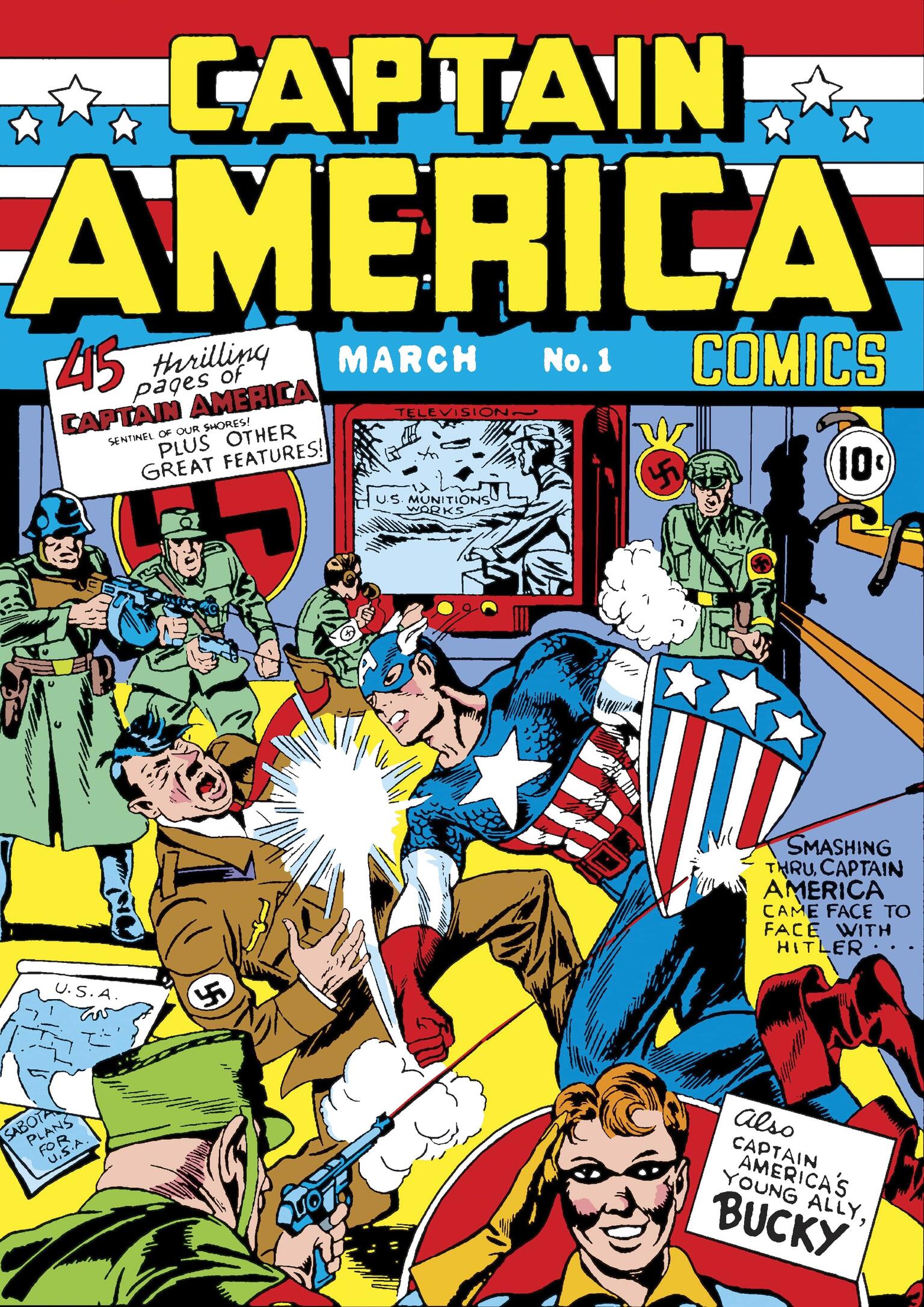
Captain America, no. 1, cover
Image
Please login or register for free access to Posen Library
Already have an account?
You may also like


Father and Sons
Yosl Bergner was only twenty-one years old and living in Australia when he painted this bleak picture. Many of his paintings were drawn from memories of his childhood in Warsaw but he also portrayed…

Self-Portrait in Graham Hollywood Car
In 1940, Man Ray fled France to escape the Nazi occupation and temporarily settled in Los Angeles. There he established a studio and made a living by his photography (in Paris, he had worked as a…

Refugees
Refugees is very different in style from Josef Herman’s later work. In 1948, the artist disowned his earlier paintings (which he felt were too derivative of Chagall’s paintings) and destroyed most of…

Carriage Driver (Self-Portrait), Drohobycz
When Drohobycz (present-day Ukraine) was occupied by the Nazis, Bruno Schulz was initially spared the fate of other Jews in his hometown. Because of his fame as a writer and artist, he was kept alive…

Gouache from Leben? Oder Theater?: Ein Singspiel (Life? or Theater? An Operetta), #4351
To ward off depression while living as a refugee in France, Charlotte Salomon began telling the story of her life in the form of a drama, in hundreds of gouache paintings. This painting depicts her…

Kerch, Crimea (Grief)
When Dmitri Baltermants took this picture in January 1942, he and the other Soviet photographers who were accompanying liberating troops did not at first understand what they were seeing. Were these…