

Untitled, Execution: Babi Yar series. Nizhny Tagil or Leningrad
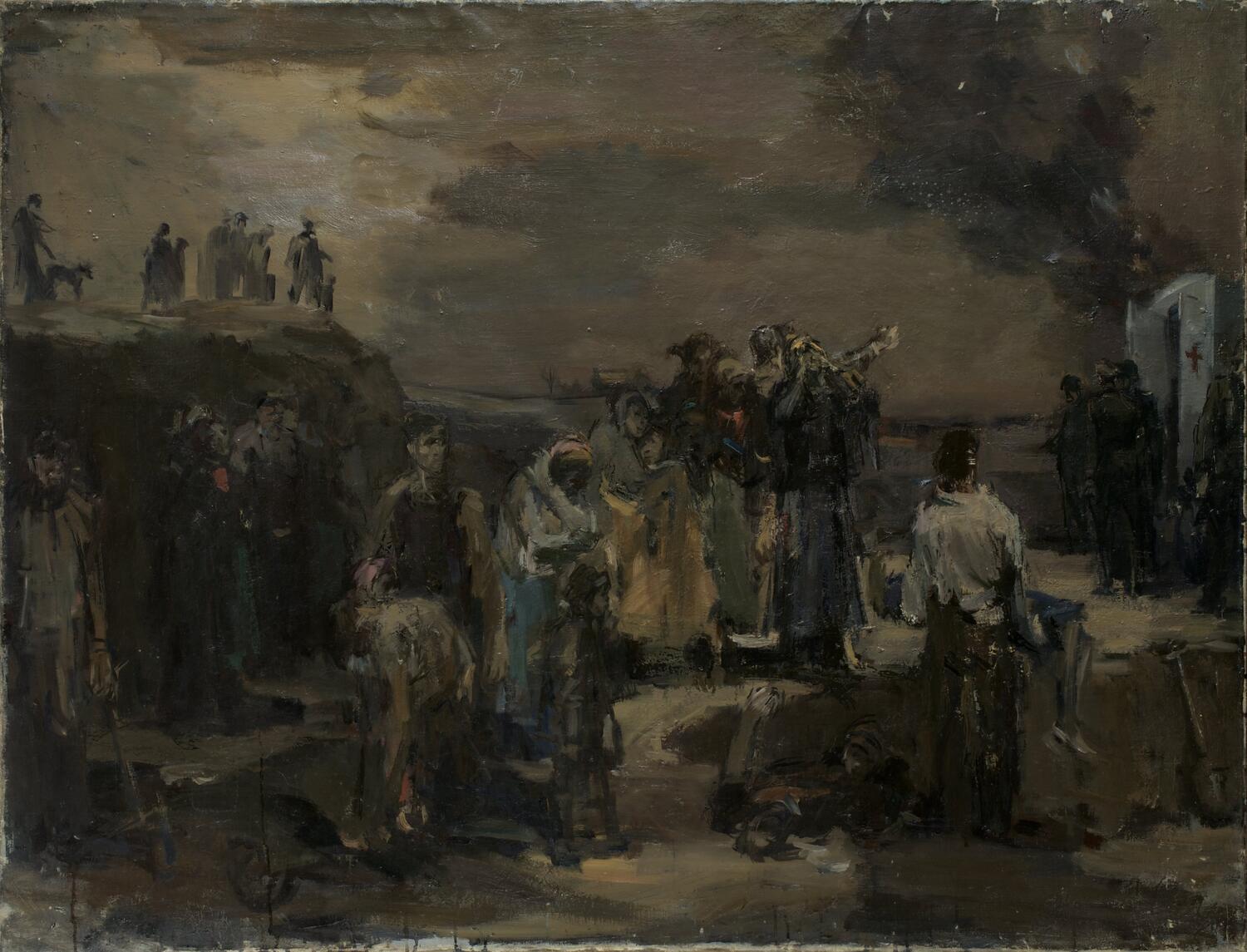

Felix Lembersky’s three Babi Yar paintings were among the first artistic representations of the Nazi massacre in Kyiv, when, over the course of two days in September 1941, over 33,000 Jews were murdered in Babi Yar, a ravine on the outskirts of the city. After the war, when Soviet policy called for downplaying the fact that Jews were specifically targeted for genocide by depicting all victims of the Nazis only as “Soviet citizens,” Lembersky was not allowed to exhibit these paintings. His daughter remembers that visitors would come to their home in Leningrad for clandestine viewings and stand before them with heads bowed, perhaps reciting Kaddish, the Jewish prayer of mourning.
We’re sorry. The Posen Library’s licensing agreements prevent this image from being printed or downloaded.
Credits
© Yelena Lembersky.
Published in: The Posen Library of Jewish Culture and Civilization, vol. 9.
You may also like

D Day Rescue, Omaha Beach, France. June 6, 1944
Though this photograph of Second Lieutenant Walter Sidlowski with the body of a soldier killed during the Allied assault on Omaha Beach has gone down in history as a photograph of D-Day, it was…

La Ghriba Djerba, Tunisia
Jules Lellouche painted the interior of this synagogue in Djerba during World War II, when Tunisia was ruled by Vichy France. Though Tunisia’s Jewish community escaped mass deportations and murder in…

Home! Home?
After surviving the war, Miklós Adler returned to his hometown of Debrecen and created sixteen woodcuts, signing them Ben Binyamin (“son of Benjamin”) in honor of his father. In this woodcut…

V-J Day in Times Square. August 14, 1945
Alfred Eisenstaedt shot one of the most iconic photographs of the twentieth century in Times Square, where crowds were gathering to watch the electric news ticker for an anticipated announcement by U…

And G-d Remembered Rachel . . . And She Conceived, and Bore a Son
Abel Pann devoted much of his artistic career to painting and drawing scenes from the Hebrew Bible. Like other Jewish artists who worked in this genre, such as Ephraim Moses Lilien and Ze’ev Raban, he…

Dismantling Bent Props
Moses Reinblatt served in the Royal Canadian Air Force during World War II, first as a mechanic and then as an aircraftman. In August 1944, he was appointed an official war artist and was posted in…
You may also like
D Day Rescue, Omaha Beach, France. June 6, 1944
Though this photograph of Second Lieutenant Walter Sidlowski with the body of a soldier killed during the Allied assault on Omaha Beach has gone down in history as a photograph of D-Day, it was…
La Ghriba Djerba, Tunisia
Jules Lellouche painted the interior of this synagogue in Djerba during World War II, when Tunisia was ruled by Vichy France. Though Tunisia’s Jewish community escaped mass deportations and murder in…
Home! Home?
After surviving the war, Miklós Adler returned to his hometown of Debrecen and created sixteen woodcuts, signing them Ben Binyamin (“son of Benjamin”) in honor of his father. In this woodcut…
V-J Day in Times Square. August 14, 1945
Alfred Eisenstaedt shot one of the most iconic photographs of the twentieth century in Times Square, where crowds were gathering to watch the electric news ticker for an anticipated announcement by U…
And G-d Remembered Rachel . . . And She Conceived, and Bore a Son
Abel Pann devoted much of his artistic career to painting and drawing scenes from the Hebrew Bible. Like other Jewish artists who worked in this genre, such as Ephraim Moses Lilien and Ze’ev Raban, he…
Dismantling Bent Props
Moses Reinblatt served in the Royal Canadian Air Force during World War II, first as a mechanic and then as an aircraftman. In August 1944, he was appointed an official war artist and was posted in…