

Wail, O community, and lament in trembling
About This Entry
Eli ben ‘Amram composed this kinah (lament) for the death of the Karaite Tsemaḥ ben Asa, who died sometime after 1036. It survives in the Cairo Geniza in a manuscript written by Eli himself. As in his lament for the assassination of Abū Naṣr Faḍl al-Tustarī, this poem shows Eli’s connections with Karaite notables; here, it is particularly striking that Eli praises Tsemaḥ’s knowledge, referring to Tsemaḥ as “the ark of testimony.” It has been suggested that this poem was written to be recited at Tsemaḥ’s grave, as it contains directives for the mourners to lament Tsemaḥ’s death.
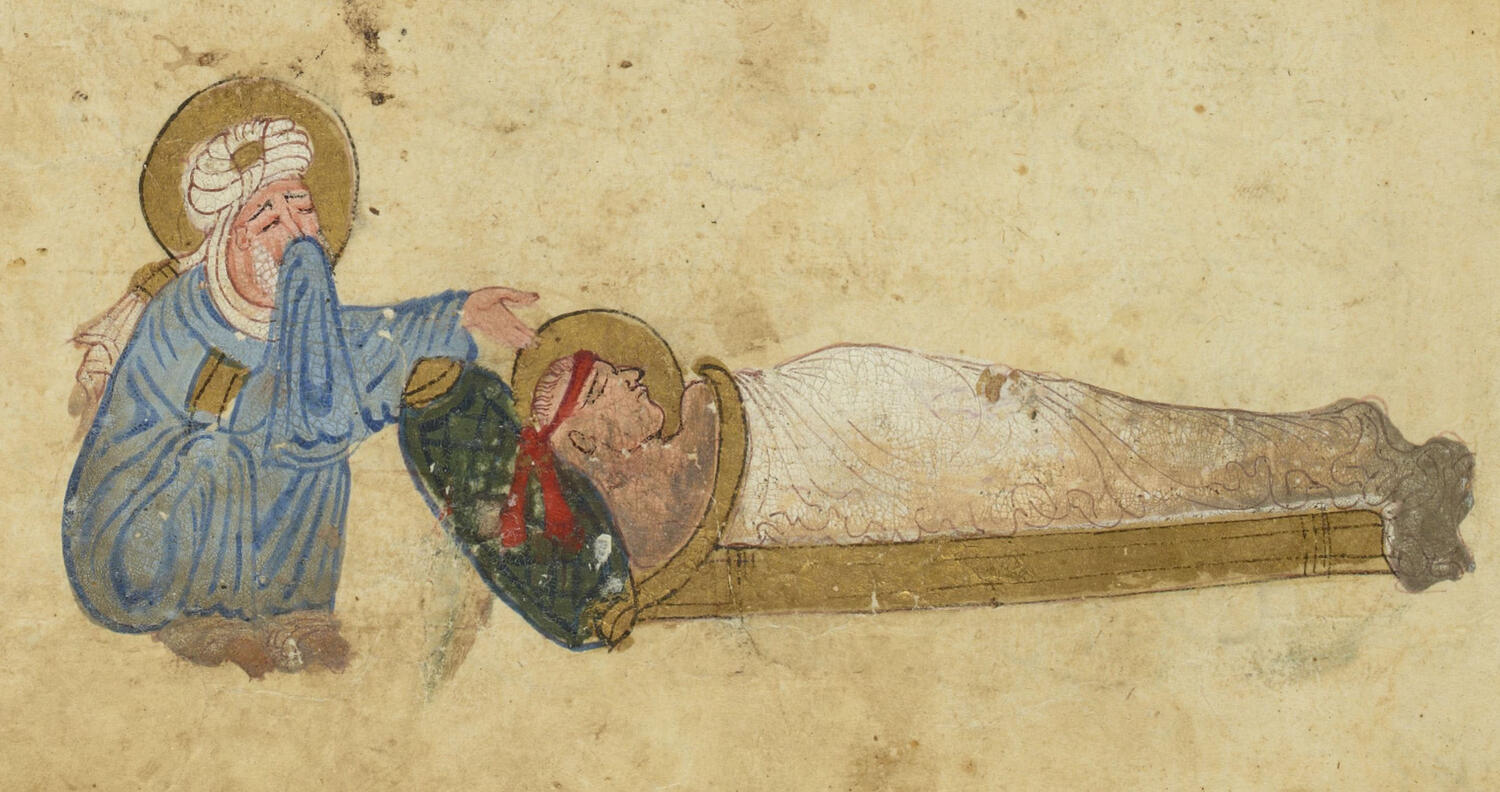

Source: CUL T-S 277.212.
Notes
[Great scholars are called by this epithet, for they contain great teaching, just as the ark with the two tablets did.—Trans.]
Credits
Published in: The Posen Library of Jewish Culture and Civilization, vol. 3: Encountering Christianity and Islam.
You may also like

Alack and alas for the eighth month
The Rock of the cosmos
Why do you complain?

The eyes of the young lad
This wine poem exemplifies the Andalusi poetic tradition with its themes of love, beauty, youth, and wine.
God spoke at length to me
I survey the heaven and the stars
You may also like
Alack and alas for the eighth month
The Rock of the cosmos
Why do you complain?
The eyes of the young lad
This wine poem exemplifies the Andalusi poetic tradition with its themes of love, beauty, youth, and wine.