

Jerusalem in the Byzantine Period (Drawing)
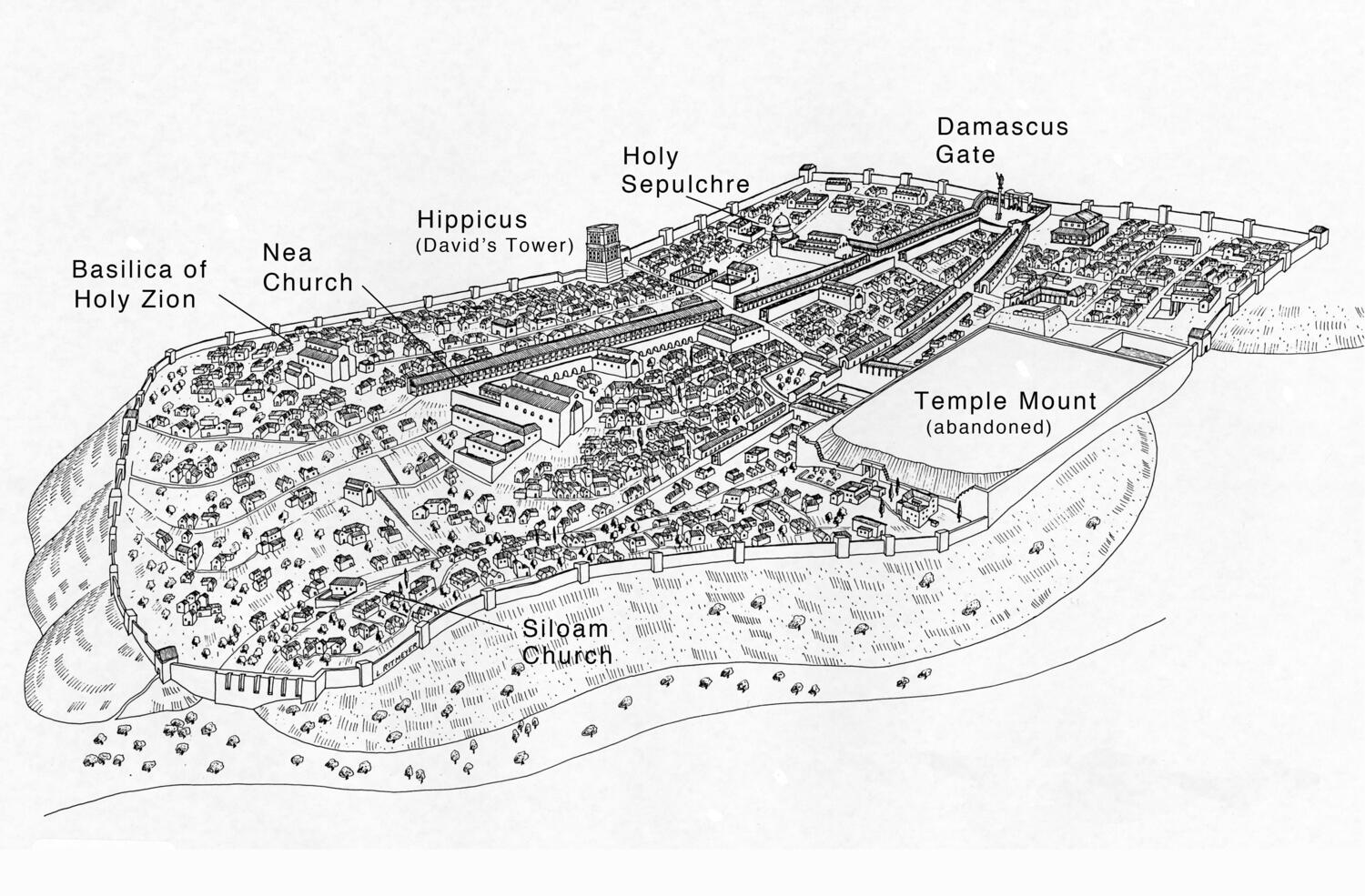

In the five centuries following the Bar Kokhba revolt, Jerusalem remained under Roman and then Byzantine rule and became heavily Christianized. In the fourth century, the Roman emperor Constantine I constructed many Christian places of worship in Jerusalem, including the Church of the Holy Sepulchre and the Church of the Ascension on the Mount of Olives. Later emperors added the Nea Church, the basilica of Holy Zion, and the Siloam Church, among others.
We’re sorry. The Posen Library’s licensing agreements prevent this image from being printed or downloaded.
Credits
Dr. Leen Ritmeyer, Ritmeyer Archaeological Design.
Published in: The Posen Library of Jewish Culture and Civilization, vol. 2: Emerging Judaism.
You may also like

Constantine’s New Jerusalem
Life of Constantine 3.25–27, 29, 33
Such was the situation when another memorable work of great importance was done in the province of Palestine by the Godbeloved [Constantine I]. It was this. He decided that he ought to make…
Emperor Justinian and the Nea Church
Buildings 5.6
Such were the works of the Emperor Justinian in Cilicia. And in Jerusalem he dedicated to the Mother of God a shrine with which no other can be compared. This is called by the natives the “New Church”…
Acts of God Prevent the Rebuilding of the Temple
Ecclesiastical History 3.20
The emperor, in another attempt to molest the Christians, exposed his superstition. Being fond of sacrificing, he not only delighted in the blood of victims [sacrifices] but considered it an affront…
Thwarted Efforts to Rebuild the Temple
Ecclesiastical History 5.22
Though the emperor hated and oppressed the Christians, he showed benevolence and humanity toward the Jews. He wrote to the Jewish patriarchs and leaders, as well as to the people, requesting that they…
Julian Pretends to Love the Jews
Commentary on Daniel 11:34–35
And all these events took place, he asserts, for the purpose of testing and choosing out the saints, that they might be made white until the time before appointed, inasmuch as victory was deferred…

Madaba Map
This map is the oldest extant map of Jerusalem and the land of Israel. The cartographic depiction is part of a larger floor mosaic that was discovered in 1884 in the ruins of an early Byzantine church…

You may also like
Constantine’s New Jerusalem
Life of Constantine 3.25–27, 29, 33
Such was the situation when another memorable work of great importance was done in the province of Palestine by the Godbeloved [Constantine I]. It was this. He decided that he ought to make…
Emperor Justinian and the Nea Church
Buildings 5.6
Such were the works of the Emperor Justinian in Cilicia. And in Jerusalem he dedicated to the Mother of God a shrine with which no other can be compared. This is called by the natives the “New Church”…
Acts of God Prevent the Rebuilding of the Temple
Ecclesiastical History 3.20
The emperor, in another attempt to molest the Christians, exposed his superstition. Being fond of sacrificing, he not only delighted in the blood of victims [sacrifices] but considered it an affront…
Thwarted Efforts to Rebuild the Temple
Ecclesiastical History 5.22
Though the emperor hated and oppressed the Christians, he showed benevolence and humanity toward the Jews. He wrote to the Jewish patriarchs and leaders, as well as to the people, requesting that they…
Julian Pretends to Love the Jews
Commentary on Daniel 11:34–35
And all these events took place, he asserts, for the purpose of testing and choosing out the saints, that they might be made white until the time before appointed, inasmuch as victory was deferred…
Madaba Map
This map is the oldest extant map of Jerusalem and the land of Israel. The cartographic depiction is part of a larger floor mosaic that was discovered in 1884 in the ruins of an early Byzantine church…