

Akeldama Burial Caves


Ancient Tombs
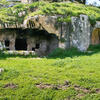
The Kidron and Hinnom Valleys, south of the Old City of Jerusalem, contain some of Jerusalem’s richest concentrations of rock-hewn tombs, known as the Akeldama burial caves. Primarily used during the First Temple period, some of the caves were reused during the Second Temple period and up to the Byzantine era, with more caves being added to them. Excavations in 1989 showed that the caves had been left undisturbed, offering a rare glimpse into their usage.
Burial Complex and Inscriptions
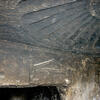
The burial complex consists of three distinct caves carved out of the bedrock. Within each cave were two or three chambers with kokhim (burial niches) and an inner chamber containing burial troughs and arcosolia (arched niches). Decorated stone doors complete with working hinges closed off some of these chambers. Many of the caves were also decorated with geometric paintings and inscriptions, indicating the wealthy status of the owners of the tombs. The ossuaries and sarcophagi were inscribed with names in Greek and Hebrew script. Pottery, glass vessels, and oil lamps were also found scattered throughout the caves. One tomb has been identified as belonging to the family of Annas, the high priest before whom Jesus was brought for judgment before being taken to Pontius Pilate.
Credits
-
Photo: www.HolyLandPhotos.org.
-
Photo: www.HolyLandPhotos.org.
Published in: The Posen Library of Jewish Culture and Civilization, vol. 2: Emerging Judaism.
You may also like


The Sanhedriyya Tomb Complex

Jason’s Tomb

Absalom’s Tomb

Bene Ḥezir Tomb

Tomb of the Kings

Wooden Coffin, ‘En Gedi
You may also like
The Sanhedriyya Tomb Complex
Jason’s Tomb
Absalom’s Tomb
Bene Ḥezir Tomb
Tomb of the Kings