

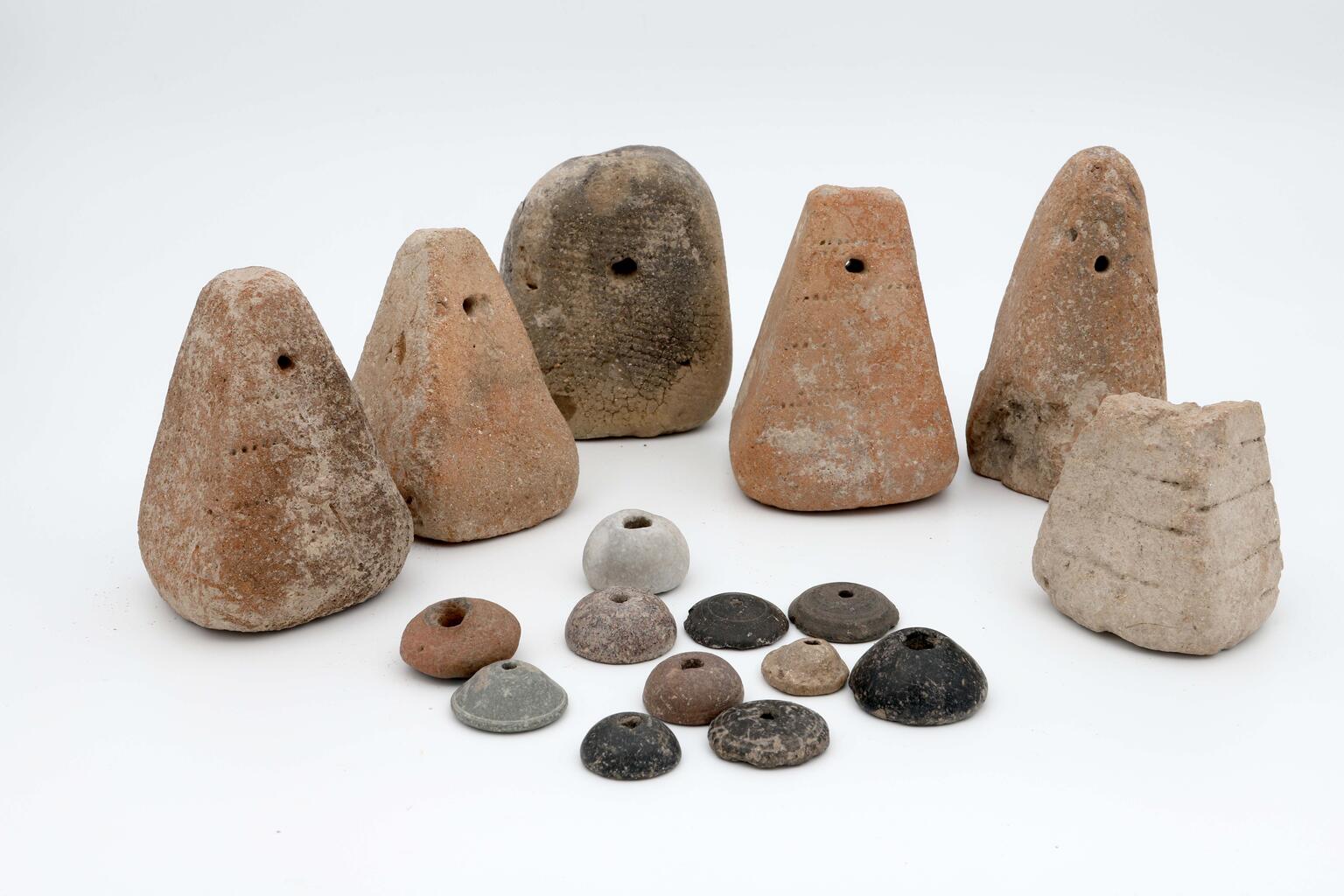
Loom Weights and Spindle Whorls
Image
Please login or register for free access to Posen Library
Already have an account?
Engage with this Source


Related Guide
Ancient Jewish Material Culture
4th Century BCE–6th Century CE
You may also like

Grinding Stone
Grinding equipment, used for food processing, ranged in size from small mortars and pestles used to grind spices and herbs to large millstones used to grind wheat. These implements were typically made…

Limestone Scale Weights
Before coinage was introduced, most commerce was based on the exchange of goods for quantities of metals, which were weighed on scales, often against standardized stone weights. Even after coins came…

Kathros Weight
This stone weight, found in upper Jerusalem, contains a Hebrew inscription in Aramaic script referring to a member of the priestly Kathros family: “Belonging to the son of Kathros.” The stone is 3.5…

Metal Keys
Typical keys of the Roman period were mostly made of iron or bronze. The items presented here are also known as the “knee” or “elbow” type because of their bent shape. They were formed this way to fit…

Lead Weight
This lead weight was found in a hiding complex in the Judean Shephelah and dates to the Bar Kokhba revolt. It weighs 1.8 pounds (804 g), half the standard weight measure of the period, and is…

Byzantine Lead Weights
Weights produced during the Byzantine era could be made in gold, silver, bronze, lead, glass, or stone. This is an assemblage of lead weights (exagia; minted coin weights) from the Byzantine period…