

Jewish Burial Society: Sewing the Shrouds and The Washing of the Body
About This Entry
Participation in a voluntary burial society (ḥevra kadisha), for men and for women, was considered a great honor and an act of ultimate generosity. The 1780 image on the left from the Prague burial society shows the creation of the simple burial shroud traditionally used to dress the body of the deceased. Women participated fully in this ritual. They had their own burial societies and were just as attentive to the female dead as men would be toward the male dead. Yet, we can see that there is a clear gendered distinction in their specific roles in creating the burial shroud along with a depiction of an older woman guiding a younger one in the task of sewing.
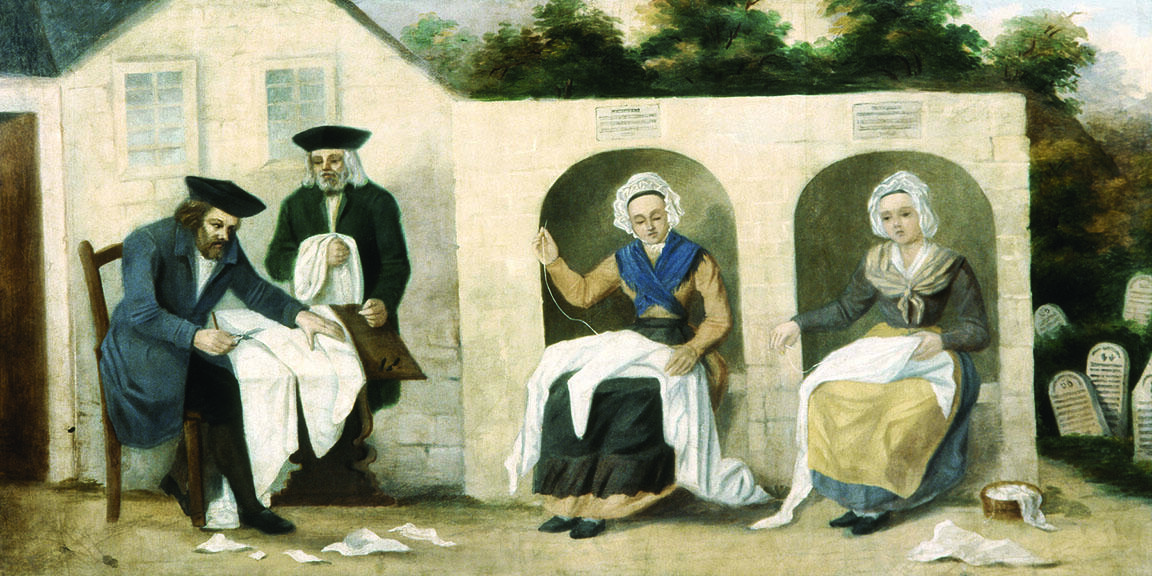
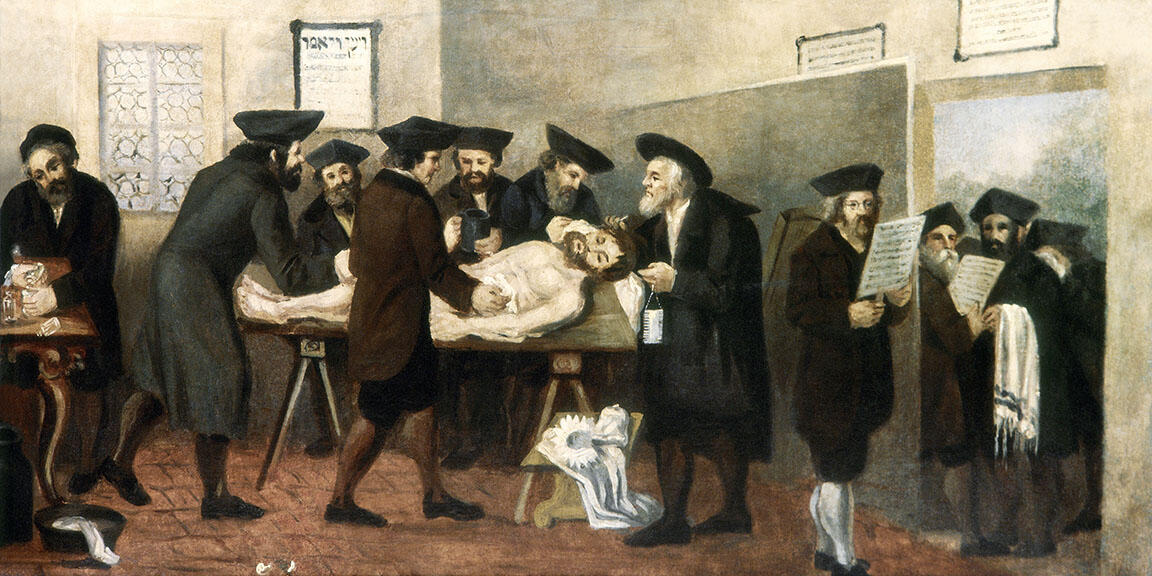


These images from a series depict acts of loving-kindness to the dead performed by members of the Jewish burial society, or ḥevrah kadisha, in Prague. Participation in this voluntary society, for men and women, was considered a great honor and an act of ultimate generosity.
Credits
-
© Jewish Museum in Prague.
-
© Jewish Museum in Prague.
Discussion Questions
What can we learn about the importance of preparing bodies for burial in historical Jewish communities from these images?
How might the male and female roles depicted in the sewing the shrouds image reinforce distinct gender roles within communities of Jewish practice?
If your community had a ḥevra kadisha, would you be inclined to volunteer for the role?
Published in: The Posen Library of Jewish Culture and Civilization, vol. 6.
You may also like

Gender Roles
Engage with the gendered dimensions of Jewish life and discover lost voices of Jewish women.

Portrait of Benjamin S. Judah

Cup and Saucer

Chatham Square Cemetery

Torah Ark Curtain (Gördes)

Hand-Washing Basin
Participation in a voluntary burial society (ḥevra kadisha), for men and for women, was considered a great honor and an act of ultimate generosity. The 1780 image on the left from the Prague burial society shows the creation of the simple burial shroud traditionally used to dress the body of the deceased. Women participated fully in this ritual. They had their own burial societies and were just as attentive to the female dead as men would be toward the male dead. Yet, we can see that there is a clear gendered distinction in their specific roles in creating the burial shroud along with a depiction of an older woman guiding a younger one in the task of sewing.

Related Guide
Material Culture and Modernity
Discover the many types of objects—furnishings and clothing, jewels and medals, wares—crafted by Jews or specifically for use by Jews.
You may also like
Gender Roles
Engage with the gendered dimensions of Jewish life and discover lost voices of Jewish women.
Portrait of Benjamin S. Judah
Cup and Saucer
Chatham Square Cemetery
Torah Ark Curtain (Gördes)