

Óbuda Synagogue
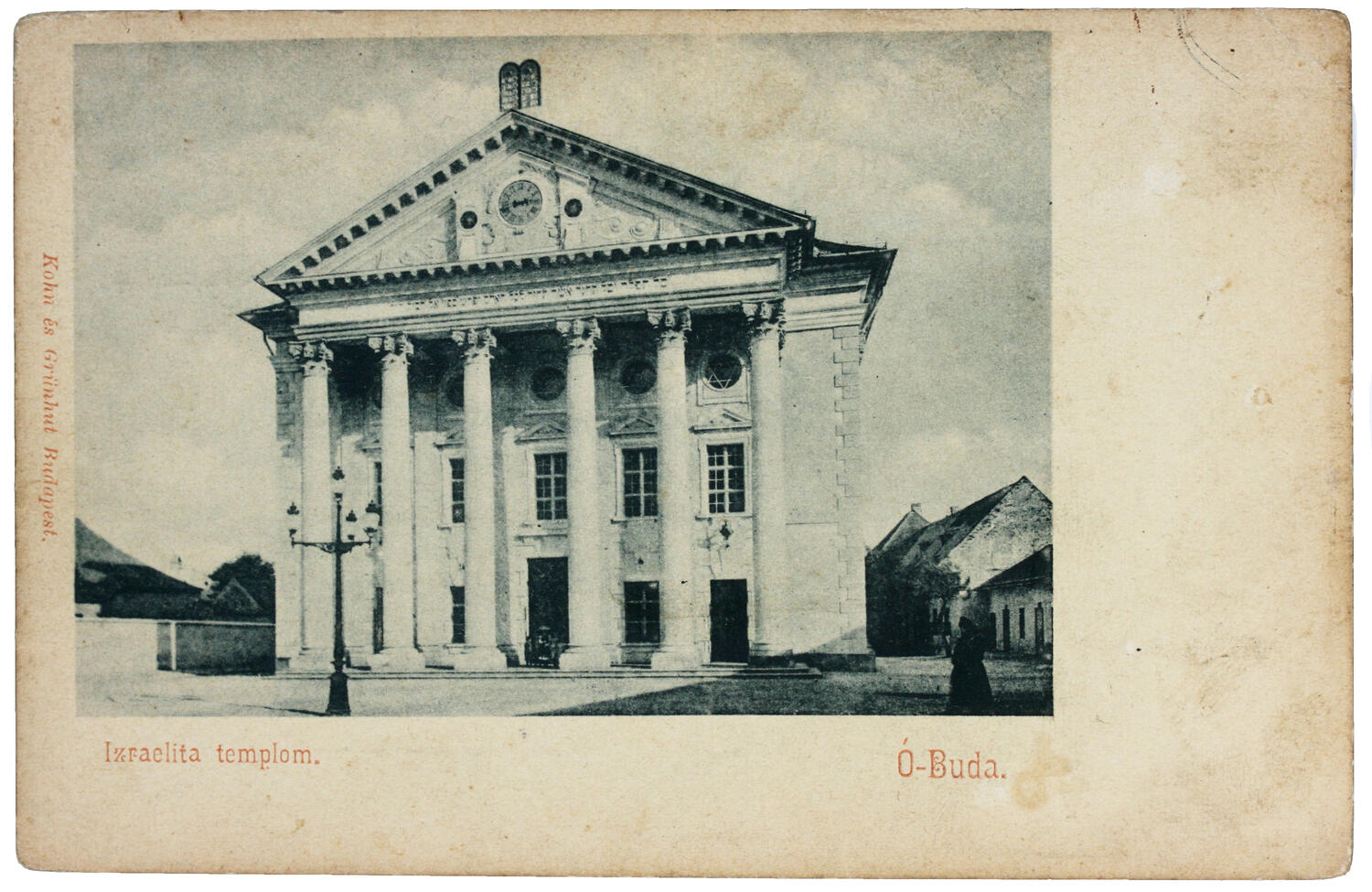

The Óbuda Synagogue in Budapest is the oldest functioning synagogue in Hungary. The building was inaugurated in 1821. Its restrained, neoclassical aesthetic was consistent with popular architectural trends in nineteenth-century Hungary, distinguished only by Hebrew inscriptions on the outer façade of the building. The Jewish community of Óbuda, at the time of the synagogue inauguration, had some 3,210 Jews, which was more than forty percent of the local population. It was a “golden age” for the community; the synagogue, with its Corinthian columns, was heralded by the Archduke Joseph (1797–1847) as “undoubtedly the most beautiful one of all similar Jewish religious establishments in the Austrian monarchy.”
We’re sorry. The Posen Library’s licensing agreements prevent this image from being printed or downloaded.
Credits
Gross Family Collection.
Published in: The Posen Library of Jewish Culture and Civilization, vol. 6.
You may also like

Touro Synagogue: America’s Oldest Jewish House of Worship
Built in 1763, Newport’s Touro Synagogue reflects colonial Palladian design and stands as a symbol of early Jewish life and liberty in America.

Synagogue in the Park at Wörlitz, Germany
Designed in the German neoclassical style, the Wörlitz synagogue was modeled on Rome’s Temple of Vesta, featuring a circular building with a conical roof. It was commissioned by Prince Leopold…

Janów Sokólski Synagogue
Janów, Poland, was home to a unique wooden synagogue. The town was settled by Jews toward the end of the seventeenth century, and, by 1739, the Jewish population formed the majority of the town’s…

Interior of the Beth Elohim Synagogue Charleston, South Carolina (Solomon Nunes Carvalho)
This synagogue, built in the Georgian style and dedicated in 1794, was, at the time it was erected, the largest and most impressive synagogue in the United States.

Dohány Street Synagogue
The Dohány Street Synagogue in Budapest is the largest synagogue in Europe, and the second largest in the world, capable of accommodating three thousand people. The Moorish- and Byzantine-inspired…

Grand Synagogue of Lyon
The Grand Synagogue of Lyon was built shortly after the establishment of a regional consistory by Emperor Napoleon III and the appointment of a regional chief rabbi. In 1858, a new synagogue for the…
You may also like
Touro Synagogue: America’s Oldest Jewish House of Worship
Built in 1763, Newport’s Touro Synagogue reflects colonial Palladian design and stands as a symbol of early Jewish life and liberty in America.
Synagogue in the Park at Wörlitz, Germany
Designed in the German neoclassical style, the Wörlitz synagogue was modeled on Rome’s Temple of Vesta, featuring a circular building with a conical roof. It was commissioned by Prince Leopold…
Janów Sokólski Synagogue
Janów, Poland, was home to a unique wooden synagogue. The town was settled by Jews toward the end of the seventeenth century, and, by 1739, the Jewish population formed the majority of the town’s…
Interior of the Beth Elohim Synagogue Charleston, South Carolina (Solomon Nunes Carvalho)
This synagogue, built in the Georgian style and dedicated in 1794, was, at the time it was erected, the largest and most impressive synagogue in the United States.
Dohány Street Synagogue
The Dohány Street Synagogue in Budapest is the largest synagogue in Europe, and the second largest in the world, capable of accommodating three thousand people. The Moorish- and Byzantine-inspired…
Grand Synagogue of Lyon
The Grand Synagogue of Lyon was built shortly after the establishment of a regional consistory by Emperor Napoleon III and the appointment of a regional chief rabbi. In 1858, a new synagogue for the…