

Esther Scroll (Amsterdam)
Image
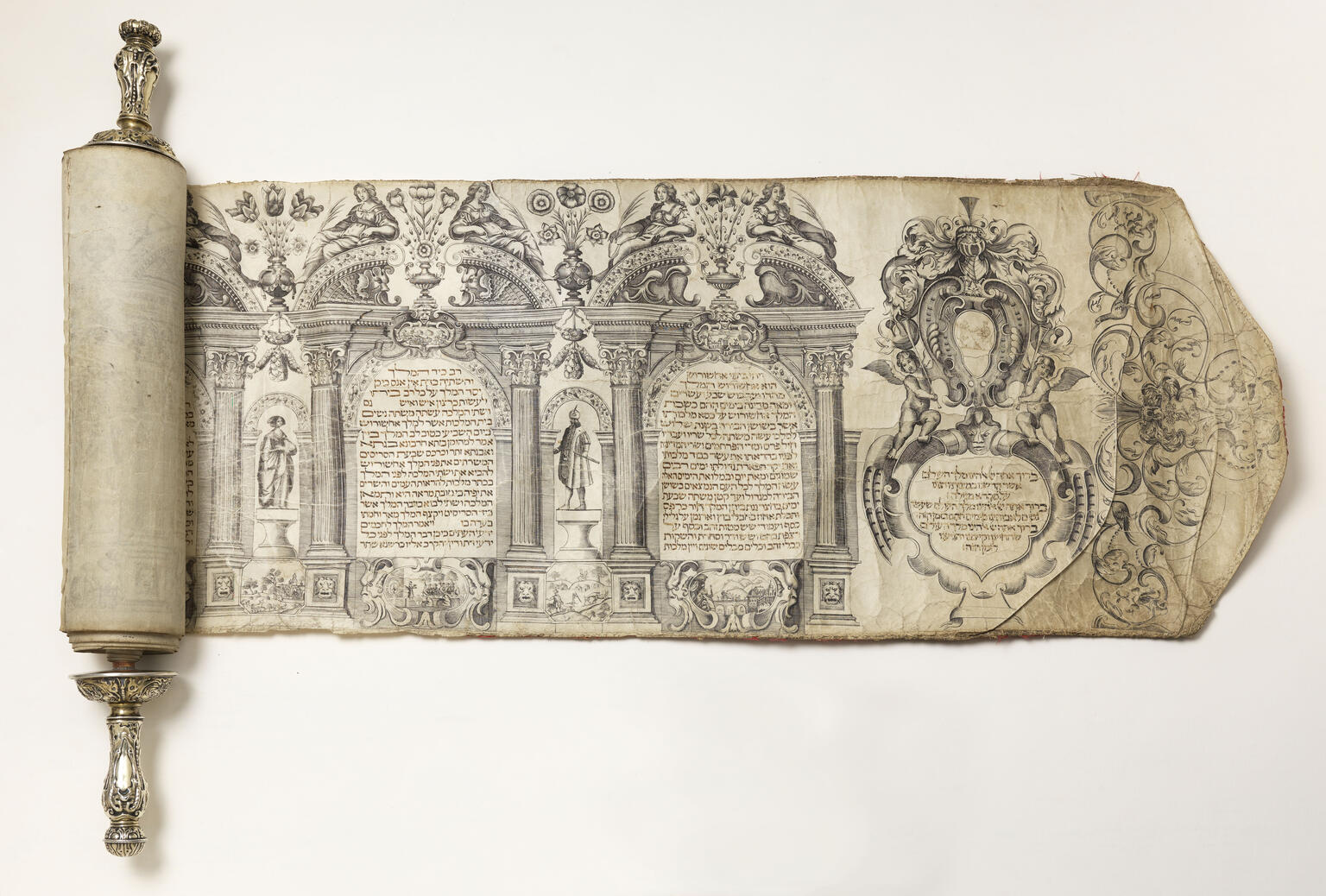
Please login or register for free access to Posen Library
Already have an account?
Engage with this Source


Related Guide
Jewish Printing and Book Culture
1500–1750
Jewish printing unified far-flung communities by standardizing religious texts, created textual uniformity, and enabled vernacular translations, and facilitated the spread of Jewish texts and knowledge.
You may also like

Responsum: On Printed Megilot (Scrolls of) Esther
Question: . . . When Rabbi Joseph Ottolenghi was visiting this land, he told me that he printed sixteen megillot on parchment prepared for this purpose [i.e., to be used for the scrolls—Ed.]. When I…

Sheloshah perushim (Three Commentaries) on the Song of Songs: On the Edition
One day, I was reading a certain book, which contained eight commentaries on the Song of Songs. More precious than pearls they are; all of their commentaries are sapphires, the words of the living God…
With God’s Help
With God’s help I set myself the aim,
And with God’s aid I hope to achieve the same.
The holy book of Psalms in Taytsh [Yiddish] to make known,
Hoping that all shall praise and extol God, blessed be…
Title Page of Moses Margolioth’s Mercies of the Lord
This title page introduces Moses Margolioth’s scholarly study of the thirteen divine attributes printed in 1589.
Tsemaḥ David (The Sprout of David): On the Invention of the Printing Press
The printing of books: began [lit. “was located”] in the city of Mainz, by a Christian man named Johannes Gutenberg of Strasbourg, and this was in the first year of the pious emperor, Friedrich, in…

Menaḥem Egozi’s Gal shel egozim (Nut Garden)
This book was printed in Belvedere, outside Constantinople, by Reina Nasi, the daughter of Gracia Nasi, and widow of Joseph. She was the first Jewish woman to establish her own press.