

The Heliodoros Stela
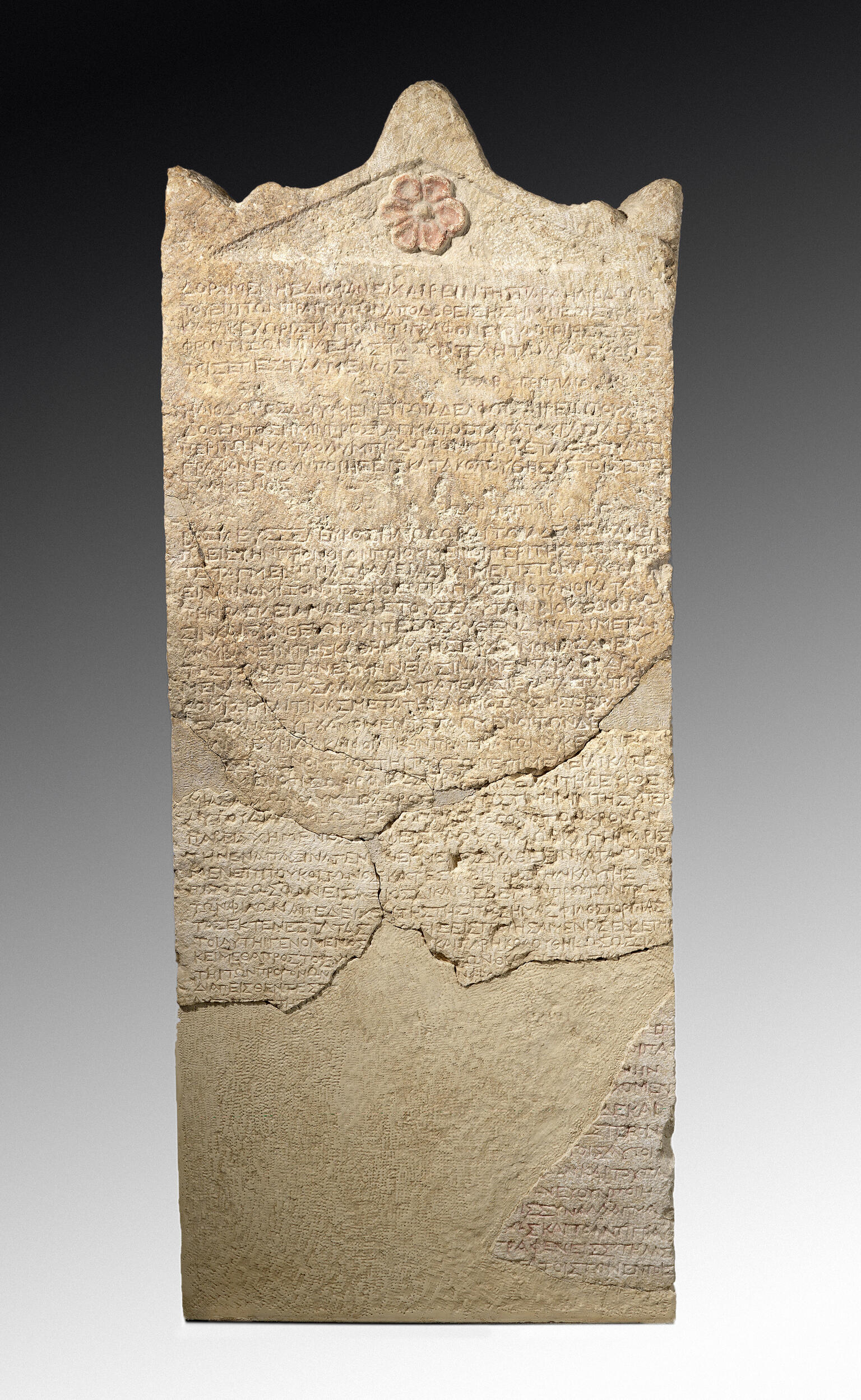
The Heliodoros stela provides historical context for the episode in 2 Maccabees 3:13–40, in which Seleucus IV Philopater sends his chancellor, Heliodoros, to seize the treasure in the Jerusalem Temple. The inscription preserves three letters, presented in reverse chronological order, including a twenty-eight-line proclamation in Greek in which Seleucus IV instructs Heliodoros to appoint Olympiodoros as the “high priest” in charge of sanctuaries throughout the region. In this role, Olympiodoros would also have been responsible for ensuring appropriate temple revenues and taxes were submitted to the king, including for the Temple in Jerusalem—and its treasury. The Jews of the region may have perceived this appointment as infringing on their own religious autonomy, leading to the deterioration of Seleucid-Jewish relations under Antiochus IV Epiphanes (r. 175–164 BCE).
This inscription is known from two ancient copies, both fragmentary. The first copy, pictured here, comprises five fragments, two of which were acquired on the antiquities market and three of which were discovered in excavations at Maresha. The second copy, consisting of a single fragment, also came from Maresha. The inscribed stone blocks are believed to have stood in temples and appear to be an enactment of Seleucus’ decree that “a copy [of our letter] be engraved on stelae [made of stone, to be set up in the most cons]picuous of [temples] in these [places].”


Related Guide
Judea under Ptolemaic and Seleucid Rule
Conflicts between the Ptolemaic and Seleucid dynasties shaped ancient Judea and eventually led to the Hasmonean revolt.
You may also like

Seleucus Tries to Confiscate the Temple Treasure
2 Maccabees 3:13–40

Zenon Papyrus
Josephus Recounts the Seleucid Conquest
Jewish Antiquities 12.129–137

Hefzibah Inscription
Hefzibah Inscription
A Seleucid-era Levantine inscription pertaining to the Fifty Syrian War.

Aerial View of Iraq el-Amir Castle
