

Holocaust and Rebirth (Kibbutz Nezer Sereni, Israel)
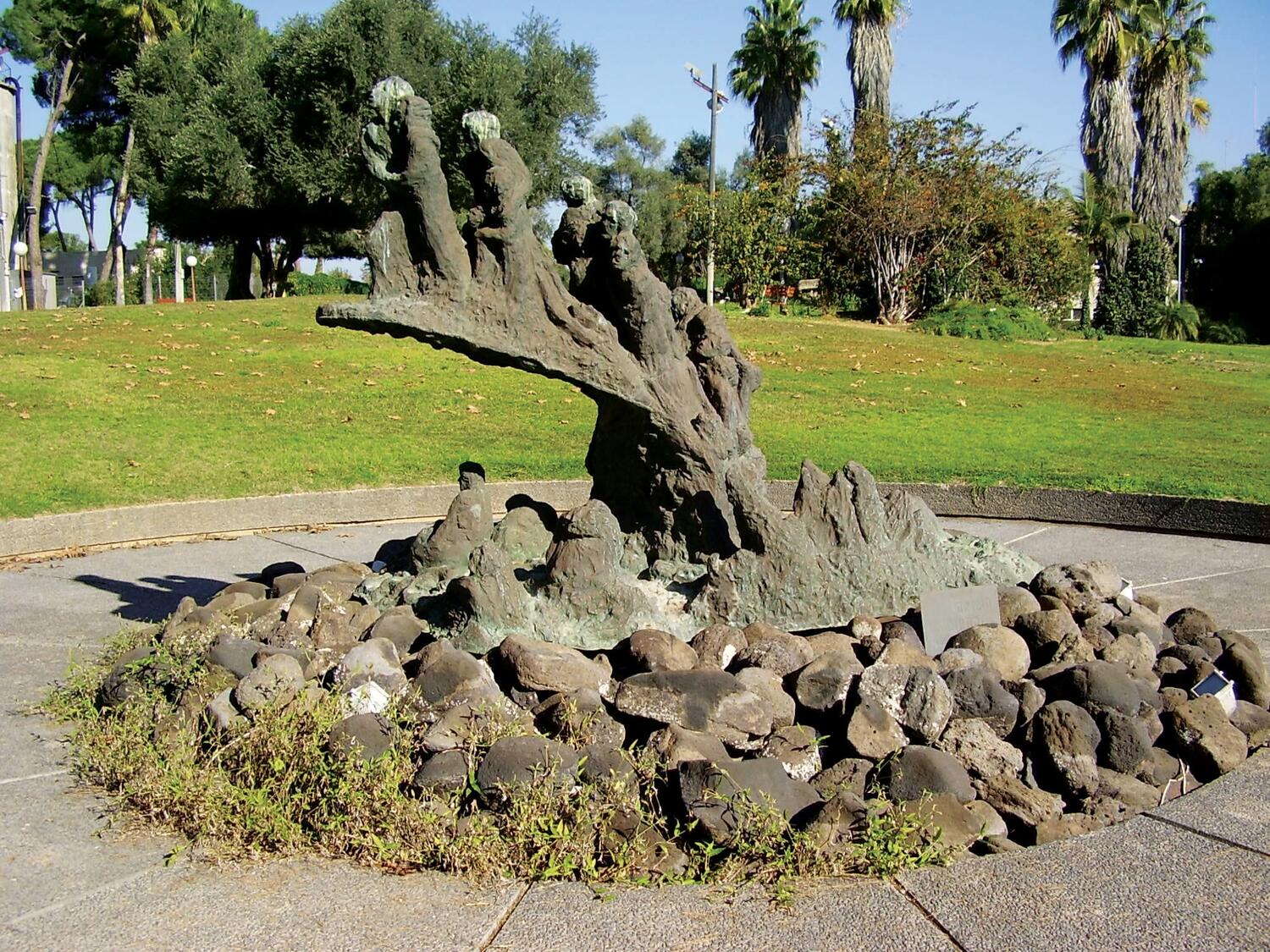

Kibbutz Netzer Sereni was established by Holocaust survivors from the Buchenwald concentration camp. In fact, its original name was Kibbutz Buchenwald. It is now named for Enzo Sereni, an Italian Zionist leader. “Netzer” means a new shoot, as in the biblical verse: “But a shoot shall grow out of the stump of Jesse; a twig shall sprout from his stock” (Isaiah 11:1). This idea, of a new branch sprouting from the stump of a tree, was the inspiration for Batia Lichansky’s monument. Atop a twisted branch that looks like it has been felled by lightning, the figures of men, women, and children climb upwards, faces turned to the sky.
Credits
Photo: “PikiWiki Israel 41120 Spohn Farm in kibbutz Netzer Sereni,” by Dr. Avishai Teicher, Pikiwiki Israel. Used under a (CC BY 2.5) license.

Published in: The Posen Library of Jewish Culture and Civilization, vol. 9.
You may also like

Abraham Joshua Heschel Marching with Martin Luther King in Selma, Alabama, March 21, 1965

Six Prayers

The Costume Party

Chickensouperman from L’il Abner

Lunch at Ratner’s

Primary Structures, cover
You may also like
Abraham Joshua Heschel Marching with Martin Luther King in Selma, Alabama, March 21, 1965
Six Prayers
The Costume Party
Chickensouperman from L’il Abner
Lunch at Ratner’s