

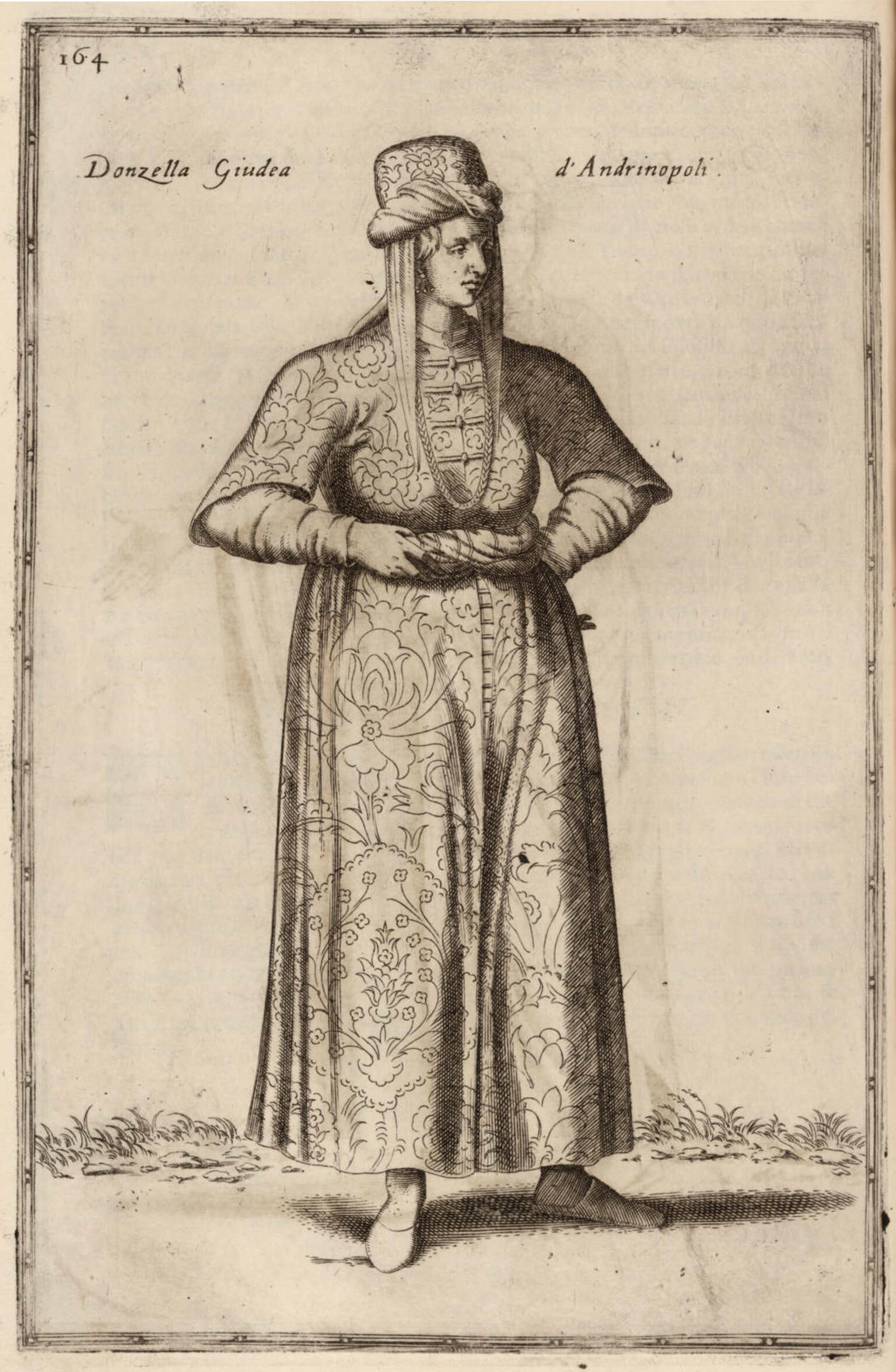
Jewish Women from Adrianople (Edirne)
Image
Please login or register for free access to Posen Library
Already have an account?
Engage with this Source


Related Guide
Early Modern Rabbis and Intellectuals on the Move
1500–1750
Carrying books and knowledge, itinerant rabbis and scholars traveled between communities, facilitating cultural exchange.

Related Guide
Early Modern Italy: Where East and West Meet
1500–1750
Ashkenazim, Sephardim, and Marranos encountered each other in Italian cities, developing community structures that later influenced Jewish communal organization throughout the western world.
You may also like

The Order of Women’s Commandments on the Sabbath Eve
Seder mitsvot ha-nashim
This 1585 Yiddish handbook examines the three specific commandments for women and the religious lives of early modern families.
Gevurot ha-shem (Mighty Acts of the Lord): On Passover
And we may remove the [Seder] table, so that the young child should express wonder at why we are removing the table; for surely it would be appropriate to eat now that we are already leaning…
Bayit ḥadash on Bowing during Prayer
“He goes back four cubits etc.”
This implies that he must move backwards, but not forwards or to the sides. [ . . . ] It seems that this action was instituted by the sages only for an individual…

Kupa Synagogue (Kraków)
The ceiling and wall paintings in the baroque-style Kupa Synagogue in Kraków, which dates from 1643, were damaged during World War II and in a pogrom that occurred in August 1945 immediately following…
A Prose Ketubah for Shavuot
The Ketubah between the Assembly of Israel and Their Father in Heaven, by the kabbalist R. Israel Najara, May the Memory of the Righteous and Holy One Be for a BlessingOn Friday, the sixth of the…

Ketubah between God and Israel for Shavuot
In the Sephardic tradition, a “marriage contract” (ketubah), a symbolic betrothal of God and Israel, is read before the Torah reading on the first day of the holiday of Shavuot, which celebrates the…