

Letter to His Brother-in-Law
In a Hebrew poem, composed by me, which I sent to you—I hope it will arrive—I said: “Let my limbs be joined to my aged husband, and fruit will appear: a son of his old age.” Perhaps God will fulfill your wish, when you come here—and then there will be three girls!—but God will nourish them. I can imagine how grieved you were when my sister did not…
Please login or register for free access to Posen Library
Already have an account?
You may also like
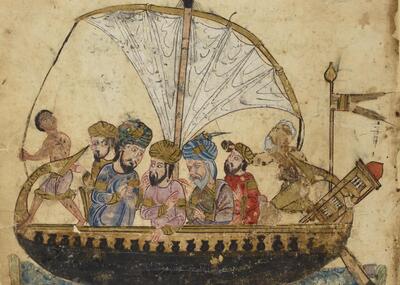

Migration and Mobility in the Early Medieval Period
Medieval societies can sometimes be seen as static and isolated. Yet medieval people of all sorts moved from one place to another, for a variety of reasons: for economic opportunity and trade, driven by wars and forced displacement, and more. Western Europe and the Mediterranean, the Middle East, and even the Far East were connected by the migration of people, merchandise, and ideas.

Letter to Ḥalfon ben Nethanel (I)
To our honorable, splendid, glorious, great, and holy master and teacher, Ḥalfon Halevi of the clan of Kehat, the wise, sage, and respected nobleman who has feared heaven since he was a youth, the son…
Letter to Judah ha-Levi
The name of the Lord is a strong tower (Proverbs 18:10).My lord and master of my soul, and the object of my hopes and longings. Because of his sadness and his poor health, and due to other…
Letter to a Merchant
Collect 20 mithqals from the price for yourself and take what remains from the sale to buy a silk outfit from the master who made the silk outfit for the elder Abū Zikrī, the cut of which cost 3 and a…
Letter to His Father, Yefet ha-Levi
In [Your] name, O Merci[ful].
To my master and lord, my succor and supp[ort], may God prolong your life and m[ake permanent your high rank] and lofty position. May he crush those who envy you and not…
Letter to Ḥalfon ben Nethanel
. . . he had no opportunity to visit anyone but the sheikh on the day of the New Year before the prohibition came into effect and also a man known as Kirām the wax-man, who arrived with him on the…