

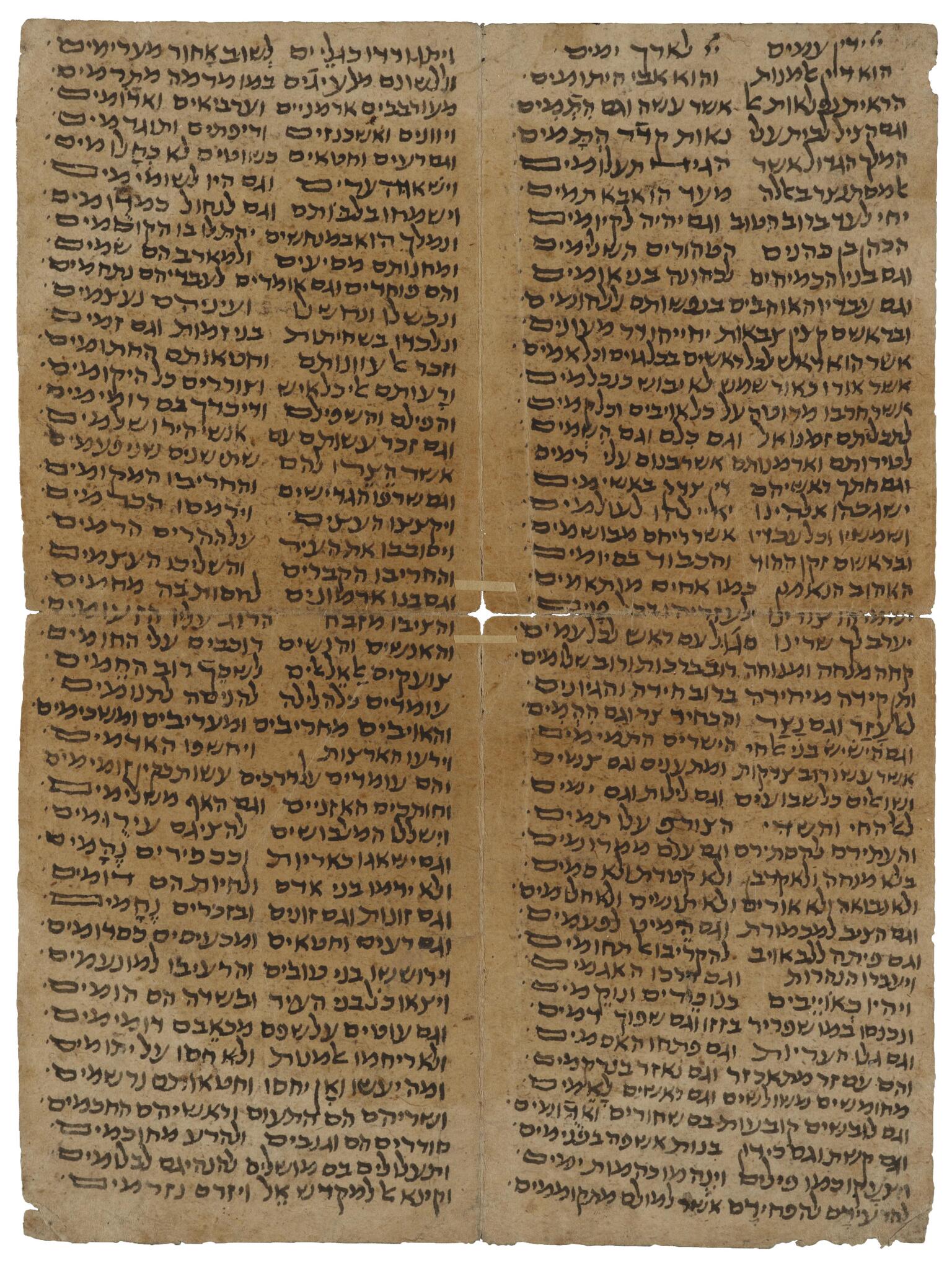
The Lord judges nations
Image
Please login or register for free access to Posen Library
Already have an account?
You may also like

I bear my wandering
[The Jewish people:]I bear my wandering; I take delight in my exile.I serve my subjugator; I am hopeful in my sickness.Let my captivity be pleasing to me, let me not reject the [moral message of]…
I have a beautiful friend
Ismā‘īl: I have a beautiful friend who repaid the helpful with the harmful and permitted what was forbidden to her.Qasmūna: Like the sun from which the full moon perpetually acquires its light…


I behold a garden ready for reaping
This brief Arabic poem by the only known female medieval Jewish author of Arabic poetry is about the loneliness of maidenhood.
O gazelle always grazing
O gazelle, always grazing in a meadow,
I’ve imitated your wildness and dark-eyed beauty.
Come evening we are both alone,
without companion, and blaming fate’s decree.
When I sent you that knife
When I sent you that knife, I thought its name was an omen, and indeed the augury and presage became true: the knife signifies that you are inhabiting my heart, its cutting signifies rupture and…
See the nature of the winds
See the nature of the winds, blowing from four corners,
divided at times, and given control.
Sometimes one is roused up, and its power becomes mighty,
and sometimes it is assuaged, and its power…