

Esther
About This Entry
The book of Esther is another of the five megillot; it is read on Purim and provides the explanation for the origin of that festival. The book is a burlesque comedy matching the tone of Purim; it is full of caricatures, exaggerations, improbabilities, comic misunderstandings, and sexual innuendos. King Ahasuerus is a buffoon, manipulated by his advisers. Haman is an egomaniac, seeking honor for himself but foiled at every turn by his nemesis Mordecai. The Persian court is portrayed in exaggerated terms (much as Greek literature portrayed it), heavily draped in luxury and bureaucracy, with ever-present wine parties, legal advisers, and the proclamation of decrees. But amid all the fun, there is a serious threat to the Jews of Persia, which is happily overcome by Esther and Mordecai. This is a diaspora story in which the Jews have a strong sense of their separate identity, even though religious observance goes unmentioned. The book shows that Jewish life in the diaspora may be precarious, but Jews can survive and even flourish.
Chapter 1
1It happened in the days of Ahasuerus—that Ahasuerus who reigned over a hundred and twenty-seven provinces from India to Ethiopia. 2In those days, when King Ahasuerus occupied the royal throne in the for-tressa Shushan, 3in the third year of his reign, he gave a banquet for all the officials and courtiers—the administration of Persia and Media, the nobles and the governors of the provinces in his service. 4For no fewer than a hundred and eighty days he displayed the vast riches of his kingdom and the splendid glory of his majesty. 5At the end of this period, the king gave a banquet for seven days in the court of the king’s palace garden for all the people who lived in the fortress Shushan, high and low alike. 6[There were hangings of] white cotton and blue wool, caught up by cords of fine linen and purple wool to silver rods and alabaster columns; and there were couches of gold and silver on a pavement of marble, alabaster, mother-of-pearl, and mosaics. 7Royal wine was served in abundance, as befits a king, in golden beakers, beakers of varied design. 8And the rule for the drinking was, “No restrictions!” For the king had given orders to every palace steward to comply with each man’s wishes. 9In addition, Queen Vashti gave a banquet for women, in the royal palace of King Ahasuerus.
10On the seventh day, when the king was merry with wine, he ordered Mehuman, Bizzetha, Harbona, Bigtha, Abagtha, Zethar, and Carcas, the seven eunuchs in attendance on King Ahasuerus, 11to bring Queen Vashti before the king wearing a royal diadem, to display her beauty to the peoples and the officials; for she was a beautiful woman. 12But Queen Vashti refused to come at the king’s command conveyed by the eunuchs. The king was greatly incensed, and his fury burned within him.
13Then the king consulted the sages learned in procedure. (For it was the royal practice [to turn] to all who were versed in law and precedent. 14His closest advisers were Carshena, Shethar, Admatha, Tarshish, Meres, Marsena, and Memucan, the seven ministers of Persia and Media who had access to the royal presence and occupied the first place in the kingdom.) 15“What,” [he asked,] “shall be done, according to law, to Queen Vashti for failing to obey the command of King Ahasu-erus conveyed by the eunuchs?”
16Thereupon Memucan declared in the presence of the king and the ministers: “Queen Vashti has committed an offense not only against Your Majesty but also against all the officials and against all the peoples in all the provinces of King Ahasuerus. 17For the queen’s behavior will make all wives despise their husbands, as they reflect that King Ahasuerus himself ordered Queen Vashti to be brought before him, but she would not come. 18This very day the ladies of Persia and Media, who have heard of the queen’s behavior, will cite it to all Your Majesty’s officials, and there will be no end of scorn and provocation!
19“If it please Your Majesty, let a royal edict be issued by you, and let it be written into the laws of Persia and Media, so that it cannot be abrogated, that Vashti shall never enter the presence of King Ahasuerus. And let Your Majesty bestow her royal state upon another who is more worthy than she. 20Then will the judgment executed by Your Majesty resound throughout your realm, vast though it is; and all wives will treat their husbands with respect, high and low alike.”
21The proposal was approved by the king and the ministers, and the king did as Memucan proposed. 22Dispatches were sent to all the provinces of the king, to every province in its own script and to every nation in its own language, that every man should wield authority in his home and speak the language of his own people.

Chapter 2
1Some time afterward, when the anger of King Ahasuerus subsided, he thought of Vashti and what she had done and what had been decreed against her. 2The king’s servants who attended him said, “Let beautiful young virgins be sought out for Your Majesty. 3Let Your Majesty appoint officers in every province of your realm to assemble all the beautiful young virgins at the fortress Shushan, in the harem under the supervision of Hege, the king’s eunuch, guardian of the women. Let them be provided with their cosmetics. 4And let the maiden who pleases Your Majesty be queen instead of Vashti.” The proposal pleased the king, and he acted upon it.
5In the fortress Shushan lived a Jew by the name of Mordecai, son of Jair son of Shimei son of Kish, a Ben-jaminite. 6[Kish] had been exiled from Jerusalem in the group that was carried into exile along with King Jeconiah of Judah, which had been driven into exile by King Nebuchadnezzar of Babylon. 7He was foster father to Hadassah—that is, Esther—his uncle’s daughter, for she had neither father nor mother. The maiden was shapely and beautiful; and when her father and mother died, Mordecai adopted her as his own daughter.
8When the king’s order and edict was proclaimed, and when many girls were assembled in the fortress Shushan under the supervision of Hegai, Esther too was taken into the king’s palace under the supervision of Hegai, guardian of the women. 9The girl pleased him and won his favor, and he hastened to furnish her with her cosmetics and her rations, as well as with the seven maids who were her due from the king’s palace; and he treated her and her maids with special kindness in the harem. 10Esther did not reveal her people or her kindred, for Mordecai had told her not to reveal it. 11Every single day Mordecai would walk about in front of the court of the harem, to learn how Esther was faring and what was happening to her.
12When each girl’s turn came to go to King Ahasuerus at the end of the twelve months’ treatment prescribed for women (for that was the period spent on beautifying them: six months with oil of myrrh and six months with perfumes and women’s cosmetics, 13and it was after that that the girl would go to the king), whatever she asked for would be given her to take with her from the harem to the king’s palace. 14She would go in the evening and leave in the morning for a second harem in charge of Shaashgaz, the king’s eunuch, guardian of the concubines. She would not go again to the king unless the king wanted her, when she would be summoned by name. 15When the turn came for Esther daughter of Abihail—the uncle of Mordecai, who had adopted her as his own daughter—to go to the king, she did not ask for anything but what Hegai, the king’s eunuch, guardian of the women, advised. Yet Esther won the admiration of all who saw her.
16Esther was taken to King Ahasuerus, in his royal palace, in the tenth month, which is the month of Te-beth, in the seventh year of his reign. 17The king loved Esther more than all the other women, and she won his grace and favor more than all the virgins. So he set a royal diadem on her head and made her queen instead of Vashti. 18The king gave a great banquet for all his officials and courtiers, “the banquet of Esther.” He proclaimed a remission of taxesb for the provinces and distributed gifts as befits a king.
19When the virgins were assembled a second time, Mordecai sat in the palace gate. 20But Esther still did not reveal her kindred or her people, as Mordecai had instructed her; for Esther obeyed Mordecai’s bidding, as she had done when she was under his tutelage.
21At that time, when Mordecai was sitting in the palace gate, Bigthan and Teresh, two of the king’s eunuchs who guarded the threshold, became angry, and plotted to do away with King Ahasuerus. 22Mordecai learned of it and told it to Queen Esther, and Esther reported it to the king in Mordecai’s name. 23The matter was investigated and found to be so, and the two were impaled on stakes. This was recorded in the book of annals at the instance of the king.
Chapter 3
1Some time afterward, King Ahasuerus promoted Haman son of Hammedatha the Agagite; he advanced him and seated him higher than any of his fellow officials. 2All the king’s courtiers in the palace gate knelt and bowed low to Haman, for such was the king’s order concerning him; but Mordecai would not kneel or bow low. 3Then the king’s courtiers who were in the palace gate said to Mordecai, “Why do you disobey the king’s order?” 4When they spoke to him day after day and he would not listen to them, they told Haman, in order to see whether Mordecai’s resolve would prevail; for he had explained to them that he was a Jew.c 5When Haman saw that Mordecai would not kneel or bow low to him, Haman was filled with rage. 6But he disdained to lay hands on Mordecai alone; having been told who Mordecai’s people were, Haman plotted to do away with all the Jews, Mordecai’s people, throughout the kingdom of Ahasuerus.
7In the first month, that is, the month of Nisan, in the twelfth year of King Ahasuerus, pur—which means “the lot”—was cast before Haman concerning every day and every month, [until it fell on] the twelfth month, that is, the month of Adar. 8Haman then said to King Ahasuerus, “There is a certain people, scattered and dispersed among the other peoples in all the provinces of your realm, whose laws are different from those of any other people and who do not obey the king’s laws; and it is not in Your Majesty’s interest to tolerate them. 9If it please Your Majesty, let an edict be drawn for their destruction, and I will pay ten thousand talents of silver to the stewards for deposit in the royal treasury.” 10Thereupon the king removed his signet ring from his hand and gave it to Haman son of Hammedatha the Agagite, the foe of the Jews. 11And the king said, “The money and the people are yours to do with as you see fit.”
12On the thirteenth day of the first month, the king’s scribes were summoned and a decree was issued, as Haman directed, to the king’s satraps, to the governors of every province, and to the officials of every people, to every province in its own script and to every people in its own language. The orders were issued in the name of King Ahasuerus and sealed with the king’s signet. 13Accordingly, written instructions were dispatched by couriers to all the king’s provinces to destroy, massacre, and exterminate all the Jews, young and old, children and women, on a single day, on the thirteenth day of the twelfth month—that is, the month of Adar—and to plunder their possessions. 14The text of the document was to the effect that a law should be proclaimed in every single province; it was to be publicly displayed to all the peoples, so that they might be ready for that day.
15The couriers went out posthaste on the royal mission, and the decree was proclaimed in the fortress Shushan. The king and Haman sat down to feast, but the city of Shushan was dumfounded.
Chapter 4
1When Mordecai learned all that had happened, Mordecai tore his clothes and put on sackcloth and ashes. He went through the city, crying out loudly and bitterly, 2until he came in front of the palace gate; for one could not enter the palace gate wearing sackcloth.—3Also, in every province that the king’s command and decree reached, there was great mourning among the Jews, with fasting, weeping, and wailing, and everybody lay in sackcloth and ashes.—4When Esther’s maidens and eunuchs came and informed her, the queen was greatly agitated. She sent clothing for Mordecai to wear, so that he might take off his sackcloth; but he refused. 5There-upon Esther summoned Hathach, one of the eunuchs whom the king had appointed to serve her, and sent him to Mordecai to learn the why and wherefore of it all. 6Hathach went out to Mordecai in the city square in front of the palace gate; 7and Mordecai told him all that had happened to him, and all about the money that Haman had offered to pay into the royal treasury for the destruction of the Jews. 8He also gave him the written text of the law that had been proclaimed in Shushan for their destruction. [He bade him] show it to Esther and inform her, and charge her to go to the king and to appeal to him and to plead with him for her people. 9When Hathach came and delivered Mordecai’s message to Esther, 10Esther told Hathach to take back to Mordecai the following reply: 11“All the king’s courtiers and the people of the king’s provinces know that if any person, man or woman, enters the king’s presence in the inner court without having been summoned, there is but one law for him—that he be put to death. Only if the king extends the golden scepter to him may he live. Now I have not been summoned to visit the king for the last thirty days.”
12When Mordecai was told what Esther had said, 13Mordecai had this message delivered to Esther: “Do not imagine that you, of all the Jews, will escape with your life by being in the king’s palace. 14On the contrary, if you keep silent in this crisis, relief and deliverance will come to the Jews from another quarter, while you and your father’s house will perish. And who knows, perhaps you have attained to royal position for just such a crisis.” 15Then Esther sent back this answer to Mordecai: 16“Go, assemble all the Jews who live in Shushan, and fast in my behalf; do not eat or drink for three days, night or day. I and my maidens will observe the same fast. Then I shall go to the king, though it is contrary to the law; and if I am to perish, I shall perish!” 17So Mordecai went about [the city] and did just as Esther had commanded him.
Chapter 5
1On the third day, Esther put on royal apparel and stood in the inner court of the king’s palace, facing the king’s palace, while the king was sitting on his royal throne in the throne room facing the entrance of the palace. 2As soon as the king saw Queen Esther standing in the court, she won his favor. The king extended to Esther the golden scepter which he had in his hand, and Esther approached and touched the tip of the scepter. 3“What troubles you, Queen Esther?” the king asked her. “And what is your request? Even to half the kingdom, it shall be granted you.” 4“If it please Your Majesty,” Esther replied, “let Your Majesty and Haman come today to the feast that I have prepared for him.” 5The king commanded, “Tell Haman to hurry and do Esther’s bidding.” So the king and Haman came to the feast that Esther had prepared.
6At the wine feast, the king asked Esther, “What is your wish? It shall be granted you. And what is your request? Even to half the kingdom, it shall be fulfilled.” 7“My wish,” replied Esther, “my request—8if Your Majesty will do me the favor, if it please Your Majesty to grant my wish and accede to my request—let Your Majesty and Haman come to the feast which I will prepare for them; and tomorrow I will do Your Majesty’s bidding.”
9That day Haman went out happy and lighthearted. But when Haman saw Mordecai in the palace gate, and Mordecai did not rise or even stir on his account, Haman was filled with rage at him. 10Nevertheless, Haman controlled himself and went home. He sent for his friends and his wife Zeresh, 11and Haman told them about his great wealth and his many sons, and all about how the king had promoted him and advanced him above the officials and the king’s courtiers. 12“What is more,” said Haman, “Queen Esther gave a feast, and besides the king she did not have anyone but me. And tomorrow too I am invited by her along with the king. 13Yet all this means nothing to me every time I see that Jew Mordecai sitting in the palace gate.” 14Then his wife Zeresh and all his friends said to him, “Let a stake be put up, fifty cubits high, and in the morning ask the king to have Mordecai impaled on it. Then you can go gaily with the king to the feast.” The proposal pleased Haman, and he had the stake put up.
Chapter 6
1That night, sleep deserted the king, and he ordered the book of records, the annals, to be brought; and it was read to the king. 2There it was found written that Mordecai had denounced Bigthana and Teresh, two of the king’s eunuchs who guarded the threshold, who had plotted to do away with King Ahasuerus. 3“What honor or advancement has been conferred on Mordecai for this?” the king inquired. “Nothing at all has been done for him,” replied the king’s servants who were in attendance on him. 4“Who is in the court?” the king asked. For Haman had just entered the outer court of the royal palace, to speak to the king about having Mordecai impaled on the stake he had prepared for him. 5“It is Haman standing in the court,” the king’s servants answered him. “Let him enter,” said the king. 6Haman entered, and the king asked him, “What should be done for a man whom the king desires to honor?” Haman said to himself, “Whom would the king desire to honor more than me?” 7So Haman said to the king, “For the man whom the king desires to honor, 8let royal garb which the king has worn be brought, and a horse on which the king has ridden and on whose head a royal diadem has been set; 9and let the attire and the horse be put in the charge of one of the king’s noble courtiers. And let the man whom the king desires to honor be attired and paraded on the horse through the city square, while they proclaim before him: This is what is done for the man whom the king desires to honor!” 10“Quick, then!” said the king to Haman. “Get the garb and the horse, as you have said, and do this to Mordecai the Jew, who sits in the king’s gate. Omit nothing of all you have proposed.” 11So Haman took the garb and the horse and arrayed Mordecai and paraded him through the city square; and he proclaimed before him: This is what is done for the man whom the king desires to honor!
12Then Mordecai returned to the king’s gate, while Haman hurried home, his head covered in mourning. 13There Haman told his wife Zeresh and all his friends everything that had befallen him. His advisers and his wife Zeresh said to him, “If Mordecai, before whom you have begun to fall, is of Jewish stock, you will not overcome him; you will fall before him to your ruin.”
14While they were still speaking with him, the king’s eunuchs arrived and hurriedly brought Haman to the banquet which Esther had prepared.
Chapter 7
1So the king and Haman came to feast with Queen Esther. 2On the second day, the king again asked Esther at the wine feast, “What is your wish, Queen Esther? It shall be granted you. And what is your request? Even to half the kingdom, it shall be fulfilled.” 3Queen Esther replied: “If Your Majesty will do me the favor, and if it pleases Your Majesty, let my life be granted me as my wish, and my people as my request. 4For we have been sold, my people and I, to be destroyed, massacred, and exterminated. Had we only been sold as bondmen and bondwomen, I would have kept silent; for the adversary is not worthy of the king’s trouble.”
5Thereupon King Ahasuerus demanded of Queen Esther, “Who is he and where is he who dared to do this?” 6“The adversary and enemy,” replied Esther, “is this evil Haman!” And Haman cringed in terror before the king and the queen. 7The king, in his fury, left the wine feast for the palace garden, while Haman remained to plead with Queen Esther for his life; for he saw that the king had resolved to destroy him. 8When the king returned from the palace garden to the banquet room, Haman was lying prostrate on the couch on which Esther reclined. “Does he mean,” cried the king, “to ravish the queen in my own palace?” No sooner did these words leave the king’s lips than Haman’s face was covered. 9Then Harbonah, one of the eunuchs in attendance on the king, said, “What is more, a stake is standing at Haman’s house, fifty cubits high, which Haman made for Mordecai—the man whose words saved the king.” “Impale him on it!” the king ordered. 10So they impaled Haman on the stake which he had put up for Mordecai, and the king’s fury abated.
Chapter 8
1That very day King Ahasuerus gave the property of Haman, the enemy of the Jews, to Queen Esther. Mordecai presented himself to the king, for Esther had revealed how he was related to her. 2The king slipped off his ring, which he had taken back from Haman, and gave it to Mordecai; and Esther put Mordecai in charge of Haman’s property.
3Esther spoke to the king again, falling at his feet and weeping, and beseeching him to avert the evil plotted by Haman the Agagite against the Jews. 4The king extended the golden scepter to Esther, and Esther arose and stood before the king. 5“If it please Your Majesty,” she said, “and if I have won your favor and the proposal seems right to Your Majesty, and if I am pleasing to you—let dispatches be written countermanding those which were written by Haman son of Hammedatha the Agagite, embodying his plot to annihilate the Jews throughout the king’s provinces. 6For how can I bear to see the disaster which will befall my people! And how can I bear to see the destruction of my kindred!”
7Then King Ahasuerus said to Queen Esther and Mordecai the Jew, “I have given Haman’s property to Esther, and he has been impaled on the stake for scheming against the Jews. 8And you may further write with regard to the Jews as you see fit. [Write it] in the king’s name and seal it with the king’s signet, for an edict that has been written in the king’s name and sealed with the king’s signet may not be revoked.” [ . . . ]
10Letters were dispatched by mounted couriers, riding steeds used in the king’s service, bred of the royal stud, 11to this effect: The king has permitted the Jews of every city to assemble and fight for their lives; if any people or province attacks them, they may destroy, massacre, and exterminate its armed force together with women and children, and plunder their possessions— 12on a single day in all the provinces of King Ahasuerus, namely, on the thirteenth day of the twelfth month, that is, the month of Adar. 13The text of the document was to be issued as a law in every single province: it was to be publicly displayed to all the peoples, so that the Jews should be ready for that day to avenge themselves on their enemies. 14The couriers, mounted on royal steeds, went out in urgent haste at the king’s command; and the decree was proclaimed in the fortress Shushan.
15Mordecai left the king’s presence in royal robes of blue and white, with a magnificent crown of gold and a mantle of fine linen and purple wool. And the city of Shushan rang with joyous cries. 16The Jews enjoyed light and gladness, happiness and honor. 17And in every province and in every city, when the king’s command and decree arrived, there was gladness and joy among the Jews, a feast and a holiday. And many of the people of the land professed to be Jews, for the fear of the Jews had fallen upon them.
Notes
I.e., the fortified city.
Or “an amnesty.”
I.e., that as a Jew he could not bow to a descendant of Agag, the Amalekite king.
Credits
Reprinted from Tanakh: The Holy Scriptures by permission of the University of Nebraska Press. Copyright 1985 by the Jewish Publication Society, Philadelphia.
Published in: The Posen Library of Jewish Culture and Civilization, vol. 1.
You may also like

Harvesting and Threshing in Egyptian Painting, from the Tomb of Pa-heri (New Kingdom)

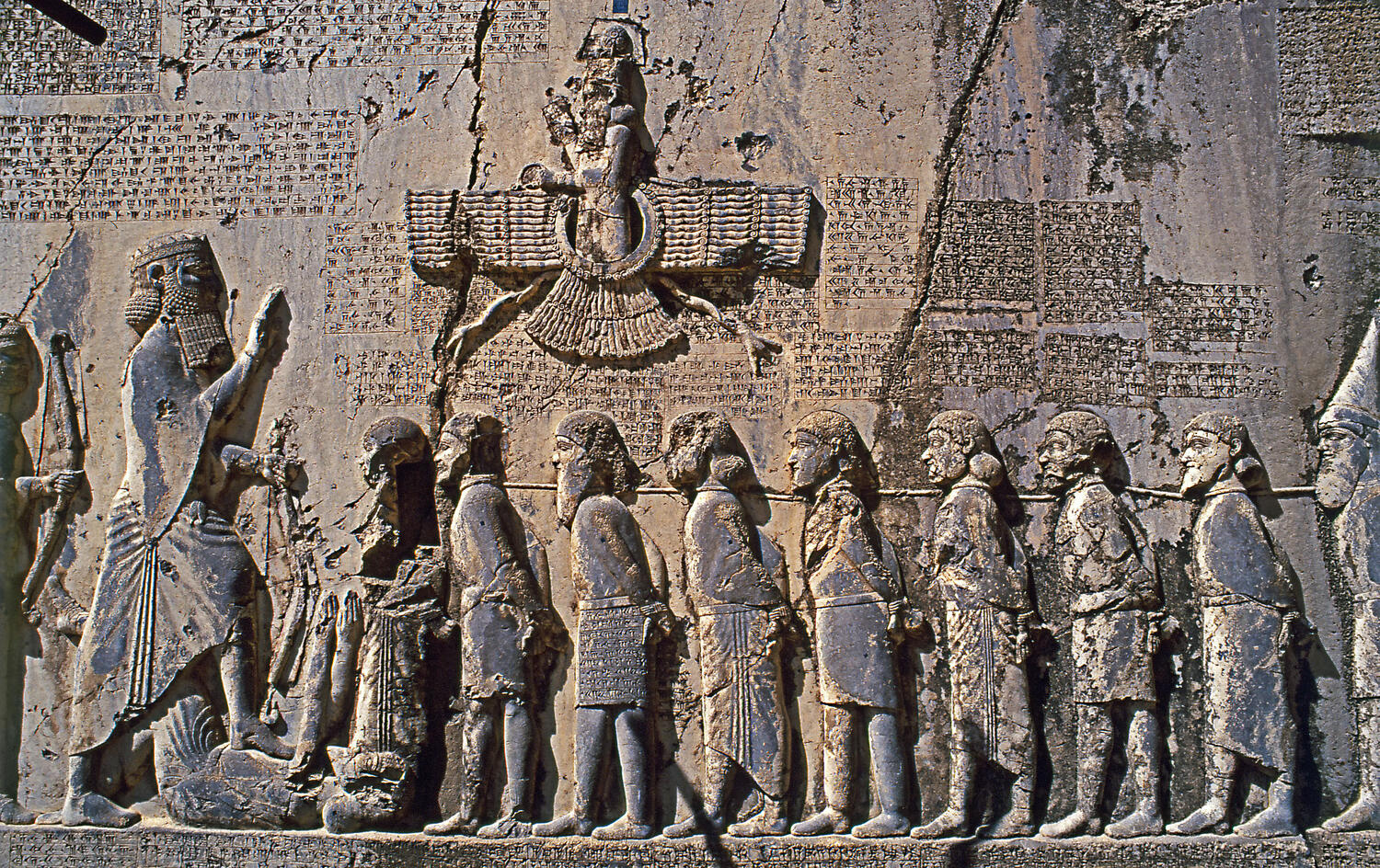
Behistun Trilingual Inscription and Aramaic Papyrus

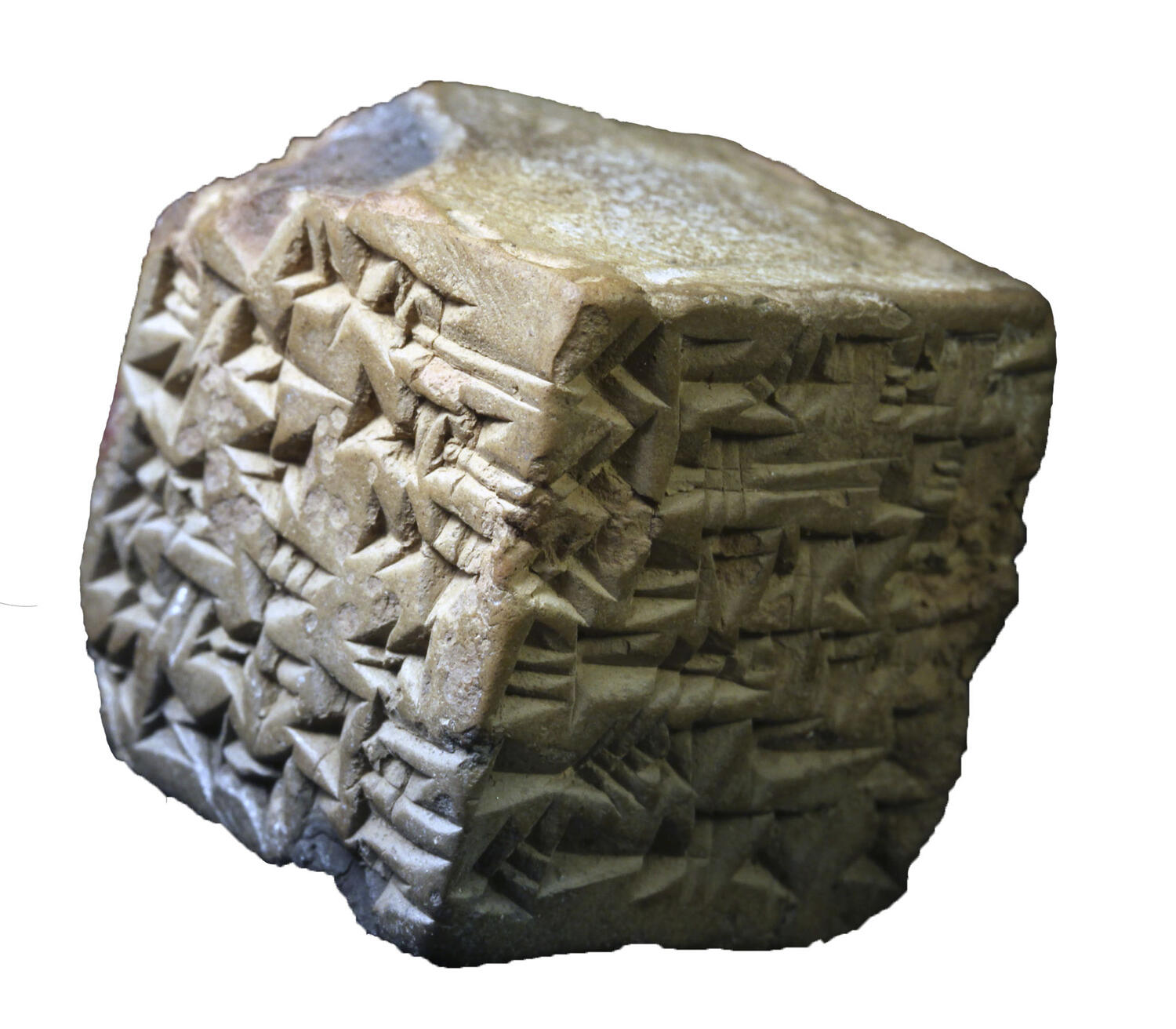
Lot (puru), Assyria

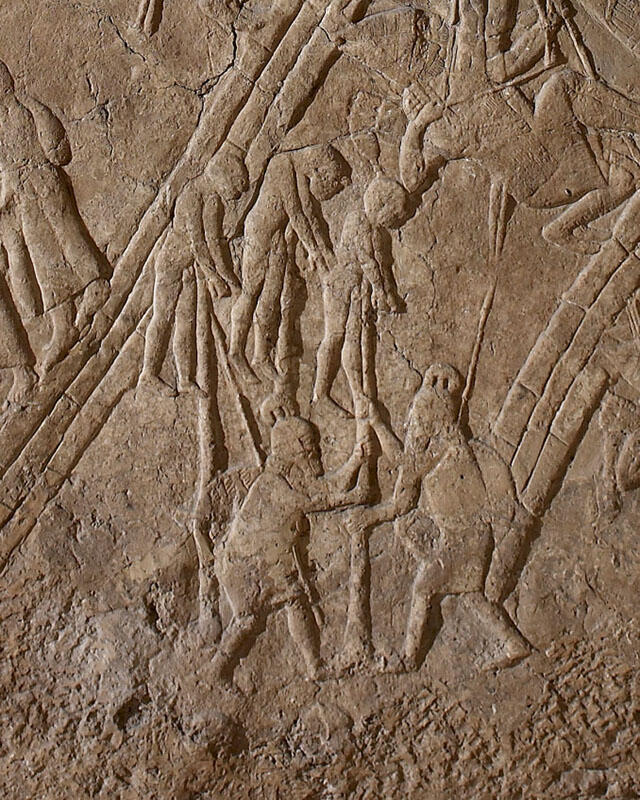
Impaled Corpses at Lachish

Court Legends of Daniel
Daniel 1, 5–6
Biblical court legends explore the protagonists' wisdom and divine protection in service to foreign kings.
The book of Esther is another of the five megillot; it is read on Purim and provides the explanation for the origin of that festival. The book is a burlesque comedy matching the tone of Purim; it is full of caricatures, exaggerations, improbabilities, comic misunderstandings, and sexual innuendos. King Ahasuerus is a buffoon, manipulated by his advisers. Haman is an egomaniac, seeking honor for himself but foiled at every turn by his nemesis Mordecai. The Persian court is portrayed in exaggerated terms (much as Greek literature portrayed it), heavily draped in luxury and bureaucracy, with ever-present wine parties, legal advisers, and the proclamation of decrees. But amid all the fun, there is a serious threat to the Jews of Persia, which is happily overcome by Esther and Mordecai. This is a diaspora story in which the Jews have a strong sense of their separate identity, even though religious observance goes unmentioned. The book shows that Jewish life in the diaspora may be precarious, but Jews can survive and even flourish.

Related Guide
Writings: The Third Section of the Jewish Bible
You may also like
Harvesting and Threshing in Egyptian Painting, from the Tomb of Pa-heri (New Kingdom)
Behistun Trilingual Inscription and Aramaic Papyrus
Lot (puru), Assyria
Impaled Corpses at Lachish
Court Legends of Daniel
Daniel 1, 5–6
Biblical court legends explore the protagonists' wisdom and divine protection in service to foreign kings.