

The Book of Direction to the Duties of the Heart: On the True Love of God
Image
Please login or register for free access to Posen Library
Already have an account?
You may also like

Treatise on the Nature of the Soul: Substance and Accident
Know that when the philosophers divided all existing things in the world into substance and accident, they defined substance as that which exists in and of itself, [capable of] containing opposite…


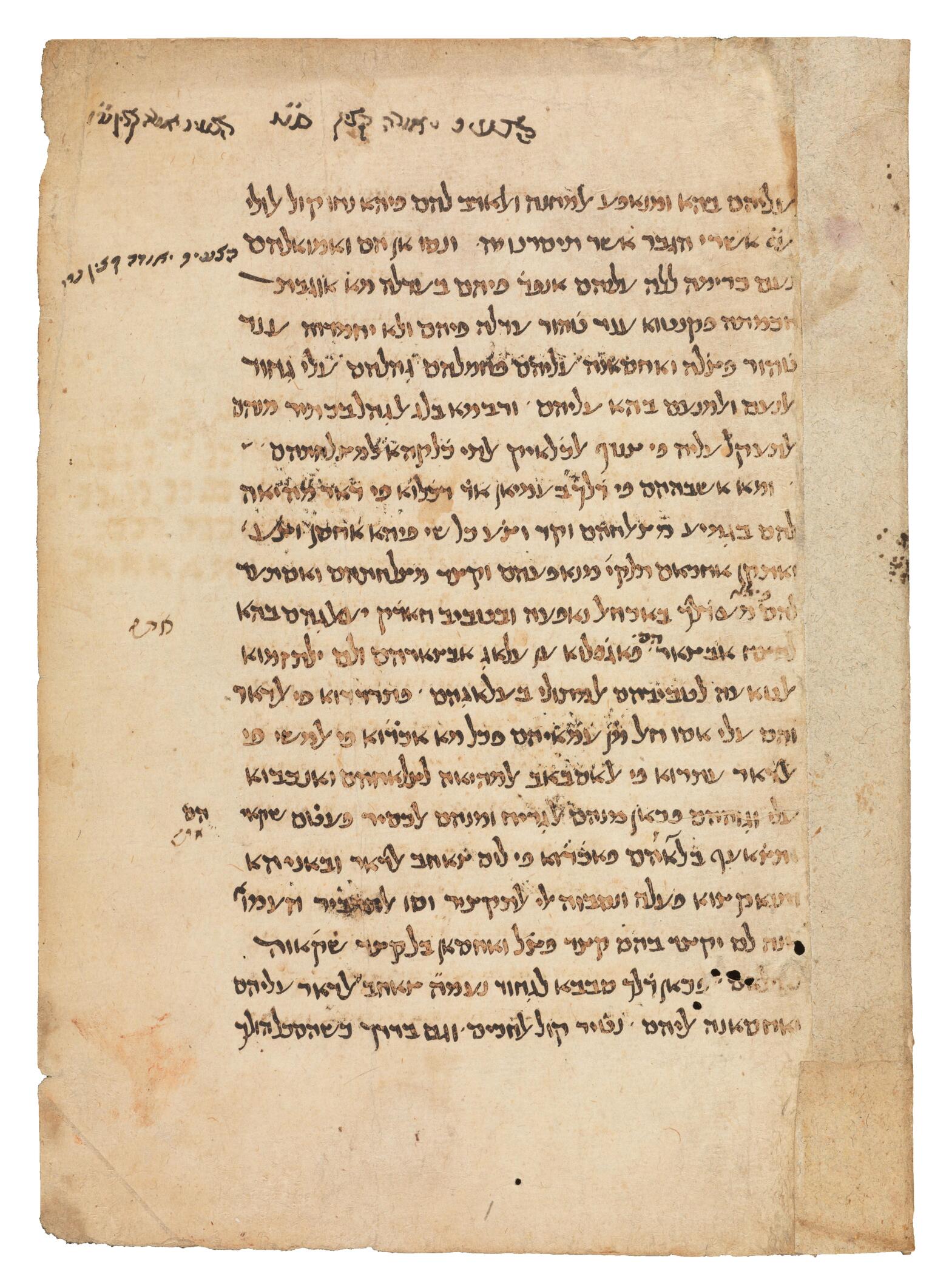
An Early Manuscript of The Book of Direction to the Duties of the Heart
Kitāb al-hidāya ilā farā’iḍ al-qulūb
Baḥya Ibn Paqūda’s theological and ethical work, The Book of Direction to the Duties of the Heart, was written in Judeo-Arabic. In it, Baḥya emphasizes the “duties of the heart”—the commandments that…
My son, join your soul
My son, join your soul to your Rock, when you declare the oneness of the one God, who fashioned you.Investigate, consider, and contemplate his wonders, and make wisdom and the righteous Law be your…
Hebrew Paraphrase of Se‘adya Ga’on’s Book of Beliefs and Opinions
. . . Know that this form is created and brought new into existence, and so are the Throne of the firmament and those that carry it—all of them are created. And the Creator created them from a shining…
Poem: On Creation
One should praise the nation of people of proper understanding,
which brings healing to all who are crushed.
Our God’s name is lofty and His speech;
He cannot be evaluated, nor has He anyone in His…
Commentary: On Pirke Avot
Commentary on m.Avot 1:3, 1:5, 2:4
Avot 1.3: Do not be as slaves who serve their master on condition to receive a reward. Rather, be as slaves who serve their master not on condition to receive a reward. And the fear of heaven should…