

The Cure of Souls: On Knowledge
About This Entry
The Cure of Souls (Ṭibb al-nufūs), written in Judeo-Arabic, is a wide-ranging ethical and psychological treatise on the soul, extant in manuscript but still unpublished, which treats not only the nature and activities of the soul, but also, using a common medical metaphor for ethics, how to improve (or “cure”) it. This excerpt focuses on the first requirement of a good teacher, namely, a perfect mastery of his subject. In explicating what that perfect mastery entails, Ibn ‘Aqnīn turns to interpret key verses from Deuteronomy, taken from the paragraphs following the recitation of the Shema‘, as referring to epistemology.
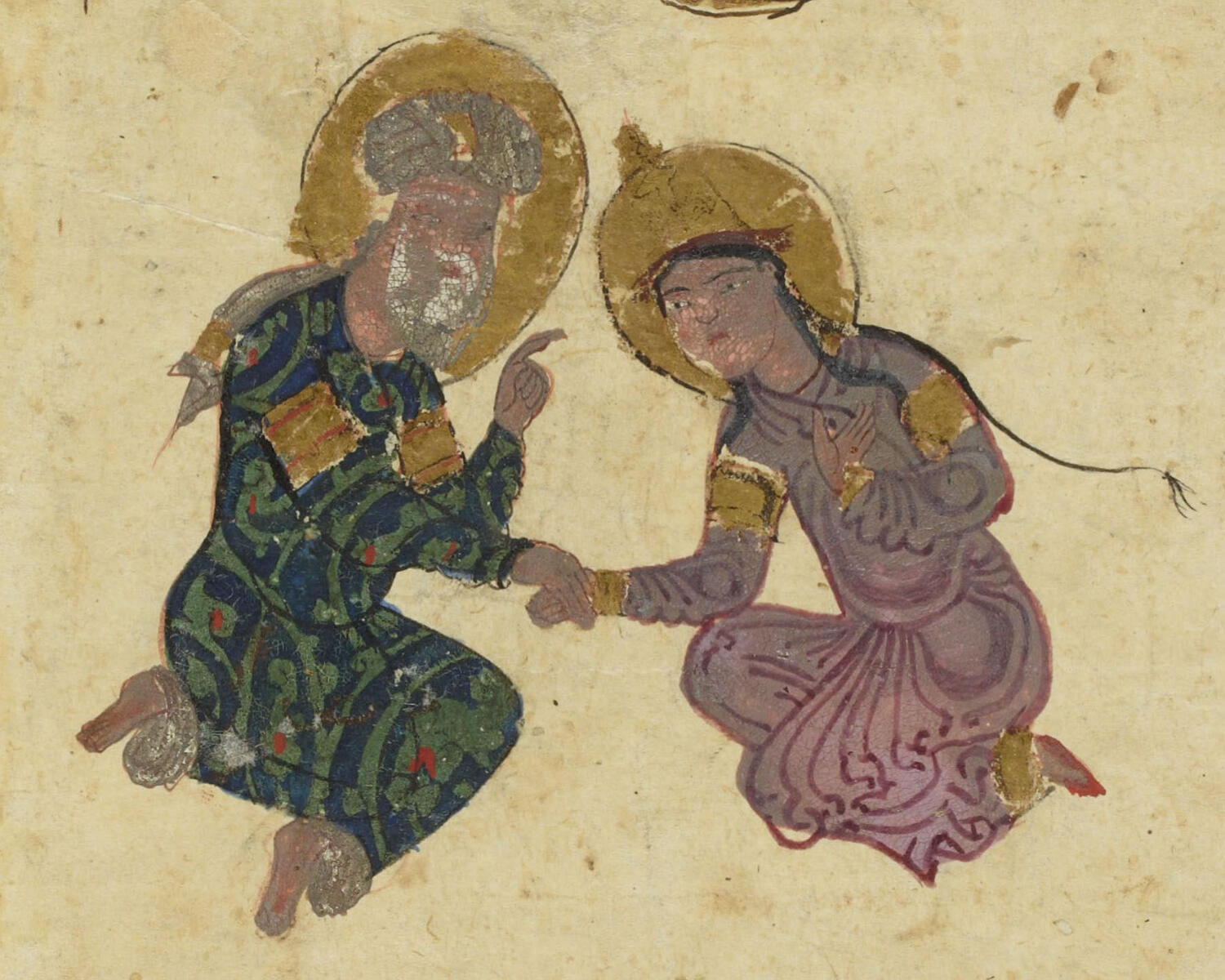

Chapter 27
On the rules of the teacher and the disciple:
As for the requirements of a teacher, there are seven. The first is that he should know the thing he wishes to teach perfectly.
The perfection of any man in any speculative art occurs when he fulfills three conditions: first, he has a clear understanding of its principles; second, he is able to derive what exists in that art, namely, that which is necessitated by those principles; and third, he can identify the errors he finds in this science, provide proofs for the views of his fellow researchers that reveal what is sound in their sayings, and correct the errors of those with defective views.
If he meets these three conditions, he is suitable to teach, and one is obliged to travel to his land in order to learn from him.
Therefore our Lord directs us to meet these three conditions, to become perfect in knowledge through two types of knowing, which are imagination and verification, as He said: Lay up these My words in your heart and in your soul (Deuteronomy 11:18).
By heart and soul, He alluded to imagination and judgment. He linked imagination to the heart and judgment to the soul, since the heart is the starting point, the premise, and the chief one of the limbs, and it is the source of the innate heat, which flows forth from it to set right the brain so it may possess the three faculties of the soul: cognition, memory, and fantasy. That is why we link imagination to it [i.e., to the heart] and this knowledge is linked to the soul, which follows after the heart, and to judgment, which follows after the imagination. The two remaining conditions [of perfect knowledge]—that is, the ability to derive [conclusions from principles] and that of finding contradictions—fall under the same category.
The heart precedes the soul [in the verse: Lay up these My words in your heart and in your soul] just as imagination precedes judgment. And that is because the essence of an object is established in the soul before we verify its existence in reality. And that is because in order to judge regarding something’s actual existence one must understand what the word for it signifies, but one may understand what it signifies without judging whether it exists or not. They said in the Sifre: “Lay up these My words in your heart and in your soul—that is learning [talmud].”
And since [acquiring] the branches of knowledge is [considered as] obedience to God, since the omnipotence of God becomes evident through acquiring knowledge by their means, as it has been said concerning the structure of the human body: . . . and from my flesh I will see God (Job 19:26). [This means] I will recognize His might from [knowing] the structure of my [bodily] parts. And what could you possibly say concerning one whose knowledge reaches the structure of heaven and the world—and [even extends to] that which is more exalted than this, namely, metaphysics? How will he obtain certainty about the Creator, His might, and His power? And that is why He said: But let him that glories glory in this, that he understands and knows Me! (Jeremiah 9:23). It teaches us that there is nothing more exalted in degree than knowledge of the Creator.
I say that His saying: You shall love the Lord, your God, with all your heart, with all your soul, and with all your might (Deuteronomy 6:5) is an allusion to the attainment of these three attributes.
With all your heart alludes to imagination [conception] of the sciences, that is, knowing the principles.
With all your soul alludes to deducing the branches from the roots, which is not possible except by means of verification.
With all your might alludes to detecting contradictions and presenting proofs establishing the firmness of their comparisons. That is not possible except by means of abundant effort and excellent cogitation, and that is the meaning of the word might.
Credits
Published in: The Posen Library of Jewish Culture and Civilization, vol. 3: Encountering Christianity and Islam.
You may also like

The Cure of Souls: Ethical Sayings

Guide of the Perplexed: On Knowing God
Guide of the Perplexed III:51 (selections)
On the Regimen of Health
Fī tadbīr al-siḥḥa
Letter to Maimonides: On Astrology
Letter to the Sages of Provence: On Astrology
Introduction to His Translations
You may also like
The Cure of Souls: Ethical Sayings
Guide of the Perplexed: On Knowing God
Guide of the Perplexed III:51 (selections)
On the Regimen of Health
Fī tadbīr al-siḥḥa