

Hefzibah Inscription
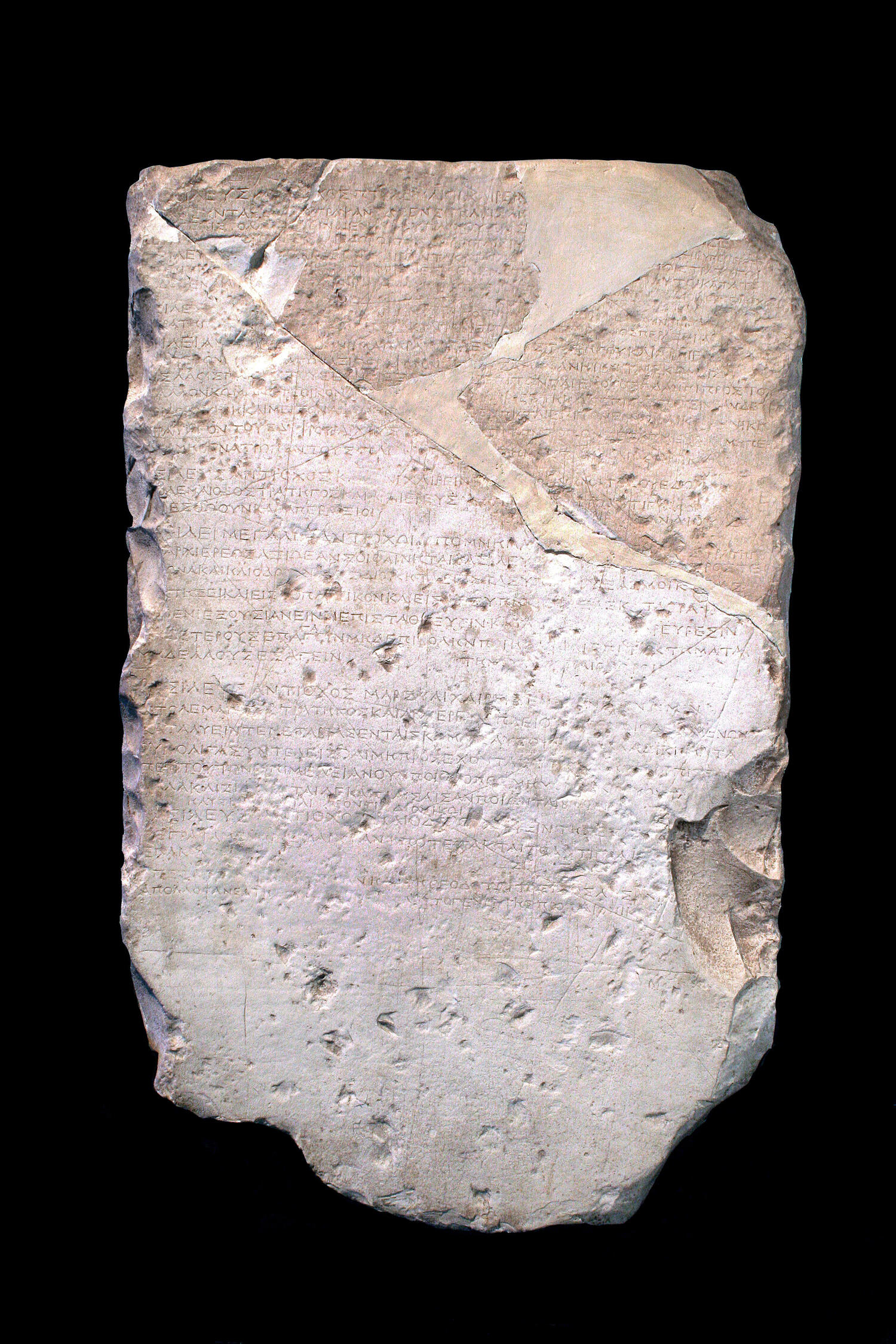

The Hefzibah inscription dates from the 190s BCE, very soon after the Seleucid conquest of the southern Levant, and pertains to developments from the beginning of the Fifth Syrian War, initiated by Antiochus III’s attack on Coele-Syria in 202 or 201 BCE. Discovered in 1960 about four miles northwest of Beth Shean, this stela presents a dossier of royal correspondence between the military governor and chief priest of Coele-Syria, Ptolemaios (Ptolemy) son of Thraseas, and Antiochus III concerning the quartering of soldiers in the villages, among other matters. Ptolemaios requests that Antiochus III prevent his soldiers from forcibly dislodging villagers and pressing the locals into service. The king obliges.
Correspondence between the king and his administrators was often publicized on limestone stelae such as this one. The current inscription appears to have been incised over an older, erased inscription, and the stone was later reused as a paver. The text was broken into multiple pieces, some of which were missing, when it was dug up in the modern period.

Related Guide
Judea under Ptolemaic and Seleucid Rule
Conflicts between the Ptolemaic and Seleucid dynasties shaped ancient Judea and eventually led to the Hasmonean revolt.
You may also like

Josephus Recounts the Seleucid Conquest
Jewish Antiquities 12.129–137

Zenon Papyrus
Seleucus Tries to Confiscate the Temple Treasure
2 Maccabees 3:13–40

The Heliodoros Stela

Aerial View of Iraq el-Amir Castle
