

Poems XI–XIV: Mourning His Brother
About This Entry
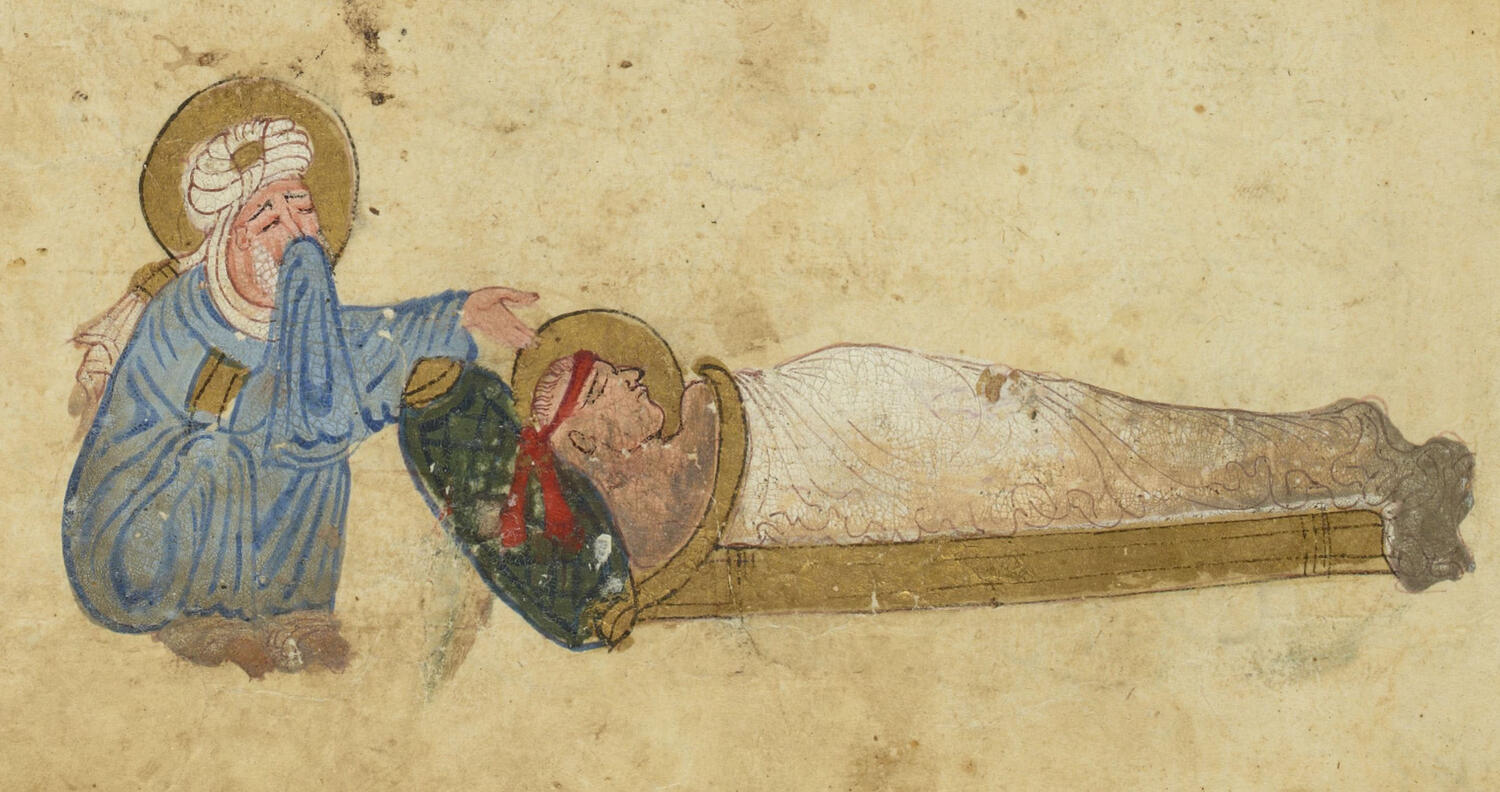
In the second set of poems written in the year after the death of his older brother Isaac, Samuel ha-Nagid narrated the period that began with the end of the month of mourning (sheloshim), during which time he continued to suffer and mourn intensely. Yet as time passed, ha-Nagid was further distressed by the fact that his sadness began to abate, and he labeled himself “faithless” and a “traitor” for daring to return to his routine. After pondering his own demise during a visit to his brother’s grave, ha-Nagid composed the longest poem in this series, bitterly describing his sleepless nights and his pain at hearing his brother’s name.

XI
And when a month had passed since his brother’s death, he thought:
XII
After which he went to visit his brother’s grave. He traveled until he had nearly reached the cemetery, when he stopped and thought:
XIII
After which he thought:
XIV
And later that year, when three more of his parents’ family had died, he wrote this elegy, the longest of his poems for his brother:
Credits
Samuel ha-Nagid, “The Death of Isaac,” trans. Hillel Halkin, from Hillel Halkin, Grand Things to Write a Poem On: A Verse Autobiography of Shmuel Hanagid (Jerusalem: Gefen, 2000), 73–78 [poems XI–XIV]. Used with permission of the publisher. Image: Bibliothèque nationale de France, Department of Manuscripts, Arabe 3929, fol. 78r, detail.
Published in: The Posen Library of Jewish Culture and Civilization, vol. 3: Encountering Christianity and Islam.
You may also like

Poems I–X: On the Death of His Brother
Poems XV–XIX: Memories of His Brother

Before the journey
Does the handsome gazelle
Alack and alas for the eighth month
Wail, O community, and lament in trembling
You may also like
Poems I–X: On the Death of His Brother
Poems XV–XIX: Memories of His Brother
Before the journey
Does the handsome gazelle
Alack and alas for the eighth month