

Tyrian Shekel
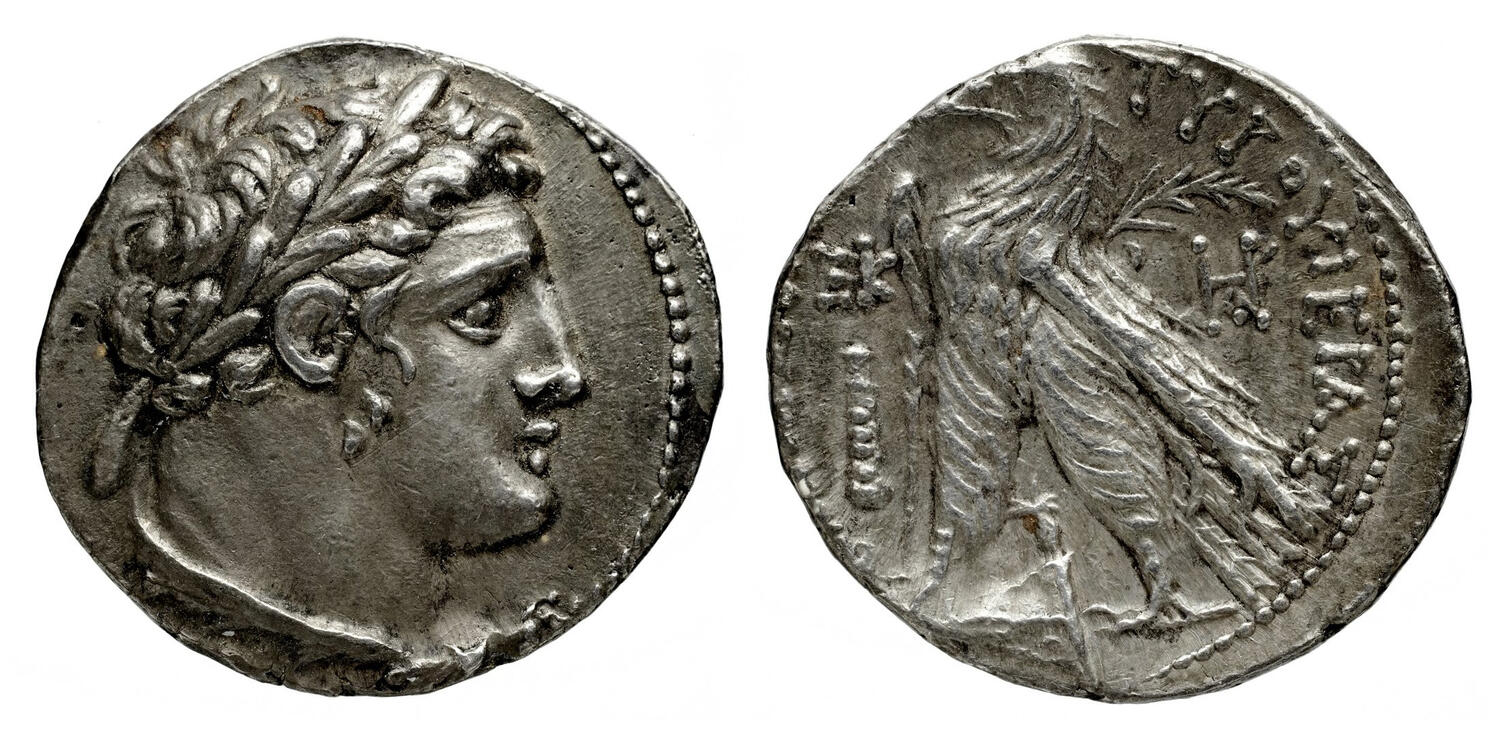

Tyrian coins originated from the Roman Empire mint in Tyre (now in Lebanon). After the Empire closed the mint, they allowed the Jewish community to mint their own Tyrian shekels under the condition that the coins continued to bear the image of Herakles and the same text as under the Empire. In this way, the Roman authorities could ensure that the Jews did not have complete autonomy. The Tyrian shekel was replaced by coins from the First Jewish Revolt.
We’re sorry. The Posen Library’s licensing agreements prevent this image from being printed or downloaded.
Credits
Source: gallica.bnf.fr / Bibliothèque nationale de France.
Published in: The Posen Library of Jewish Culture and Civilization, vol. 2: Emerging Judaism.
You may also like

Reconstruction Drawing of a Man in Typical Jewish Dress, 1st c. CE
Reconstruction drawing of a man in typical Jewish dress, circa first century CE. Drawing by Joan Taylor. © Joan Taylor. All rights reserved.

Capernaum House
This reconstruction drawing depicts a first-century house in the village of Capernaum, on the west shore of the Sea of Galilee. The walls of the houses in Capernaum were made of coarse, undressed…

Ḥorvat ‘Ethri House
This reconstruction drawing of Ḥorvat ‘Ethri, a typical first-century village in the Judean hills south of Jerusalem, is based on excavations conducted at the site by the Israel Antiquities Authority…

Meiron House
This large, late Roman house in the village of Meiron, in upper Galilee, had two stories with several rooms each. The upper story served as living space and was accessed by a built staircase. The…

Katzrin House
This two-story late Roman and/or early Byzantine house in the village of Katzrin, to the northeast of the Sea of Galilee, is constructed of hewn basalt stones, as are almost all buildings in the Golan…

Ḥorvat Kanaf House
This reconstruction drawing shows a house in the village of Ḥorvat Kanaf, to the northeast of the Sea of Galilee, fronted by a courtyard with a staircase giving access to the roof. A “window wall”…
You may also like
Reconstruction Drawing of a Man in Typical Jewish Dress, 1st c. CE
Reconstruction drawing of a man in typical Jewish dress, circa first century CE. Drawing by Joan Taylor. © Joan Taylor. All rights reserved.
Capernaum House
This reconstruction drawing depicts a first-century house in the village of Capernaum, on the west shore of the Sea of Galilee. The walls of the houses in Capernaum were made of coarse, undressed…
Ḥorvat ‘Ethri House
This reconstruction drawing of Ḥorvat ‘Ethri, a typical first-century village in the Judean hills south of Jerusalem, is based on excavations conducted at the site by the Israel Antiquities Authority…
Meiron House
This large, late Roman house in the village of Meiron, in upper Galilee, had two stories with several rooms each. The upper story served as living space and was accessed by a built staircase. The…
Katzrin House
This two-story late Roman and/or early Byzantine house in the village of Katzrin, to the northeast of the Sea of Galilee, is constructed of hewn basalt stones, as are almost all buildings in the Golan…
Ḥorvat Kanaf House
This reconstruction drawing shows a house in the village of Ḥorvat Kanaf, to the northeast of the Sea of Galilee, fronted by a courtyard with a staircase giving access to the roof. A “window wall”…