

The Story of the Parrot
About This Entry
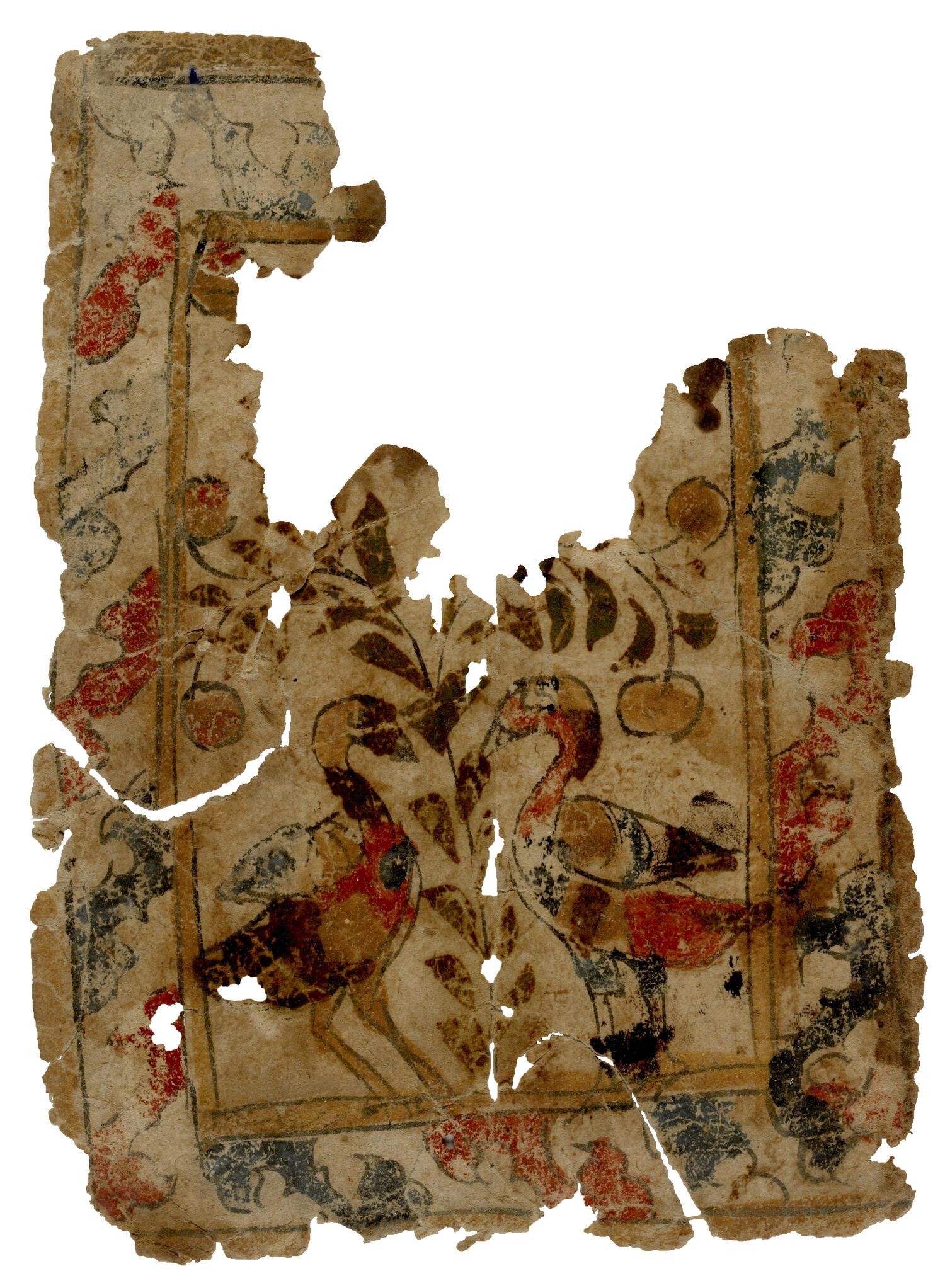
In this short passage from his Judeo-Arabic commentary on 1 Kings 10:22, Isaac ben Samuel explains the meaning of the word tukiyyim, which in the biblical text are imported by King Solomon. Isaac rejects the interpretation of the word as “peacocks” (also found in some translations today) in favor of “parrots” and explains the etymology of the word in Hebrew. He also reports that he himself saw a parrot with the ability to repeat biblical passages. This bird must have been quite an attraction in medieval Egypt.
R. Isaac Mevorakh ha-Nagid ha-Sephardi said, etc.: And the Targum [Aramaic translation of the Hebrew Bible] said concerning ve-tukiyyim: ve-tusin.
I say that the meaning of the word ve-tukiyyim is not “peacocks,” but “parrots,” which have a green color. It is a kind of bird that comes from India, and it can speak if it learns how to do so. The word ve-tukiyyim is derived from the word tavekh, that is, “middle,” meaning that it holds a middle position between those animals that speak and those that do not speak. This animal is not granted the [capacity of] speech in a manner similar to humans, but it is not dumb, incapable of speaking, like the birds. If it learns how to speak, it can speak, since its tongue is similar to the human tongue. They are called tukiyyim—that is, “middle”—for this reason. The singular form is tuki, and the plural is tukiyyim. I have seen a parrot in Miṣr [Cairo], at [the house of] our master, the nagid Mevorakh (may his memory be blessed), which was brought to him by a Jew who came from India and who had taught it many passages [from the Torah], and I have heard it recite the whole Shema‘ until [the word] “one” (Deuteronomy 6:4), and it prolonged [the pronunciation] of the [word] “one.” And [it recited] also the passage, Save us, our Lord (Psalms 118:25) in its entirety and the passage Praise, by David (Psalms 145) in its entirety. Therefore, these birds are justly called tukiyyim.

Published in: The Posen Library of Jewish Culture and Civilization, vol. 3: Encountering Christianity and Islam.
You may also like

Report about Rashi

Letter on the Capture of Jerusalem
Several Karaite Jewish leaders report on the aftermath of the 1099 conquest of Jerusalem by the Crusaders (“Franks”) and their defeat of a Fātimid army outside Ascalon.
Controversy between the Karaites and the Rabbanites
Ḥilluk ha-Kara’im ve-ha-Rabbanim

The Scroll of Ovadiah
Megilat ‘Ovadyah
Ovadiah recounts his travels before finally reached Egypt, meeting Karaites, and encountering Crusaders.
Dialogue Against the Jews: His Conversion to Christianity
Dialogi contra Iudaeos

I uttered a vow to God
You may also like
Report about Rashi
Letter on the Capture of Jerusalem
Several Karaite Jewish leaders report on the aftermath of the 1099 conquest of Jerusalem by the Crusaders (“Franks”) and their defeat of a Fātimid army outside Ascalon.
Controversy between the Karaites and the Rabbanites
Ḥilluk ha-Kara’im ve-ha-Rabbanim
The Scroll of Ovadiah
Megilat ‘Ovadyah
Ovadiah recounts his travels before finally reached Egypt, meeting Karaites, and encountering Crusaders.
Dialogue Against the Jews: His Conversion to Christianity
Dialogi contra Iudaeos